
Your floors can look well cared for without the relentless daily cycle of scrubbing and bucket work.
Winter slush, spring pollen and summer dust all put floors through a lot. A handful of easy routines and modest improvements make each clean last longer, leaving you with less mopping and more time to enjoy life.
Why floors get dirty fast
The majority of dirt enters at the doorway. Sand and road salt can score floor finishes, while grease and soap residue cling to tiles. Fine dust can resettle within minutes of vacuuming. In humid conditions, dirt adheres to the surface almost like glue.
After micro-scratches appear, they hold onto even more soil. Harsh cleaning products may lift grime, but excessive residue draws dirt straight back. The aim is to stop grit at the source, remove oily films promptly and leave virtually no product behind.
Stop the grit, cut the grease, leave no residue. Do that, and you clean less often with better results.
Set up a dirt defence at the door
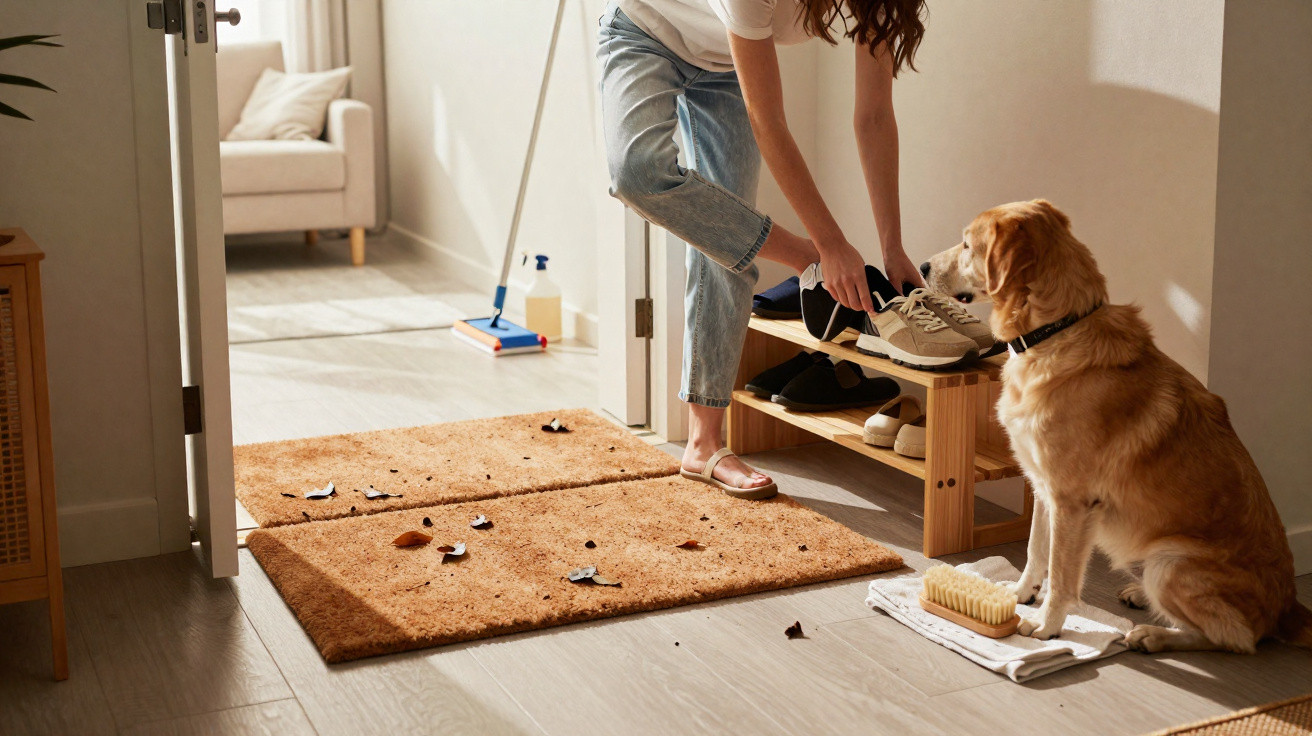
Double doormats that actually work
- Outdoors: use a firm coir or scraper mat to remove grit and salt.
- Indoors: choose a rubber-backed textile mat that absorbs dampness and catches fine dust.
- Size is important: allow for three stride lengths inside, so shoes make several wiping steps.
- Shake out or vacuum mats two to three times weekly. Once a mat is clogged, it no longer captures dirt effectively.
A long, absorbent indoor mat can cut tracked-in soil by half, which means fewer mops and a floor that stays brighter.
A no-shoes rule that actually sticks
A rule succeeds when it is simple to follow. Put a bench beside the entrance, include a shoe rack, and leave spare socks or house slippers nearby. Visitors will take their lead from the set-up without needing a reminder.
Pets need a pause station
Keep a towel or microfibre mitt by the door. Wipe paws quickly, dab their tummy, then let them in. Those 20 seconds can prevent 20 minutes of cleaning gritty paw marks afterwards.
Clean smarter, not harder
Daily two-minute habits
- Collect loose grit dry with a soft-bristled broom or microfibre dust mop. Always clean dry before using water.
- Focus on the “mess magnets”: the entrance, beneath the dining table and the kitchen area in front of the sink.
- Deal with sticky marks using a damp microfibre cloth and a drop of gentle washing-up liquid.
Weekly 15-minute reset
- Vacuum using a hard-floor attachment. Deliberate, slow passes collect more debris than rushed ones.
- Use a flat microfibre pad for damp mopping, with lukewarm water and a neutral cleaner.
- Rinse the pad as soon as it turns grey. A fresh pad helps avoid streaking.
Monthly and seasonal maintenance
- Wash the doormats, renew chair-leg felt pads and secure any loose pads before they cause scratches.
- Clean the perimeter thoroughly, including skirting boards and beneath appliances where dust gathers.
- Apply grout sealer each year where kitchens or hallways receive heavy foot traffic.
Pick the right method for your floor
| Floor type | Routine | Cleaner | Avoid |
|---|---|---|---|
| Sealed hardwood | Vacuum, then damp mop | pH-neutral, a few drops per litre | Soaking, steam, oily polishes that trap dust |
| Engineered wood / laminate | Vacuum, very light damp mop | pH-neutral spray on the pad | Steam mops, excess water at seams |
| Luxury vinyl / linoleum | Vacuum, damp mop | Mild neutral cleaner; a splash of isopropyl alcohol helps fast drying | High-alkaline degreasers that dull finish |
| Ceramic / porcelain tile | Vacuum, damp mop; scrub grout as needed | Neutral cleaner; oxygen-based powder for stained grout | Bleach mixed with acids, which creates fumes |
| Natural stone (marble, limestone) | Vacuum, damp mop with care | Stone-safe neutral cleaner only | Vinegar, lemon, or acidic sprays |
| Cork (sealed) | Vacuum, barely damp mop | Neutral cleaner; well-wrung pad | Standing water, abrasive pads |
Use as little liquid as you can. A lightly damp microfiber pad often beats a bucket for shine and speed.
Tackle the mess magnets first
Kitchen grease film
Cooking releases tiny oil particles onto flooring around the hob. Unless that layer is broken down, dust quickly sticks to it. Mix one or two drops of washing-up liquid into a litre of warm water and mop the affected area. Then use clean water on the pad for a quick rinse. If streaks remain, dry the surface with a towel.
Bathroom hair and soap deposits
Begin with a vacuum pass to collect hair, then mop with a neutral cleaner. On matt tiles with a soap film, combine warm water with a teaspoon of washing soda. Do not use this on natural stone. Rinse thoroughly and dry the floor afterwards to stop leftover residue attracting dirt again.
Entryway grit
During wet weather, give this spot an additional dry sweep each evening. This short task helps keep the rest of the home cleaner. Change the indoor mat when its backing begins to crack, as damaged backing slides about and spreads dirt.
Tiny upgrades that pay back
- Chair-leg felt pads prevent the micro-scratches that collect dirt.
- A low-pile hallway runner reduces sound while trapping grit.
- Keeping a second microfibre pad can cut mopping time in half: use one for degreasing areas and the other for final passes.
- A handheld vacuum stored near the kitchen means you need not carry out a larger machine for crumbs.
- Boot trays prevent meltwater and salt from reaching wood or laminate flooring.
Dry soil first, minimal moisture second, and a quick dry at the end. That sequence makes any floor look freshly cleaned for longer.
Safe, simple mixtures that won’t backfire
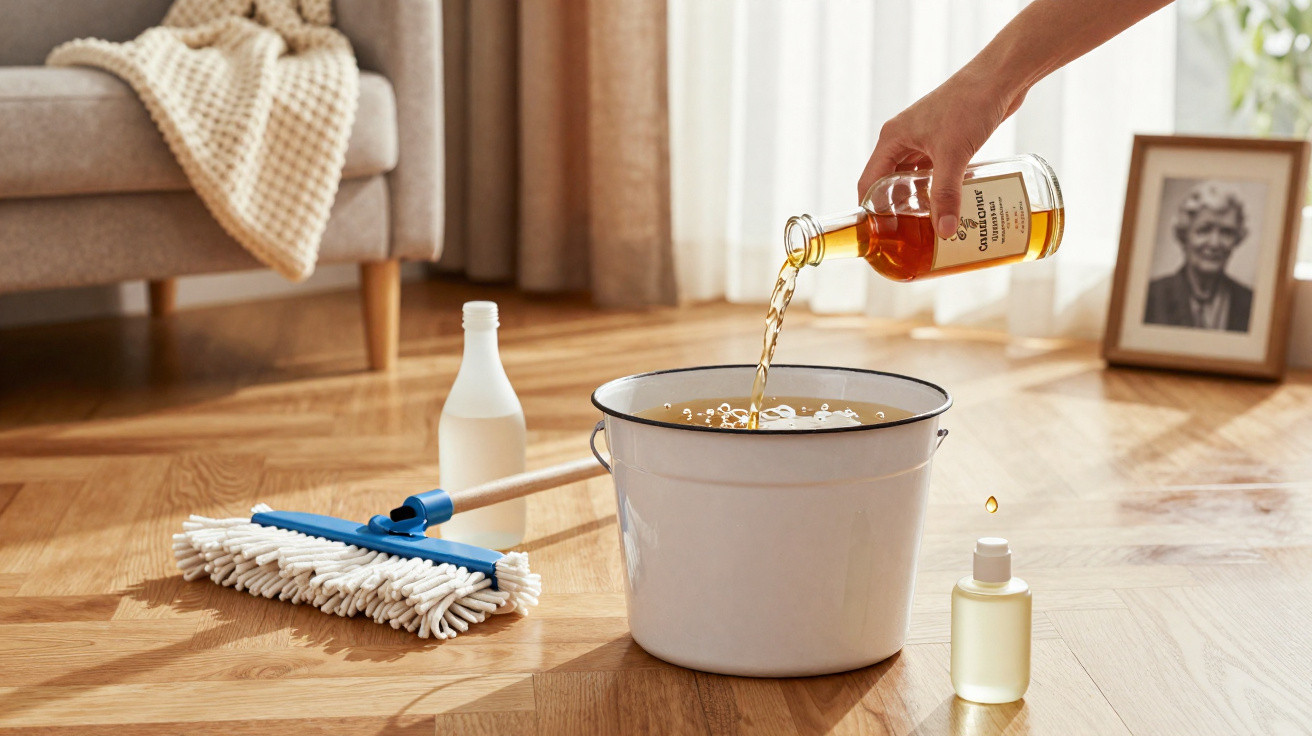
- Everyday neutral: 1 teaspoon mild washing-up liquid in 4 litres of warm water. Apply it sparingly with the pad.
- Fast-dry for vinyl and porcelain: 1 litre warm water + 60 ml isopropyl alcohol. Ensure the room is well ventilated.
- Grout refresh: make a paste with an oxygen-based cleaner, scrub gently using a soft brush, then rinse.
Avoid vinegar on stone and steam on laminate or engineered wood. Never combine bleach with acidic products. Label every bottle and test any mixture in an inconspicuous corner first.
If you rent or share a home
Keep the cleaning system in plain sight. Store mats, a broom and a spray mop close to the entrance or kitchen. Set a simple rota: one person refreshes the mats twice weekly, while another does the weekend vacuuming. A whiteboard is more reliable than assumptions. People are more likely to use cleaning supplies when they are kept where the mess begins.
When the shine fades
When sealed wood still appears dull following careful cleaning, old product residue may be sitting on the finish. Apply a dedicated residue remover before returning to a neutral cleaning routine. With tiles, an intensive grout clean can change the appearance of the entire floor. On vinyl, gentle use of a white eraser pad, followed by rinsing, often removes light scuff marks.
Extra ideas that stretch each clean
Use a “storm mode” routine during wet weeks: remove shoes, shake mats every day, do a brief evening sweep and keep a door towel ready for pets. With very little effort, the rest of the home remains steady. When entertaining regularly, position an extra mat just inside the room where the gathering takes place; guests will often wipe their feet unconsciously during the event.
If allergies affect you, vacuum hard floors with a HEPA machine once each week as well. Fine dust lands everywhere. One careful pass along skirting boards and beneath the sofa helps reduce the persistent grey film that seems to return immediately after mopping.
Comments
No comments yet. Be the first to comment!
Leave a Comment