
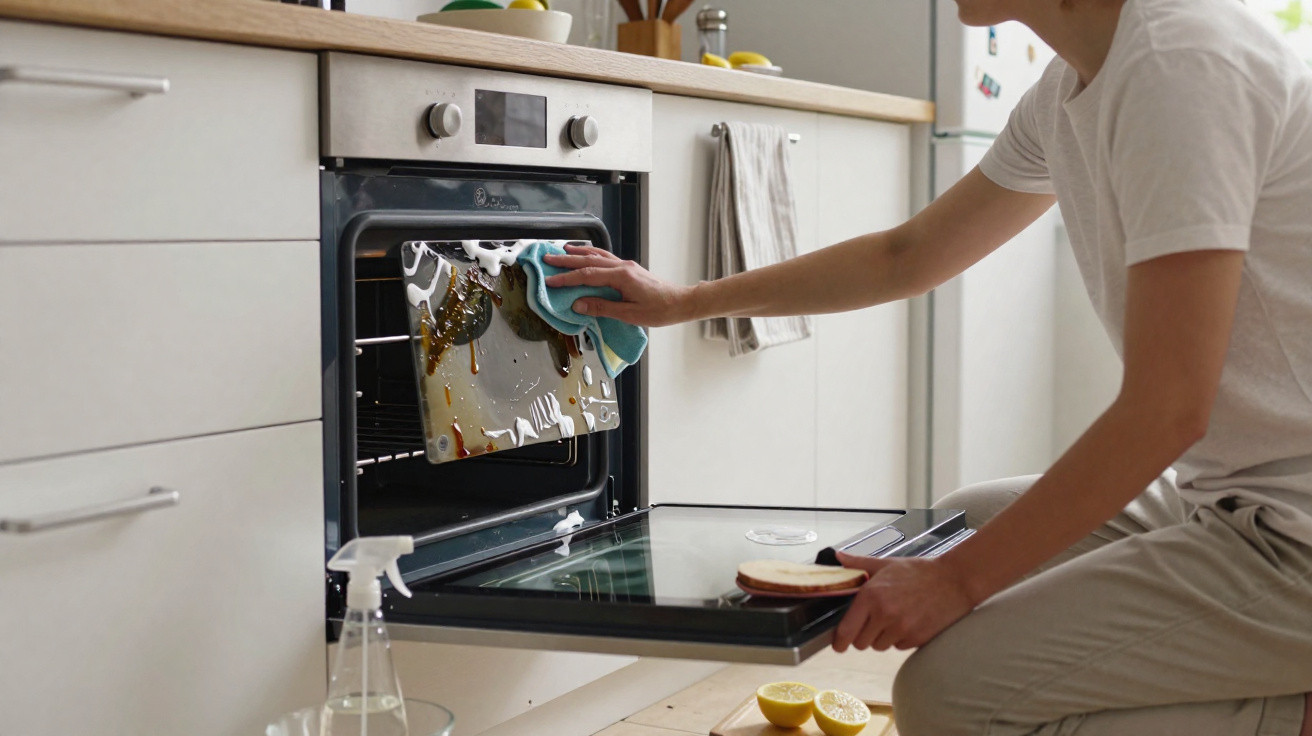
Weeks of cooking can build up a dense layer of burnt fat and sticky residue behind an apparently clean oven door. Many households put off dealing with it, only to spend ages scrubbing later with lacklustre results and a bigger energy bill.
How a dirty oven can quietly increase your costs
Consumer surveys in Italy indicate that over 60% of households devote more than half an hour each month to oven cleaning, frequently without achieving much. The picture is much the same in the UK and US, where ovens are heavily used for roasts, frozen food and batch cooking but tend to get far less attention than hobs and worktops.
Energy agencies around Europe caution that accumulated dirt can reduce oven performance. Burnt fat covering the internal enamel prevents heat from reflecting as it should and compromises insulation. Trials by national energy-efficiency organisations suggest that a grimy oven may need up to 10% more energy to reach and hold an identical temperature.
Grease and carbon deposits do not just look bad: they can nudge your electricity or gas bill up month after month.
Homes without self-cleaning programmes commonly depend on supermarket sprays. In an Italian consumer trial of 15 retail products, just one third delivered a plainly noticeable result on the first application. Results like these are helping drive the move towards inexpensive homemade solutions using baking soda, vinegar and citrus.
Baking soda and vinegar: an inexpensive cleaning staple
Baking soda and white vinegar are a familiar pairing that many technicians now recognise as a useful domestic oven-cleaning method. Sodium bicarbonate reacts with acetic acid to release carbon dioxide, helping to loosen organic deposits while leaving the enamel coating unharmed.
Independent materials laboratories state that, when applied properly, the combination does not harm standard oven finishes. Each treatment costs only pennies and relies on items that most households already keep in the cupboard.
Using an overnight baking soda paste
For an average medium-sized oven, use this straightforward method:
- Combine three tablespoons of baking soda with two tablespoons of water until you have a thick paste.
- Apply the paste to the cool oven walls, door and difficult patches, keeping clear of heating elements.
- Keep the door shut and allow it to work for at least eight hours or overnight.
- Remove the dry paste with a damp cloth or a non-scratch sponge.
- Spray on white vinegar at the end to neutralise remaining alkaline residue and eliminate odours.
The extended contact period allows the paste to gradually loosen carbonised fat, meaning less vigorous scrubbing is needed the following day. It requires more elapsed time than a quick spray-and-wipe commercial cleaner, but considerably less hands-on work.
| Method | Total time (minutes) | Average cost (€) |
|---|---|---|
| Baking soda + vinegar | 480 (overnight resting included) | 0.45 |
| Chemical oven cleaner | 30 | 3.90 |
| Steam clean (manual) | 40 | 0.20 |
Leaving the baking soda paste overnight shifts the work from your muscles to chemistry, which spares both your enamel and your shoulders.
Steam cleaning: a quiet eco-friendly kitchen ally
Steam cleaning is becoming more popular as energy costs climb and health worries grow. It uses nothing beyond heat and water, substantially reducing reliance on harsh chemicals and heavily scented products.
The process is simple: put a deep tray of water in the oven, heat it to approximately 240–250°C (465–480°F), then leave it running for roughly 30 minutes. The resulting steam releases baked-on grease from the walls, shelves and glass door.
Many modern ovens have an automatic “steam clean” or “aqua clean” setting, although the manual approach can be equally useful for older appliances. Once the cycle has finished, the inside normally requires no more than a brief wipe with a soft cloth.
European health institutes report that hot steam can remove up to 99% of common kitchen bacteria while leaving no chemical residue behind. This is particularly relevant for households with children, allergy sufferers or pets that enjoy investigating the lower oven door.
Steam turns solid grime into something you can simply wipe away, with no harsh smell and no warning symbols on the bottle.
Lemon power for stubborn crusts
When grease has repeatedly burned and formed a tough crust, aggressive sprays are often the immediate choice. Lemon citric acid provides a gentler alternative.
Halve and squeeze two lemons into a dish containing hot water to make a natural degreasing bath. Put the dish into the oven and heat it on a high setting for about 30 minutes. As the liquid simmers, vapour containing citric acid and essential oils moves through the oven cavity.
Research from Italian energy and materials institutes finds that this technique can reduce the need for mechanical abrasion by around 20% against standard chemical cleaners. Its milder action limits micro-scratches in the enamel, helping the oven wear better and remain easier to clean later on.
When lemon is better than soda or spray
The lemon approach is especially effective when:
- The oven has a pronounced fish, cheese or smoke smell after roasting.
- Deposits are fairly recent but have already adhered after a few uses.
- You need a fast refresh before using the oven for cakes or desserts.
For very old, blackened residue, lemon vapour will soften the top layer. It can then be followed the next day with a baking soda paste for more thorough cleaning.
Chemical oven cleaners under scrutiny
Industrial cleaners still have a place in the market, but health professionals and consumer organisations are increasingly critical of them. A large number contain sodium hydroxide, ammonia or similarly powerful alkalis. European and North American labels generally carry hazard pictograms and lengthy safety guidance for good reason.
- Protective gear: Nitrile gloves and a filtering mask are strongly recommended.
- Ventilation: Keep windows open and the extractor running for at least 10 minutes after application.
- Frequency: Limit heavy treatments to no more than two a month to lower corrosion risks.
Manufacturers maintain that their formulas are safe when directions are followed precisely. Even so, poison control centres receive dozens of calls annually relating to accidental splashes, inhalation or mixing cleaners with other products, including bleach.
Chemical sprays give fast results, but the price includes gloves, open windows and careful timing, especially in small flats.
Oven care from the 1990s to today
During the 1990s, only a small proportion of ovens in countries such as Italy and the UK had any self-cleaning capability. Industry figures now indicate that, in certain markets, more than 70% of newly sold units include pyrolytic or steam-assist systems.
Pyrolytic cleaning takes the oven to around 450–500°C, reducing food remains to ash. Although it reduces physical effort, it also consumes a considerable amount of energy. As electricity tariffs rise, households are increasingly weighing up the cost of using the setting, which may add up to several percentage points to a monthly bill when used routinely.
The result is a split in behaviour: some people depend on automatic programmes for convenience, while others go back to low-tech cupboard remedies. Environmental concerns contribute too, because homemade mixtures create less packaging waste and release fewer chemicals into wastewater systems.
Where oven grime builds up and how to stop it escalating
Whichever cleaning method is chosen, the same problem spots usually demand attention. The inner glass, particularly along its bottom edge, gathers splatters and sugary spills. Covers protecting heating elements collect fatty vapour, while slim side gaps and door hinges hold carbonised crumbs that burn a little more with every use.
Research by family-consumption observatories shows that preventive cleaning every three weeks can reduce the need for intensive, lengthy work by around 35%. Brief but regular cleaning sessions make the task less daunting and lower the chance of smoke and persistent smells.
Frequent light cleaning beats rare deep scrubbing: stains never have the time to turn into permanent, black scars.
Do not use steel wool, metal scrapers or strongly abrasive powders inside the oven. They create tiny scratches in the enamel, eventually making the surface more porous, more likely to retain grease and less able to reflect heat efficiently. This, in turn, can push energy consumption up again.
Six practical ways to make your oven look new again
For a practical plan covering both quick maintenance and intensive cleaning, use these six measures:
- Apply an overnight baking soda paste to walls and burnt-on areas.
- Spray vinegar the next morning to loosen leftover residue and remove odours.
- Run a manual steam cycle using a tray of hot water at a high temperature.
- Use a lemon-water bath for tough crusts and strong smells.
- Wipe the oven quickly with hot water and mild washing-up liquid after messy cooking.
- Inspect door seals, glass edges and concealed corners every three weeks.
What professionals advise - and what they find in damaged ovens
Appliance technicians regularly see the lasting damage caused by poor cleaning routines. Typical faults include enamel warped by repeated metal-scraper use, door seals damaged by aggressive sprays, and hinges blocked with dense grease that stops the door closing correctly.
When asked which routine creates the fewest issues across a decade of ownership, many point to a mix of manual steam cleaning, mild degreasers and very occasional professional-grade products in extreme situations. This approach keeps corrosion to a minimum and helps the oven last longer, delaying the environmental effects associated with manufacturing and disposal.
Safety and health considerations beyond cleaning
An uncared-for oven presents risks beyond increased energy usage. Grease layers can ignite, particularly beneath the grill. Old spillages may also produce smoke and volatile compounds that affect indoor air quality, especially in small urban homes with restricted ventilation.
Conversely, a clean oven generally cooks more evenly. Cakes rise more successfully, pizzas brown more consistently and roasting times are easier to predict because the thermostat and heat reflection perform as intended by the designers. Such consistency is valuable for those batch-cooking weekly meals or operating home-baking side hustles.




Comments
No comments yet. Be the first to comment!
Leave a Comment