
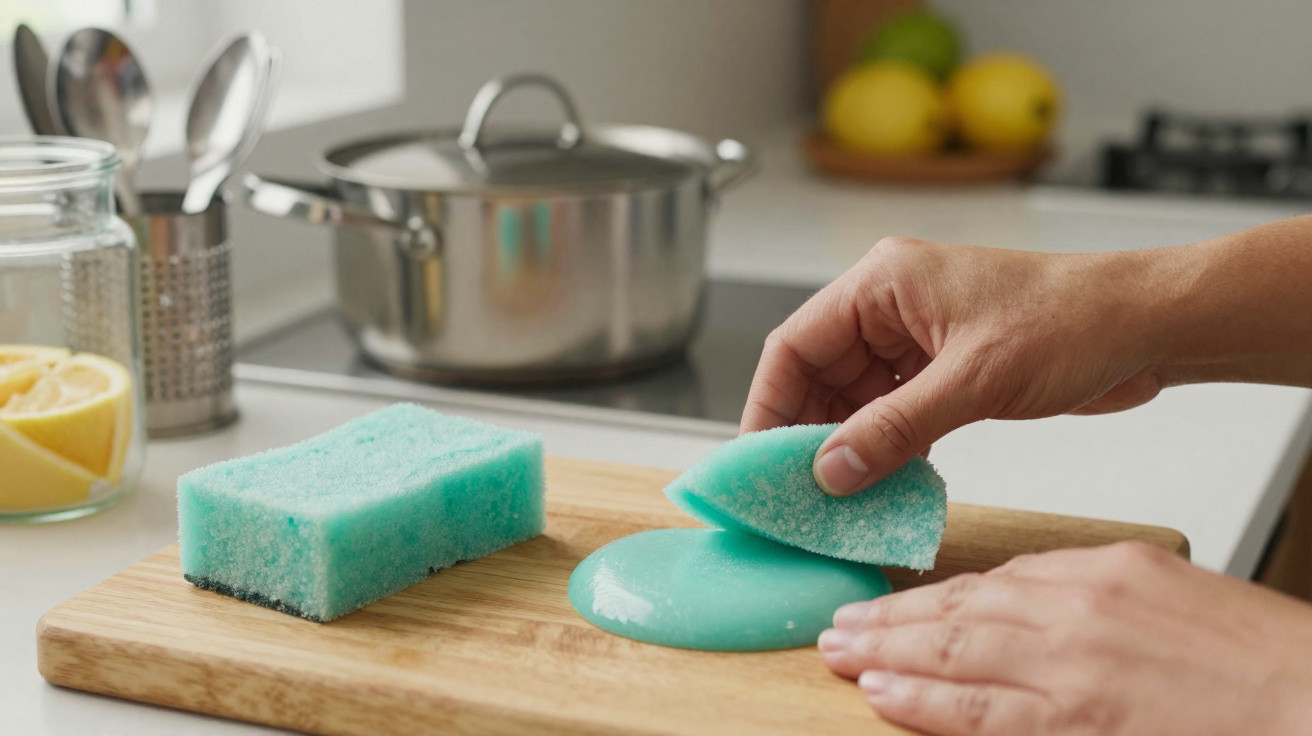
This long, colourful foam tube – the very one children use to whack one another in the swimming pool – had been cut into pieces and tucked into every conceivable spot: over cupboard doors, beneath chopping boards and even along a knife drawer. There were no expensive gadgets or viral Amazon purchases, only a £3 piece of foam quietly changing the rules in a small, noisy kitchen.
I stood watching for a moment. Drawers shut without their usual aggressive crash. Glass dishes no longer scraped against metal shelving. The leads behind the coffee machine stopped knotting themselves into furious-looking snakes. Nothing genuinely “new” had been added, yet the room seemed calmer, safer and less heavy.
That evening, I went home, rescued an abandoned pool noodle from the garage and cut it up on the worktop. Ten minutes later, my kitchen looked exactly the same. But it felt utterly transformed.
Why a humble pool noodle can make a big difference in your kitchen
In theory, a pool noodle is barely anything: a hollow foam tube, perhaps neon-bright or perhaps bleached by sun and chlorine. Yet in a kitchen, it turns into an unexpectedly adaptable tool for tackling the small irritations you may have put up with for years.
Cut it lengthways and it becomes soft protection for cupboard doors that bang straight into the wall. Slice off several short sections and they work as buffers for glass lids that previously knocked and chipped one another. Put a strip beneath a chopping board and it no longer skates across the worktop like a hockey puck whenever you chop an onion.
The clever part is not the noodle itself. It is what happens when an inexpensive, pliable material is introduced to a room filled with hard edges and breakable possessions.
One woman I spoke to began using pool noodles after her toddler hit his head on a sharp worktop corner. Rather than buy a bulky-looking childproofing set, she halved a noodle and fitted it around every edge at her child’s height. The kitchen was surrounded by bright blue foam. It was not Pinterest-perfect, but her son stopped leaving the kitchen in tears.
Another man living in a compact studio flat used half a noodle as a spacer between his fridge and the wall. The fridge door had always hit the plasterboard, producing dents and dark scuffs. Once he wedged in the noodle, the door stopped softly at precisely the right point. He told me he had been “mad at that wall” for three years, never realising the answer was floating in his parents’ pool.
There are no figures recording “pool noodle hacks per household”, but the trend is easy to spot. Whenever somebody shares a small foam solution on social media, the replies quickly fill with “I’m doing this today” and “Why did no one tell me this sooner?” One low-cost item, repeated thousands of times, is quietly altering thousands of kitchens.
When you view a kitchen as a network of surfaces, impacts and movement, the pool noodle makes immediate sense. It is lightweight, squeezable, easy to trim and naturally grippy. Finding all of those qualities at this price is unusual.
Consider the many tiny collisions in your kitchen: doors meeting walls, drawers striking their stops, pans knocking together and bottles clinking in the fridge door. Individually, they are minor. Collectively, they create continual noise, damage and little jolts of tension your brain notices even when you act as though it does not.
The noodle provides a quiet cushion between those forces. A 10 cm piece on a drawer edge lets it close with a muted thud rather than a bang. Lining a pot-lid drawer prevents your costly glass lids from chipping. When your chopping board stays put, your knife hand can relax. You are not purchasing “organisation” or “design”; you are choosing fewer everyday frustrations.
When people claim a pool noodle “changes your life in the kitchen”, they do not mean it will make you a chef. They mean the unseen sources of friction are finally turned down. You notice that difference every day.
Practical pool noodle hacks for a smarter-feeling kitchen
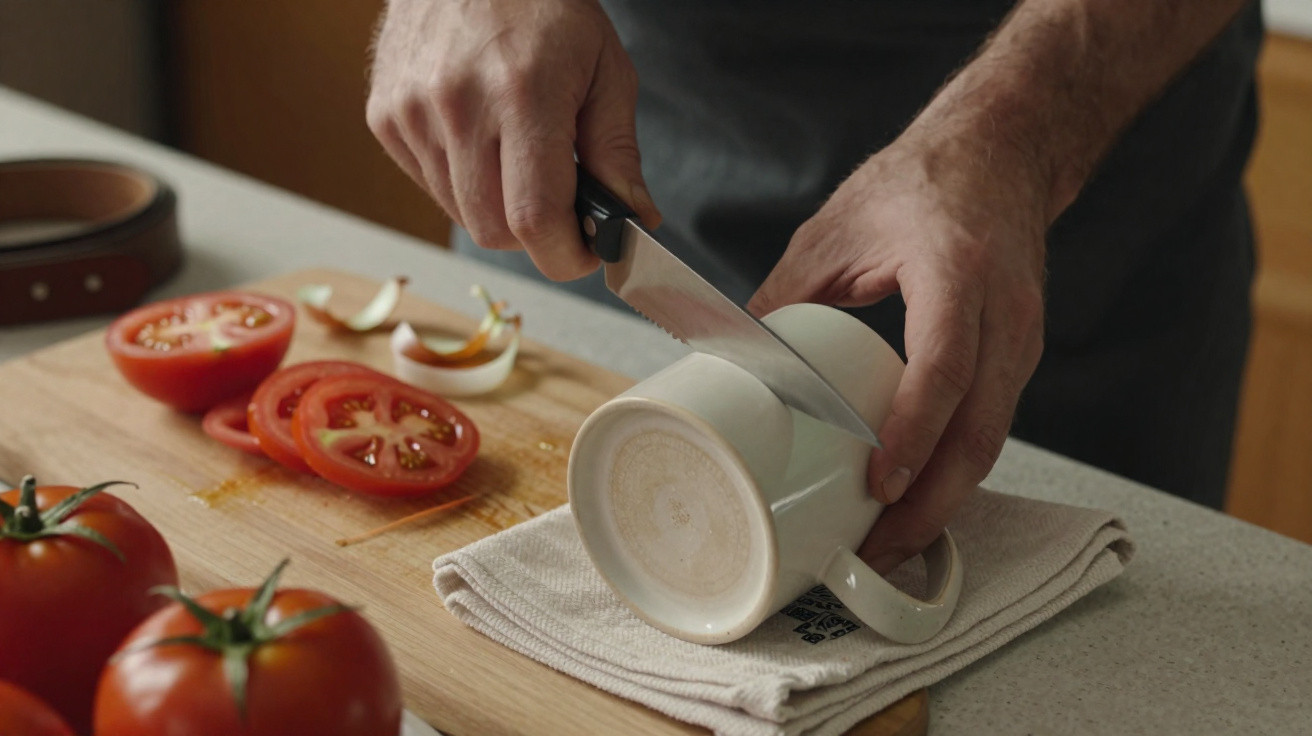
Begin simply: take one pool noodle and a good pair of scissors or a serrated knife. Make a lengthways cut along part of the tube so it opens like Pac-Man’s mouth. That piece becomes a universal soft edge.
Fit it onto cupboard doors that strike walls, around the edge of a low oven door that children keep tripping over, or over the dreaded island corner where everyone bruises a hip. There is no need to cover every surface. Addressing two or three key areas already changes the way you move around the room.
Next, cut short sections – each 3 to 5 cm long – and place them under chopping boards as non-slip feet, between stacked pans as cushions, or beneath a tabletop appliance that wobbles. After ten minutes of cutting, your kitchen has fewer hazardous edges and fewer startling noises.
Emotionally, this foam idea often begins with a desire to protect someone: a baby learning to walk, an older parent who is less steady on their feet, or a pet that likes to sleep beneath the table where people swing their legs.
That is why guarding corners is among the most popular uses. Split the noodle, wrap it around the riskiest edges and trim it to fit. It will not earn any design awards, but it can prevent the painful knock to the head you fear whenever a child races past the worktop at full speed.
Drawers and doors offer another particularly effective option. Cut narrow rings and slip them over the inside top bar of a cupboard door. On closing, foam meets wood rather than wood slamming into wood. There is less noise and less vibration. Less sense that your kitchen is shouting at you.
Let’s be honest: no one is going to measure, mark out and engineer the ideal foam set-up. You will judge it by eye, cut it and clip it into place. That is perfectly sufficient.
The most frequent error is attempting to solve every issue at once. You can end up covering half the kitchen in neon foam, disliking how it looks and pulling it all off a week later. Instead, begin with three things that genuinely bother you: that drawer, that corner and that stack of rattling pans.
Cutting the noodle too thinly is another pitfall. A flimsy strip can tear or slip out of place. Leave enough depth for it to compress and spring back. Colour also matters more than most people acknowledge. If bright pink is unbearable in a neutral kitchen, choose a darker or subtler shade. Black, grey and even marble-pattern pool noodles are available. They are not glamorous, but they do blend in.
And do not leave loose pieces close to naked flames or in the oven gap. Foam and heat are a disastrous pairing.
“I realized I wasn’t buying a kitchen gadget,” a reader told me. “I was buying silence. I was buying the feeling that my home wasn’t working against me anymore.”
There is something almost subversive about using a child’s toy to quietly adapt a distinctly adult room. Rather than waiting for a brand to offer the “official” fix, you cut your own solution on the worktop in five minutes with whichever knife happens to be clean.
To make it straightforward, assess your kitchen using three categories:
- Impacts: doors, drawers, lids and corners that strike something or are struck
- Slips: chopping boards, appliances and trays that move when they should stay still
- Rattles: pans, bottles and glassware that clink, chip or simply drive you mad
Wherever you find one of these, a small piece of foam could alter the sound, the sensation and your mood more than you might expect.
Living with a pool-noodle-proofed kitchen: small changes, quiet revolutions
After a week in a kitchen adjusted with pool noodles, you begin to notice what is missing: the drama. The oven door opens with a softer drop. Under-sink pipes no longer clatter against the cupboard wall. That drawer full of metal cutlery stops sounding like a car crash whenever it closes.
It is not glamorous. Nobody enters your home and exclaims, “Wow, what an incredible foam installation.” Still, something changes in how you use the room. You move about more easily and flinch less. Your child learns to open a cupboard door without slamming it. Your neighbours hear fewer bangs through the wall at midnight.
On a difficult day, that can feel like a small kindness.
At a deeper level, putting a pool noodle in the kitchen is a quiet refusal to accept that every issue needs a specialised, branded and costly solution. You take a cheap, generic item and make it serve your needs, with scissors in hand and no instructions required.
It follows the same thinking as turning a jar into a vase or using a shoebox to organise cables. The difference here is that the benefit reaches your ears, your dishes, your shins and your nerves. You are not merely organising objects; you are making life around them softer.
When work emails are piling up and the world feels hard and loud, returning home to a kitchen that does not slam back at you matters.
You may begin with a single noodle and one corner. A week later, your mind will spot another opportunity: the tray that always slides, the plant pot scraping the windowsill or the mixer vibrating across the worktop. Each time, the answer is waiting in that same low-cost foam tube, ready to be cut.
Practically speaking, this gives you a kind of household kit to draw on whenever something rattles, bangs or scrapes. There is no order to make and no trip to the shops. All you need are scissors, a little imagination and the willingness to try something that looks slightly ridiculous until it proves itself.
We have all experienced the moment when one small improvement changes how we see our home: the first time you put up hooks and discover that walls can do more than hold paint, or the day you add felt pads to a chair and wonder why you ever tolerated that screeching noise.
A pool noodle in the kitchen belongs in the same category: low-risk, inexpensive and strangely effective. It will not cook your dinner or wash up for you. Yet it may quietly reshape the background soundtrack of daily life, one slice of foam at a time.
| Key point | Detail | Benefit for the reader |
|---|---|---|
| Cushion impacts and noise | Noodle sections placed on doors, drawers and lids | Reduces noise-related stress and wear on kitchen furniture |
| Stabilise surfaces | Pieces positioned beneath chopping boards and appliances | Safer work, more precise movements and less slipping |
| Protect people and possessions | Foam edging on corners and between pans | Fewer bruises, less breakage and a calmer kitchen |
FAQ:
- Can a pool noodle really hold up in a busy kitchen? Yes, provided it is kept away from direct heat and sharp blades. The foam compresses and springs back for months, and sometimes years, particularly in low-impact spots such as cupboard edges and drawer stops.
- Is it safe to use pool noodles near food? They are not designed for direct contact with food, so keep them on the outside of containers, underneath boards or on furniture edges. Use them as buffers and stabilisers, not as serving equipment.
- Will it make my kitchen look childish? It can do if you use neon foam everywhere. Choosing more neutral colours, cutting the pieces neatly and treating only important areas keeps the appearance subtle while retaining the benefits.
- How do I cut and install a pool noodle without special tools? A standard kitchen knife or strong scissors will do. Cut carefully, make a lengthways slit for edges and test small pieces first. Fitting it simply involves clipping or wedging the foam where it is needed.
- What happens if the noodle gets dirty or damaged? Wipe it with a damp cloth and mild soap. If it tears or becomes badly stained, replace that section. One noodle normally provides enough pieces that changing a damaged one is quick and inexpensive.



Comments
No comments yet. Be the first to comment!
Leave a Comment