
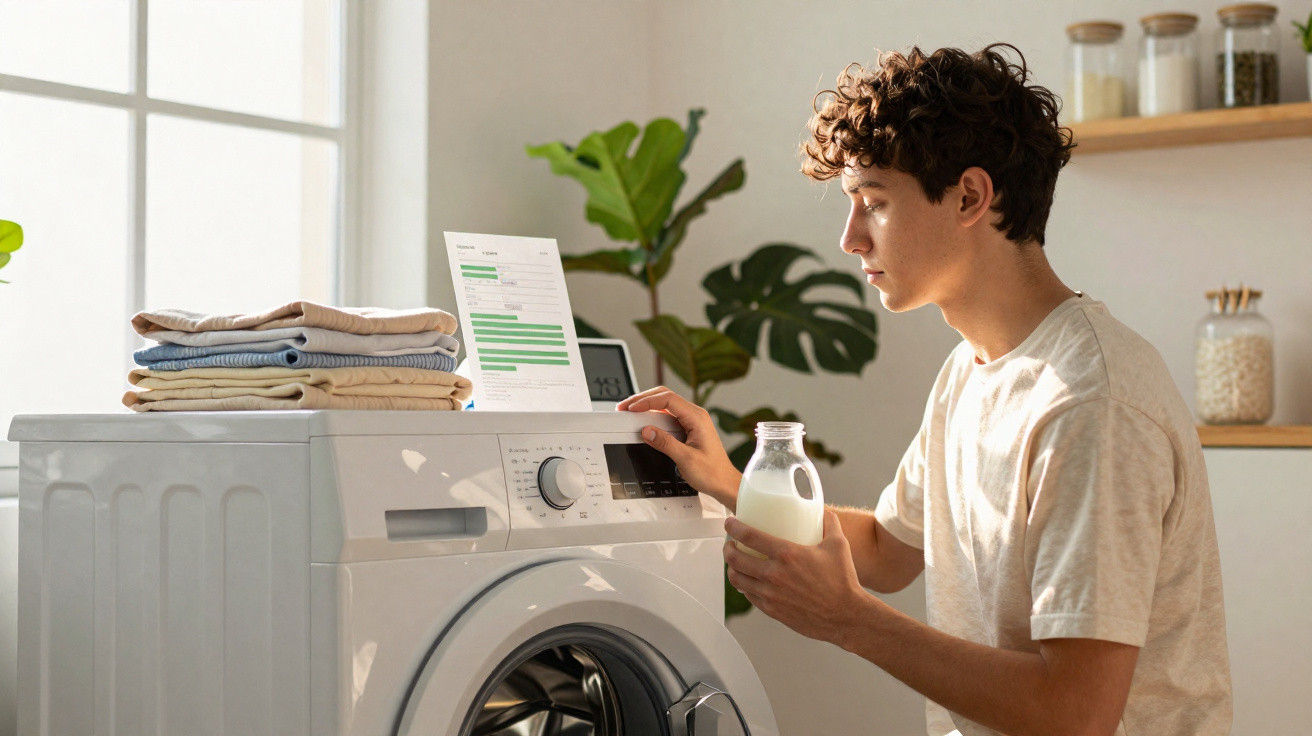
Sometimes, good habits can make a major difference to both your budget and the planet.
Today, people in France are looking to save money wherever possible, including on their energy use. Fortunately, a few simple tips can benefit both your finances and the environment. As Engie points out in its latest statement, “optimising the use of everyday appliances is a practical measure, available to everyone, for consuming less and consuming better”.
The energy giant has therefore shared several everyday habits that can lower electricity consumption and deliver worthwhile savings. Of all household energy expenses, laundry can be optimised easily, without any investment or loss of comfort. Here are 5 useful habits to adopt when putting on a wash.
Washing machine: how to cut your energy consumption easily
While a washing machine is not the most energy-hungry household appliance, adopting the right habits is still worthwhile to keep its consumption down. They cost nothing to implement, yet can make a real difference to your bills.
First, get into the habit of filling your washing machine drum properly before starting a cycle. It may sound obvious, but it is worth repeating. Avoiding half-full drums means you will run fewer cycles, which has a significant effect on your bills.
Many people in France do not realise how greatly cycle temperature affects electricity use. The higher the temperature selected, the more energy the washing machine needs to heat the water. In fact, 80 to 90% of the electricity used for a wash goes to the heating element, with the remainder powering the motor and electronics. A difference of only 10°C can change everything. According to a study by the Testex laboratory, switching from a 40°C wash to 30°C can save 30% of energy. A 30°C wash is not only better for your clothes: it also guarantees lower consumption. The gap is striking: washing at 60°C or 90°C raises consumption by at least 50% compared with a 30°C wash. You now know the winning temperature for your next loads.
Eco mode and washing machine maintenance
If you routinely use express cycles, there is some bad news. These faster programmes are something of a false economy. Since the appliance has to heat water very quickly to complete the wash in a short time, using express cycles systematically is extremely energy-intensive. Engie therefore recommends choosing “Eco” mode whenever possible. It may take longer, but it is kinder to both your bills and the planet.
Maintaining your washing machine regularly is the best way to prevent excess consumption and extend its lifespan. Finally, if you have an off-peak/peak tariff, Engie strongly advises scheduling cycles during off-peak hours, reducing the cost of your bill while using the same amount of electricity.
Dryers and dishwashers: habits that reduce consumption
Naturally, the same principles apply to your other household appliances. The tumble dryer is the most energy-intensive of them all. It is sensible, therefore, to use it sparingly, dry clothes outdoors whenever possible and limit its use to winter. Long, low-temperature programmes can save energy compared with quick drying, while an action as straightforward as sorting laundry can make a substantial difference. Pre-drying clothes also shortens the time your appliance needs to run.
The same applies to the dishwasher. “Eco” mode should be preferred to reduce consumption, as its lower-temperature, longer wash is less energy-intensive. As with your washing machine, do not run the dishwasher unless it is fully loaded. Lastly, cleaning the appliance’s filter regularly is an important detail.




Comments
No comments yet. Be the first to comment!
Leave a Comment