
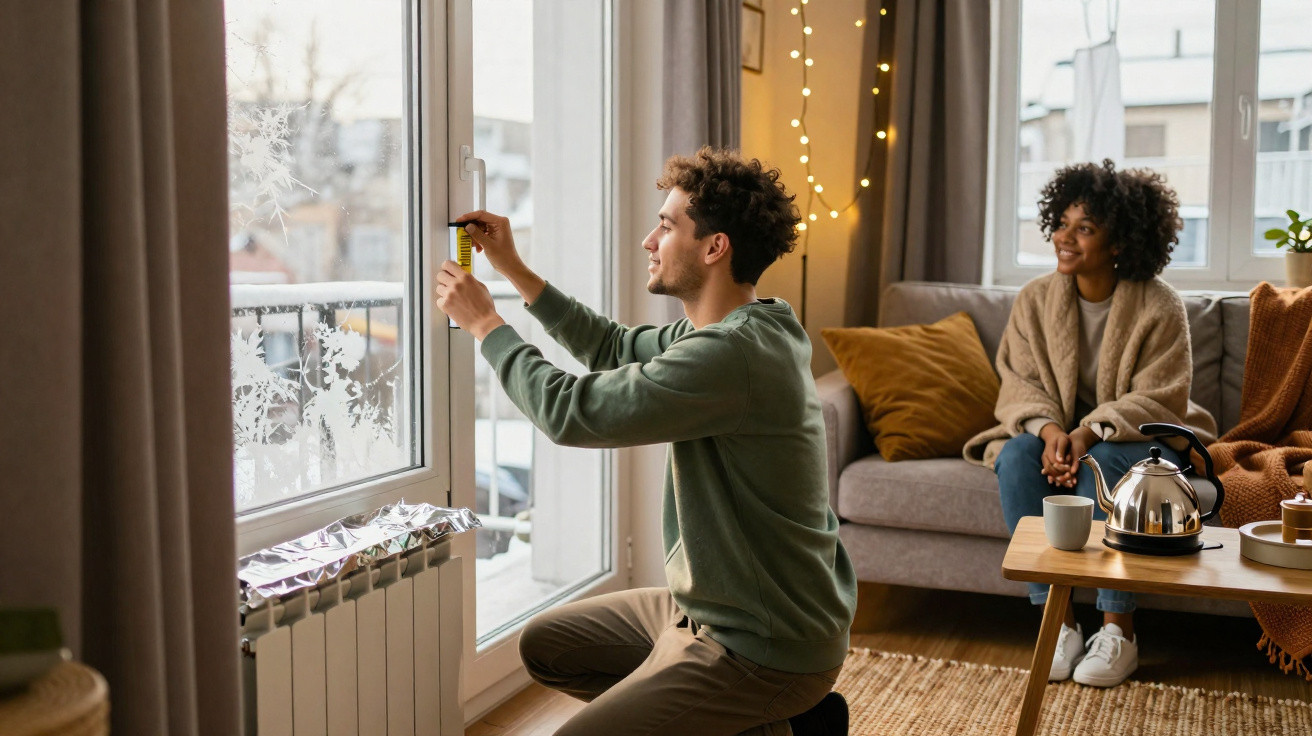
The forecasts for winter 2025 sound doubly uncomfortable for many tenants and homeowners: energy will remain expensive, while countless buildings are still poorly insulated. If you simply turn the heating up, you can end up paying more – and still sitting on the sofa in a jumper. Three straightforward tricks, each based on clear physical principles, can noticeably improve how warm your home feels without sending the bill through the roof.
Why it often feels cold at home even with the heating on
Anyone living in a period flat or a poorly insulated house will recognise the frustration: the radiators are blazing, yet the air still feels draughty, the floor is icy, and the walls seem to radiate cold. The cause is rarely a boiler that is “too weak”, but rather three main routes by which heat escapes:
- Heat conduction: cold seeps indoors through cracks, gaps and thin walls.
- Thermal radiation: radiators don’t just warm the room – they also waste heat warming the external wall.
- Convection (air movement): warm air rises and escapes; cooler air flows in to replace it.
"If you influence these three mechanisms in a targeted way, you can feel two to three degrees more warmth in many rooms – without buying a new heating system."
1. Seal gaps: keep heat in and stop draughts
Research from energy institutes shows that, in an unimproved building, up to 30% of heating heat can be lost through leaky windows, doors and other gaps. Cold outdoor air forms real “cold corridors” that pull warm indoor air outside. The good news is that tackling this often takes surprisingly little money and can be done quickly.
Windows and doors: tiny gaps, big impact
Start with a slow walk around your home on a windy or very cold day. If you run your hand along frames and joints, you can often feel immediately where the draught is coming from. A lit candle works too: if the flame flickers, you’ve found a leak.
- Fit sealing strips: self-adhesive rubber or foam strips on window and door frames stop air movement. A few metres of material per room is often enough.
- Seal the bottom of doors: door seals or simple draught excluders (“door sausages”) stop cold air flowing underneath.
- Check the letterbox slot and roller shutter boxes: these are often major cold bridges and can be closed up with brush seals or cover flaps.
"Just a few pounds spent on sealing strips can mean you can set the heating one or two notches lower – while keeping the same comfort temperature."
Textile “insulation”: curtains and rugs as a comfort boost
Not everyone can install new windows or add insulation. In the meantime, fabrics can act like a fast, soft extra layer of thermal protection.
- Heavy curtains in front of windows create an air pocket and reduce the cold pull from the glass.
- A curtain inside the front door can noticeably cut draughts from the communal stairwell.
- Rugs on cold floors can increase the perceived temperature at floor level by up to two degrees – a huge difference to how chilly it feels.
2. Aluminium foil behind the radiator: reflect radiant heat back into the room
Radiators heat rooms largely through thermal radiation. If the radiator sits against an external wall, a lot of that energy can end up warming the wall instead of you. In poorly insulated buildings, a significant share of heat can be lost this way.
How a simple reflector can help
Metallic surfaces reflect thermal radiation very effectively. That is why aluminium foil can work surprisingly well to bounce heat back from the wall into the room. Specialist authorities cite potential savings of up to 5–10% in heating energy use when radiators are consistently fitted with reflectors.
The effect is particularly strong when:
- the radiator is mounted on an external wall,
- the wall is poorly insulated,
- the radiator is used frequently (living rooms and home offices).
How to make a reflector using household materials
- Cut a piece of sturdy cardboard to the radiator’s width and height.
- Cover the cardboard with aluminium foil, with the shiny side facing outwards. Smooth the foil as flat as possible.
- Place or hang the resulting “mirror” behind the radiator, leaving a small gap to the wall so air can circulate.
You can also buy ready-made reflective panels made from specialist foil or thin rigid foam, which are easier to clean and less visually obvious. For tenants, that can be helpful if a landlord later requires redecoration.
"Important: never stick aluminium foil directly onto very hot surfaces, and do not use it in damp rooms where condensation can build up."
With modern, flat electric heaters and infrared panels, a reflector usually brings little benefit because their design is already optimised for directed radiation. In those cases, it is more worthwhile to focus on correct sizing and controls.
3. A warmer home with body heat, cooking and the kettle
A resting adult gives off around 80 to 100 watts of heat output – similar to a traditional incandescent light bulb. In a small room with several people, you can genuinely notice the difference. Add in the heat from kitchen and household appliances, and there is even more warmth you can use intelligently.
How you use rooms: you stay warmer together
If you live in a large home, it can help to concentrate day-to-day life into one or two main rooms during the coldest months. When everyone works, reads, plays or watches television in the same space, the temperature rises gradually without extra heating.
- If possible, group your desk, dining area and sofa corner in one room when you need to.
- Keep doors to rarely used rooms closed so heat is not spread unnecessarily.
- In heavily used rooms, let the heating run steadily at a moderate setting rather than turning it up and down across the whole home.
Candles can also contribute a little, as long as they burn in sturdy, heat-resistant holders. A tealight only produces a few watts, but several candles in a smaller room can add up to noticeable extra warmth. Safety comes first: never leave them unattended and keep them well away from curtains or paper.
Use energy wisely: why the kettle can act as a heating helper
In many kitchens, the hob still goes on for every mug of tea or pan of pasta water. For those jobs, a modern electric kettle is far more efficient. If you boil only as much water as you actually need, you can cut electricity use in everyday life.
- Use the kettle instead of a saucepan on the hob for tea, coffee and instant soups.
- Do not overfill – every extra litre costs energy.
- Descale as soon as a hard layer forms on the base: limescale acts like insulation and increases the time needed to boil.
You can also use the remaining heat twice over: the still-hot water can go straight into a hot-water bottle, into a bowl for washing up, or into a soup. Alongside the energy saved, you also get a small added boost of warmth and comfort in the home.
The psychology of warmth: light, colours, clothing
Warmth is not only about what the thermometer says, but also about perception. Studies show that people feel more comfortable in rooms lit with warmer tones and often judge the temperature to be higher.
- Warm-white LED bulbs (around 2700 Kelvin) create cosy, “warm” light.
- Textiles in warm colours – cushions, throws, curtains – reinforce that effect visually.
- Several thin layers of clothing insulate better than one thick jumper, because they trap air between the layers.
If you regularly feel cold at home even though the thermostat reads 20 °C, thick socks, slippers and a light gilet often make a bigger difference than you expect. Cold feet in particular can make your whole body feel chilly, even at otherwise moderate room temperatures.
Where you need to be careful
However smart many of these ideas are, a few limits still apply:
- No open flames near fabrics or wood, and no improvised “heater hacks” such as plant pots over tealights.
- Ventilate regularly, especially in well-sealed rooms – otherwise you risk mould and stale air.
- Do not use aluminium foil and reflectors on heating systems where the manufacturer explicitly warns against it.
- Keep an eye on humidity: air that is too dry can feel colder, but air that is too damp increases the risk of mould.
If you combine several of these simple measures – sealing gaps, adding aluminium reflectors behind radiators, using the kettle sensibly, and concentrating activities into fewer rooms – you can raise the perceived temperature in your living space by several degrees. Heating costs often fall at the same time, because you can turn the thermostat down a little without sacrificing comfort.
Comments
No comments yet. Be the first to comment!
Leave a Comment