
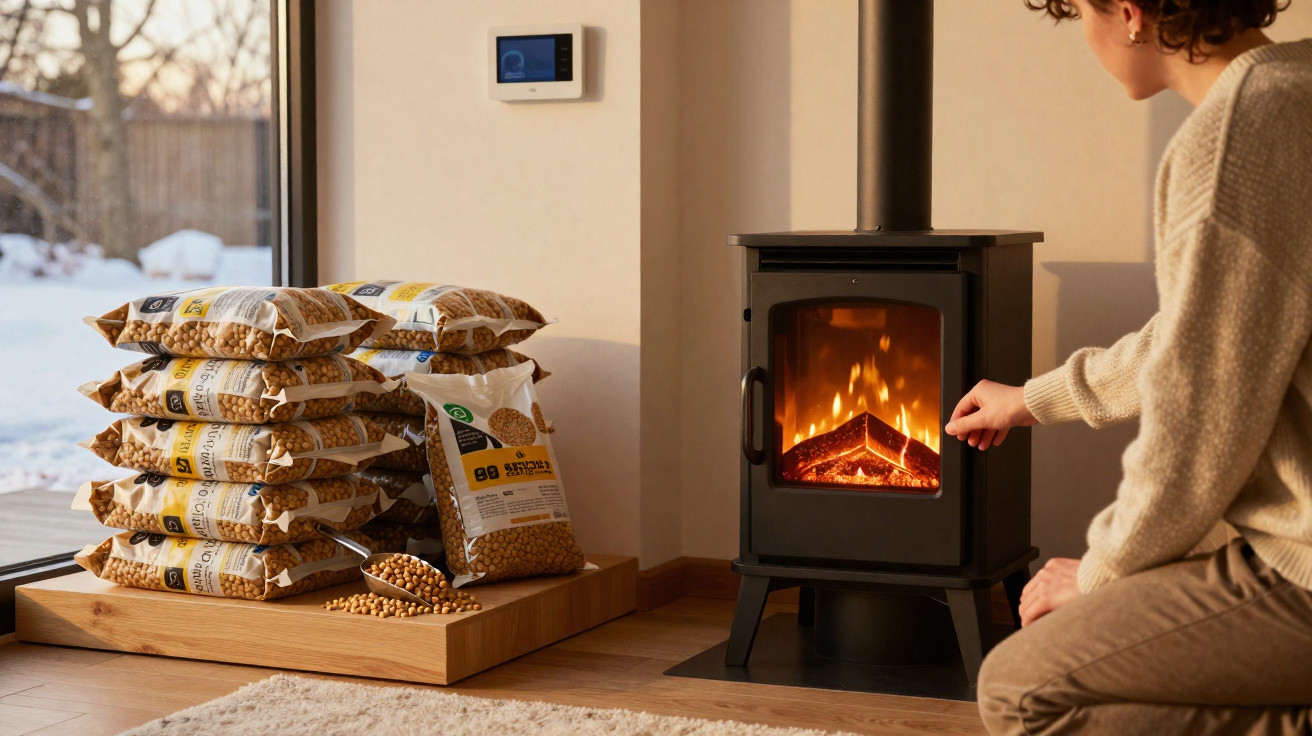
Pellet prices have crept up again this winter, and that once-comforting stack in the garage is suddenly looking worryingly thin.
Bags that used to see you through a week now seem to be gone in four days. The flame is still lovely and the rooms are still warm, but the calculator app feels far less cosy. Plenty of households that moved to pellets to dodge gas or oil costs are now checking delivery sites late at night, hoping the next pallet won’t blow the monthly budget.
At the same time, 2026 is turning into an odd year for energy: jittery markets, fresh rules, and manufacturers selling “premium efficiency” while your own stove is simply… getting on with it. It can feel like you’re stuck between comfort and guilt, warmth and worry. Somewhere between the glow in the lounge and the bank balance, something needs to give - and the biggest shift is rarely where people expect.
Understanding why your pellets disappear faster than you think
Step into a typical living room at 7 p.m. in January 2026 and you’ll recognise the scene repeated across thousands of homes: the pellet stove working hard, children in T‑shirts, and a window cracked open “because it’s too hot”. The bag beside the stove is already half gone, and nobody really clocks it. Warmth is addictive, and pellets can still feel affordable when you look at the price per bag. Yet it’s usually comfort habits - not outdoor temperatures - that decide how many kilos you burn.
On a wet evening near Lyon, one family tracked their pellet use for a full month and were genuinely taken aback by what they found. Their heaviest consumption didn’t line up with the coldest days; it happened on the “easy” days: weekends at home, Netflix marathons, and friends over for dinner. A Belgian energy agency reported the same trend in 2025: households heating above 22 °C used up to 35 % more pellets than those sitting nearer 19–20 °C. The weather app wasn’t to blame - the thermostat and the remote were.
Once you notice this pattern, the conclusion is hard to avoid. A pellet stove won’t challenge you on wasted heat; it just follows the settings you gave it months ago and then forgot about. High power locked in, fan set to maximum, the target temperature nudged “a bit higher, just in case”. Each extra degree above 19–20 °C costs roughly 6–7 % more energy. Stretched across a whole season, that tiny “comfort buffer” becomes several hundred kilos of pellets. In 2026, the real loss isn’t from the bag - it’s from how the flame is being used.
Fine-tuning your stove: small settings, big savings
The most effective first step in 2026 is almost embarrassingly straightforward: move your stove from “default” to “custom”. Begin by dropping the set temperature by 1 °C and stick with it for a full week. Not two degrees, not a drastic overhaul - just one. At the same time, set up a schedule that turns the stove down 30–60 minutes before you leave in the morning and before you go to bed. The house won’t turn icy in that short gap, and you avoid needless overshoot.
Next, review the power setting. Many stoves offer 4–5 stages, yet lots of households sit at 4 purely to warm up quicker. Bring it down to level 2 or 3, allow the stove to run more evenly, and keep an eye on your consumption. People who made this exact change in 2025 often reported burning 10–20 % fewer pellets without feeling colder. The flame becomes steadier, temperatures stop swinging as much, and bags don’t vanish quite so fast. It’s a handful of remote-control presses - not a refurbishment.
Let’s be honest: hardly anyone tweaks settings every day. You’re not going to redo your programme each evening, and you don’t need to. The aim is to dedicate one focused hour once at the start of winter, test a slightly lower temperature and gentler power, then leave it alone. A single round of optimisation can last all season. Those who also adopt simple routines - closing internal doors and lowering shutters at night, for example - often save an extra bag or two per month. Small wins, without turning life into a hardship challenge.
From pellets to house habits: where the real savings hide in 2026
The second major lever doesn’t require touching the stove at all. It’s everything around it.
Start with draughts. On a windy day, walk slowly past windows, doors and even electrical sockets with the back of your hand. Feel a cold stream? That’s warmth - and pellets - leaking out minute after minute. A €10 roll of foam tape or some rubber sealing around the two or three leakiest windows can cut pellet demand more than any “super‑premium” pellet brand.
Most of us also know that sinking feeling when you open the front door and a wave of hard-earned warm air spills outside. Now multiply that by children dashing in and out, deliveries arriving, and pets demanding attention. Hanging a thick curtain behind the main door, adding a draught excluder along the threshold, and agreeing a household rule of “open once, shut quickly” reduces temperature swings. It sounds almost too basic. In reality, it’s structural - because every sharp drop forces the stove to push hard again, and that burns pellets.
Then look at day-to-day heating patterns. Run a two-week experiment: heat by zones. Keep the lounge and kitchen at 19–20 °C, let bedrooms fall to 17 °C, and keep doors closed. Put inexpensive standalone thermometers in each area. You’ll quickly spot where the heat is bleeding away. Many people find that one uninsulated stairwell or corridor is effectively “drinking” their warmth. Blocking it off with a door, a thick curtain or even a simple sliding panel can feel almost comically easy, yet it may cut winter use by 10–15 %.
Practical moves you can adopt now to cut pellets in 2026
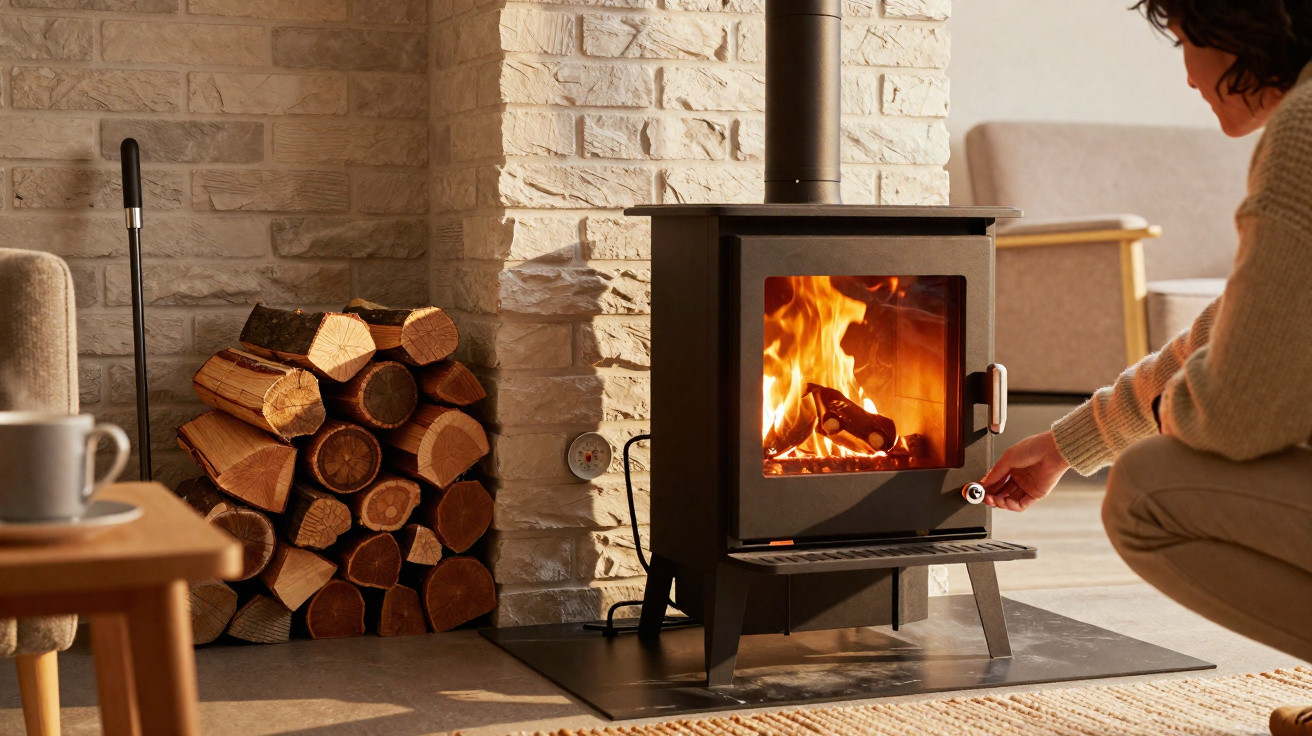
If you want a tangible task for this week, start with the glass and the ash. When the stove glass gets grimy, combustion is less complete and efficiency drops. Give it a gentle clean once a week when the stove is cold. Empty the burn pot and vacuum the ash pan before it overfills. With the same pellet dose, you’ll get a hotter, cleaner burn. Many technicians say they can tell a neglected stove instantly: slow, languid flames and soot-blackened glass.
After that, consider the pellets themselves. In 2026, it’s very tempting to grab the cheapest bags on promotion - prices sting, no question. Even so, poorer pellets with higher moisture and more dust can make the stove feed more often to produce the same heat. Try one pallet from a dependable brand with low ash content, then compare how many bags you use over a similar spell of weather. Sometimes the “pricier” option works out cheaper per kWh because you burn fewer kilos overall.
And don’t overlook the oldest comfort rule there is: dress for winter. Thicker socks and a jumper make 19 °C feel perfectly liveable. A warm throw on the sofa does more for your mood than cranking the dial up by 2 degrees. Heat your body, not the staircase. Focus on the rooms you actually occupy: shut the door, draw the curtain, put a rug over cold floors. These aren’t dramatic eco-performances - they’re simply sensible ways to spend less on something you can’t see: air at 22 °C that nobody truly needs.
“We didn’t change our stove, just the way we lived around it,” explains Marc, 47, who cut his pellet use by almost a third in winter 2025–2026. “Once we lowered the target temperature, fixed two drafty windows, and stopped heating empty rooms, the bags suddenly lasted.”
- Set aside a single “energy hour” at the start of the season to programme schedules and check seals.
- Keep a simple notebook or app record of bags used versus outdoor temperature for one month.
- Book a professional stove service every two years to recalibrate airflow and pellet feed.
Rethinking comfort: from consumption anxiety to smart warmth
By 2026, nearly everyone with a pellet stove has felt that moment of doubt while hauling yet another 15 kg bag. You start counting what’s left on the pallet, how many weeks until the next order, and whether prices will jump again. Beneath that pressure sits a more personal question: how warm do you actually want to live - and what’s the mental price of maintaining it? Shifting a few numbers on the thermostat is easy. Resetting your relationship with comfort takes longer, but it runs deeper.
The households that handle this change best don’t fixate on every handful of pellets. Instead, they create a routine: one hour of serious set-up before the cold arrives, a quick weekly cleaning habit, an agreement at home about sensible temperatures, and a short review in spring. Nothing extreme. Just a quiet move from “we suffer the bills” to “we manage our warmth”. The stove stops feeling like a hungry creature and becomes a tool you control.
It can also help more than you’d expect to swap tips with neighbours and compare real numbers rather than vague impressions. You’ll often find your frustrations are shared, and that other families have come up with clever solutions for old doors, leaky windows, or draughty staircases. The pellet market in 2026 may remain unpredictable. Your habits don’t need to be. With a few deliberate choices, each bag becomes an intentional decision instead of a background worry - and that, more than any smart gadget, is what changes how winter feels.
| Key point | Details | Why it matters to readers |
|---|---|---|
| Lower your set temperature by 1–2 °C | Most homes can move from 21–22 °C down to 19–20 °C over a week. Combine this with warmer clothing and throws on the sofa so the change feels natural, not punishing. | Each degree cut often saves 6–7 % of energy. Over a full season, that can mean several bags of pellets less, without sacrificing comfort. |
| Run the stove on lower, steady power | Instead of using maximum power for fast heat, set the stove to level 2 or 3 and let it run longer. Adjust fan speed so the room warms gently and stays stable. | Steady operation improves combustion efficiency and reduces on/off cycles, which are pellet‑hungry. Many users see 10–20 % savings from this alone. |
| Fix the worst draughts first | Identify leaky windows and doors with your hand or a candle flame on a windy day. Seal them with foam tape, door brushes, and a thick curtain where needed. | Stopping uncontrolled air leaks keeps warmth inside, so the stove doesn’t have to “chase” a falling temperature all day with extra pellets. |
| Choose consistent, low‑ash pellets | Look for pellets with moisture under ~10 % and low ash content, even if they cost slightly more per bag. Avoid dusty, crumbling pellets that clog the burn pot. | Better pellets burn hotter and cleaner, meaning fewer kilos for the same heat and less frequent cleaning, which also protects your stove. |
FAQ
How many bags of pellets should a “normal” house use in a winter? There’s no single “normal” figure, because it depends on insulation, surface area, climate, and how warm you like to live. A reasonably insulated 90–110 m² home in a mild to moderate climate might burn 80–150 bags per season, while a larger or poorly insulated house can double that. The most honest benchmark is your own last two winters: aim to reduce your pellet use by 10–20 % with better settings and small home upgrades, rather than chasing generic averages.
Is it really worth paying more for premium pellets in 2026? In many cases, yes, but only if the difference in quality is real, not just marketing. Higher‑grade pellets usually have less moisture and ash, which means cleaner combustion and more heat per kilo. If a slightly pricier pellet lets you burn, say, 10 % less over the season, the maths can work in your favour. Try alternating pallets and keep a simple log of bags used and how often you need to clean the stove to see what actually works in your home.
How often should I clean my pellet stove to keep consumption low? A light weekly routine is usually enough: empty the burn pot, vacuum visible ash, and wipe the glass when the stove is cold. A deeper cleaning of internal passages and the flue is best done at least once a year by a professional. Neglecting maintenance leads to poorer combustion, more soot, and a stove that has to feed more pellets to reach the same temperature, so a little regular care pays you back in saved bags.
Can smart thermostats really reduce pellet consumption? Smart controls help if they match your actual life, not an ideal schedule. Programming realistic set‑backs when you’re at work or asleep and avoiding constant manual overrides can reduce waste. The biggest gains usually come from simply not heating at full power when no one is home and from avoiding big temperature swings. Tech is useful, but it works best combined with basic measures like closing doors and sealing draughts.
What’s the quickest win if I can only change one thing this winter? For most people, it’s lowering the set temperature by 1 °C and closing internal doors to zone the house. That single move cuts demand immediately without any spending. Pair it with a short “energy hour” to set up a proper heating schedule, and you’ll likely see fewer empty bags stacked in the garage by the end of the month.



Comments
No comments yet. Be the first to comment!
Leave a Comment