
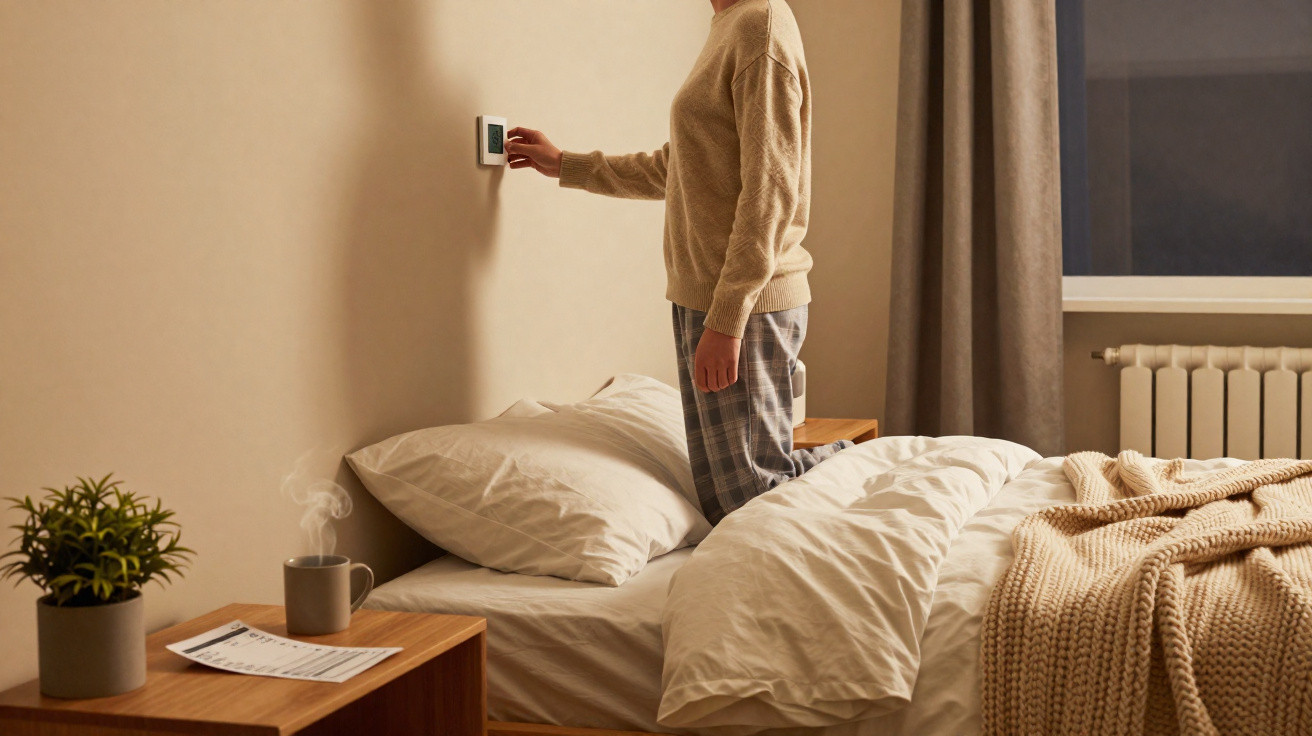
It is not quite that straightforward.
As soon as the nights become a little milder, the same question crops up in countless homes: should you simply turn the thermostats down and pocket the savings - or could that decision end up causing more harm than good? Specialists in energy and building services urge caution. They set out when switching off makes sense, when it can actually cost you more, and why a measured temperature drop is often the better option.
Why heating has such a big impact on your bills
In residential buildings, heating accounts for the largest share of energy use. In a typical household, around 60 to 75 percent of total energy costs are spent on space heating alone. That is why even small tweaks can make a noticeable difference.
"As a rule of thumb: if you lower the average room temperature by one degree, your heating bill drops by roughly seven percent."
It is easy to assume: if one degree saves money, then turning the heating off overnight must save even more. In reality, the outcome depends heavily on two factors:
- how well the building is insulated
- which heating system you have
If you ignore those points and shut every radiator down completely, you may find the system uses significantly more energy in the morning than it would with a continuous but reduced setting.
Turning the heating off completely at night: where the ‘saving’ idea falls apart
On paper, it sounds convincing: eight hours with no heat output should mean eight hours of lower costs. In practice, a poorly insulated house - or a flat with inadequate insulation - can lose warmth to the cold outside air very quickly.
The result is a major overnight drop in indoor temperature. Rather than falling from 20 to 17 degrees, it might sink to 14 or 15 degrees. That is not just uncomfortable - it also forces the heating to run hard to recover.
"High output over a short period often pushes consumption up more than a slightly reduced, steady setting across the whole night."
This effect is particularly noticeable with:
- Gas and oil heating systems with a lot of inertia: bringing them back up to temperature can use more energy than keeping a lower but stable flow temperature.
- older boilers that do not modulate and always start at full power.
- buildings with old windows and uninsulated external walls, where stored heat escapes rapidly.
In these situations, a drastic overnight switch-off can even increase the annual bill - despite the feeling of being especially “thrifty”.
Why professionals usually recommend lowering the temperature rather than switching off
In most cases, energy advisers suggest a planned night-time setback instead of letting temperatures plunge. For bedrooms, 16 to 17 degrees is commonly seen as a sensible guideline. In living areas, 17 to 18 degrees overnight is often sufficient if nobody is sitting there for long.
"The combination of a slightly cooler indoor climate and a stable baseline temperature saves energy without putting comfort or the building fabric under strain."
This approach pays off in three main ways:
- In the morning, the heating is not starting from a “cold hole”, so it needs less power to get back to comfort levels.
- Temperatures across the building stay more even, which often feels more comfortable.
- Moist indoor air is less likely to condense on cold walls, reducing the risk of mould.
Many modern heating systems include dedicated night programmes or time controls. If you use radiator thermostats with timers, or smart thermostats, you can automate the overnight setback rather than adjusting the dial every evening.
When switching off completely can genuinely be worthwhile
Despite the cautions, there are scenarios where turning the heating off entirely is reasonable. What matters is how slowly the building cools down and how efficiently warmth can be restored.
Well-insulated homes with modern technology
In very well-insulated new builds - for example, with a heat pump, underfloor heating and triple-glazed windows - indoor temperatures often fall by only one to two degrees over a few hours even if the system is off. In those homes, you can reduce heating much more overnight without creating big morning demand spikes.
Even then, professionals usually talk about “a strong setback” rather than a hard switch-off. Controls typically lower the flow temperature and output instead of taking the system completely out of operation.
Longer absences rather than just one night
If residents are away for several days, a much lower setting - or a temporary shutdown - can be more worthwhile. The savings are greater because losses are spread over many hours, and the extra heat needed on the day you return is put into perspective.
Even so, a minimum temperature of around 14 to 15 degrees remains important to prevent pipes freezing, to stop furniture absorbing moisture, and to avoid mould - especially on external walls and in room corners.
At what point in the year can the heating stay off entirely?
In spring, the question of night-time setback often blends into another: when can the system switch fully to summer mode? Many households turn heating off around mid-April, once daytime outdoor temperatures settle at about 19 degrees and nights no longer drop well below that.
The best timing varies greatly by location:
- In milder areas, or in built-up urban settings, an earlier switch-off date is often fine.
- In higher ground, valleys where cold air pools, or the windy north, nights can stay noticeably chilly for longer.
People generally make the better call by paying attention to how the home actually feels, rather than relying on calendar dates alone. A quick check of the weather forecast can help you spot any cold snaps.
How the right temperature affects sleep and health
Saving money is one side of the equation; feeling well is the other. Sleep researchers have long recommended keeping bedrooms on the cooler side. Many people sleep better at 16 to 18 degrees than at 21 degrees, because the body naturally lowers its core temperature slightly overnight.
"A slightly cooler - but not icy - sleeping environment supports more restorative sleep, while also easing heating costs."
It is also important not to dry the air out too much. Rooms that are overheated for long periods can dry the mucous membranes, which can encourage colds and irritation. Those who reduce heating sensibly, ventilate properly and maintain a basic level of humidity usually find a good middle ground.
Practical day-to-day tips for thermostats and heating
A lot of the most effective adjustments are directly in residents’ hands. A few simple steps can deliver quick results:
- At night, lower thermostats by two to three notches rather than turning them fully off.
- Do not block radiators with furniture or curtains, so heat can circulate freely.
- Ventilate by opening windows wide for short bursts several times, instead of leaving windows on the latch for hours - especially during the heating season.
- In rooms you do not use, set a lower but steady baseline temperature.
- Check regularly whether your chosen set point matches the actual room temperature.
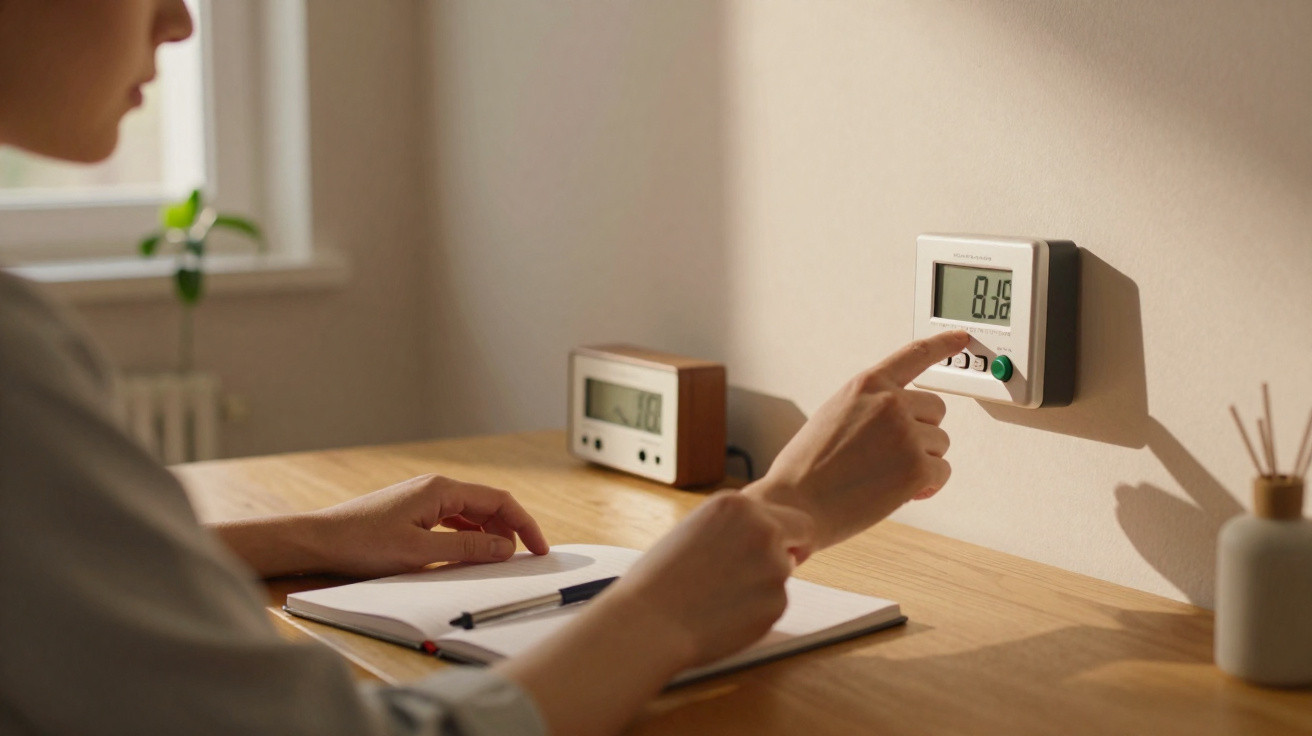
If you are unsure, use a simple room thermometer and test different settings for a week or two to find the best balance between comfort and savings.
Why insulation and heating technology determine the saving potential
Many family arguments about heating being “too cold” or “too expensive” come down to how the property is built. In older homes with thin external walls, ageing windows and draughty gaps, any temperature reduction has a much stronger effect. Rooms cool down quickly, and cold wall surfaces can feel unpleasant.
In renovated, well-insulated buildings, warmth stays inside for much longer. There, setback periods can be more generous without making the space feel uncomfortable. The heating system itself also matters: modern condensing boilers, heat pumps and smart controls tend to run more efficiently when conditions remain as steady as possible, rather than repeatedly switching hard on and off.
For the long term, it is therefore worth looking at insulation, window quality and the system’s control technology. Each upgrade increases your options for night-time setback - and reduces the bill permanently.



Comments
No comments yet. Be the first to comment!
Leave a Comment