
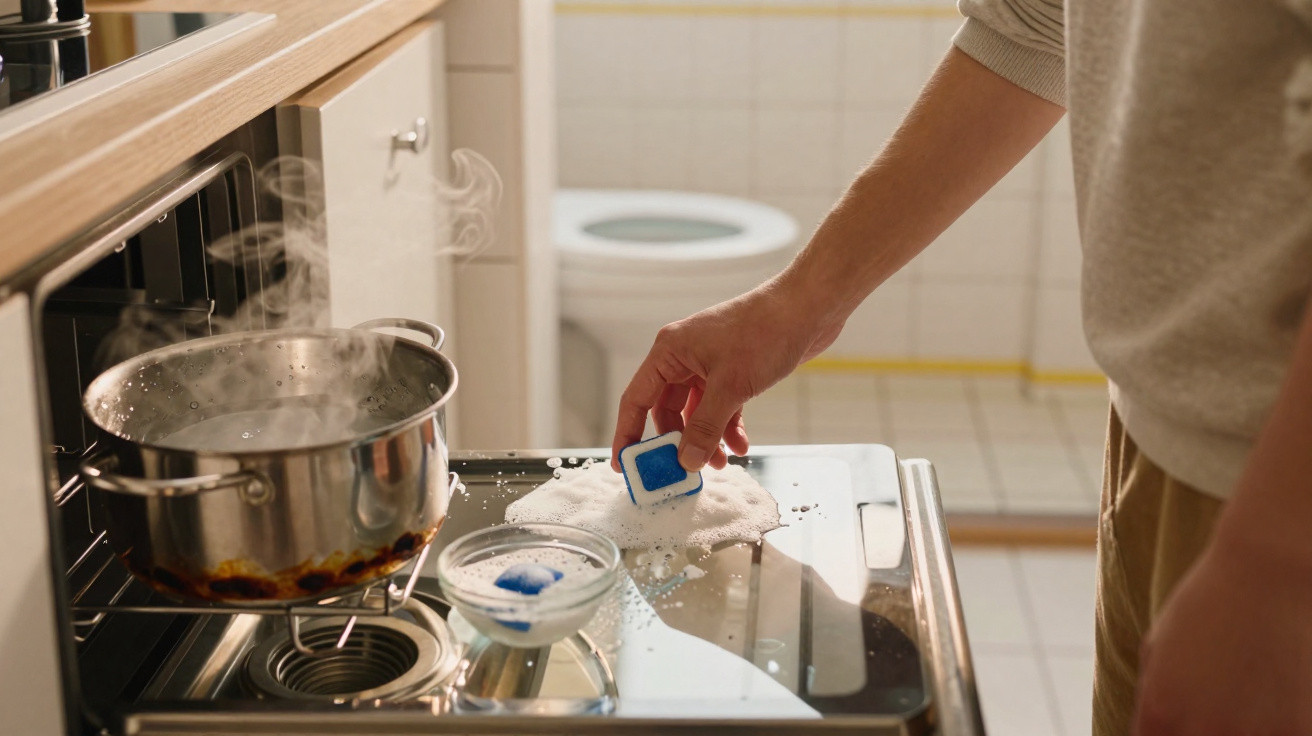
A dishwasher tablet often sits in a kitchen cupboard and is only taken out when it is time to run a cycle. However, this concentrated tablet contains cleaning agents that can loosen stubborn grime in several areas of the home. It must be used carefully, as its formula is far more powerful than ordinary washing-up liquid.
Why this dishwasher tablet works on so many types of dirt
A tablet designed for a dishwasher usually delivers several effects at once. Its ingredients break down grease, reduce limescale build-up and neutralise certain unpleasant smells. When exposed to hot water, it gradually breaks apart, releasing these cleaning agents.
This is why it can be useful on cooking marks, soap residue and grime that has accumulated over time. It is not intended to replace every everyday household cleaner. Instead, it can be a useful backup for areas that are difficult to restore with a sponge and a little washing-up liquid.
Heat remains the key ally of this method: it helps dissolve the tablet and soften deposits before the sponge is used.
Before trying it, it is best to put on household gloves. The formula may irritate the skin, particularly with prolonged use. It must also not be combined with another cleaning product, especially a chlorine-based cleaner. Mixing household products can release irritating fumes or damage a surface.
The oven: an effective target for baked-on grease
Splashes from meat, gratins or sauces eventually create a dark film on oven walls. The inner glass quickly becomes cloudy, while the baking tray develops a sticky layer of grease. A dishwasher tablet can make cleaning easier when used gently.
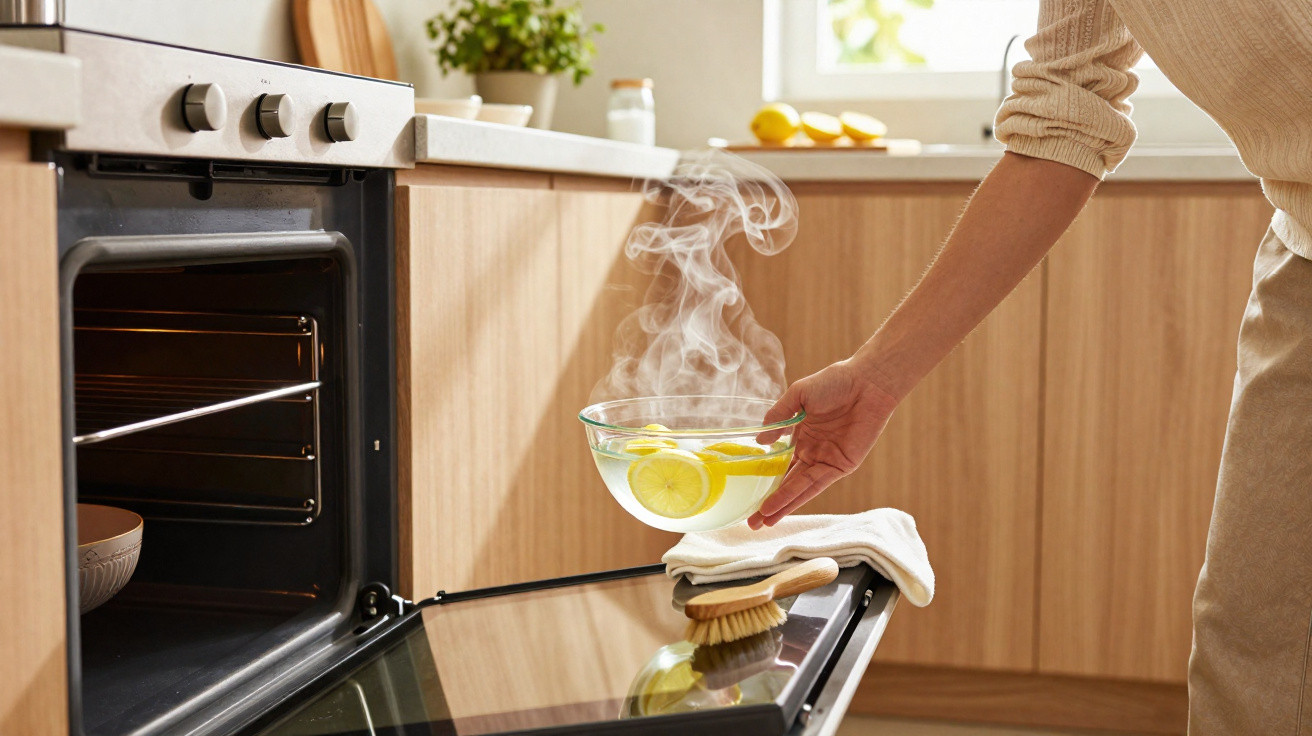
Put a heatproof container filled with very hot water into an oven that is only warm. Add one tablet, then close the door for around ten minutes. The steam dampens the residue while the cleaning agents begin to work. Once the oven has cooled, wipe the walls with a damp sponge.
For the glass, use a soft cloth lightly moistened with the cooled solution. Rinse it several times with clean water. No residue should be left inside an appliance used to cook food.
Precautions when cleaning the oven
- Never pour the solution over a heating element or electrical component.
- Do not use metal scrapers on the glass or enamelled surfaces.
- Rinse the baking tray thoroughly before using it again.
- Wait until the appliance is cold before cleaning into corners and crevices.
Burnt saucepans are easier to clean at the base
A saucepan left on the hob can rapidly become a difficult cleaning job. Burnt food sticks to the bottom and can sometimes withstand several washes. In this situation, fill the pan with very hot water, add a tablet and leave it to work for at least one hour.
After soaking, burnt layers will often lift more easily. A wooden spatula or non-abrasive sponge is then enough to remove any remaining residue. This method is mainly suitable for stainless steel and enamel, provided they are rinsed generously.
On a non-stick coating, soaking should be limited and rubbing must be extremely gentle to avoid weakening the surface.
Bare aluminium requires particular care. Some alkaline ingredients can dull or damage it. It is preferable not to use this tip on that material, unless the manufacturer permits it and a discreet test has first been carried out.
The toilet bowl: treating the waterline
A yellowish or greyish line can sometimes form at the water level in a toilet bowl. It is often caused by limescale, made worse by everyday deposits. Placing a dishwasher tablet in the bowl may help soften this mark.
Allow it to dissolve for around thirty minutes, brush the stained areas and flush. Keep the room ventilated during the process and wash your hands after handling it. This option is not a replacement for an appropriate treatment where limescale is heavily embedded, but it can help maintain the bowl regularly.
Kitchen drains when unpleasant odours rise up
The sink collects food remnants, grease and washing-up liquid residue. Over time, the trap can give off an unpleasant smell even when there is no complete blockage. A dishwasher tablet dissolved with hot water can help clean this area lightly.
Place it in the plughole, wait a few minutes, then slowly pour in about two litres of very hot water. The water should not be poured in forcefully, to prevent splashing. This routine can be used occasionally while the drain is still flowing freely.
If there is a blockage, this process will not be enough. When water barely drains, taking apart and cleaning the trap is often the most direct solution. A plunger may also help before turning to harsh drain-unblocking products.
Tile grout, often overlooked in the bathroom
Grout darkens because of moisture, soap residue and sometimes surface mould. A tablet diluted in a small amount of hot water creates a cleaning mixture that can be applied with an old toothbrush.
Work on small sections, leave it for a few minutes, brush without scrubbing too hard, then rinse. A second application may be needed if the marks are old. The outcome also depends on the condition of the grout: cracked or porous material will not always return to its original appearance.
Three habits that slow down darkening
- Rinse the walls after showering to remove soap and shampoo.
- Dry the dampest corners using a squeegee or towel.
- Open the window or switch on ventilation after every shower.
Bicarbonate of soda can make the mixture slightly thicker for vertical grout lines, but it must not be mixed with just any product. One tablet with hot water is often sufficient. After cleaning, thorough rinsing prevents residue from remaining in the gaps.
A dishwasher tablet is therefore an occasional aid when baked-on grease, limescale or odours withstand normal cleaning routines. The right approach is to respect the materials, never mix products, and rinse every surface that comes into contact with hands, crockery or food.


Comments
No comments yet. Be the first to comment!
Leave a Comment