
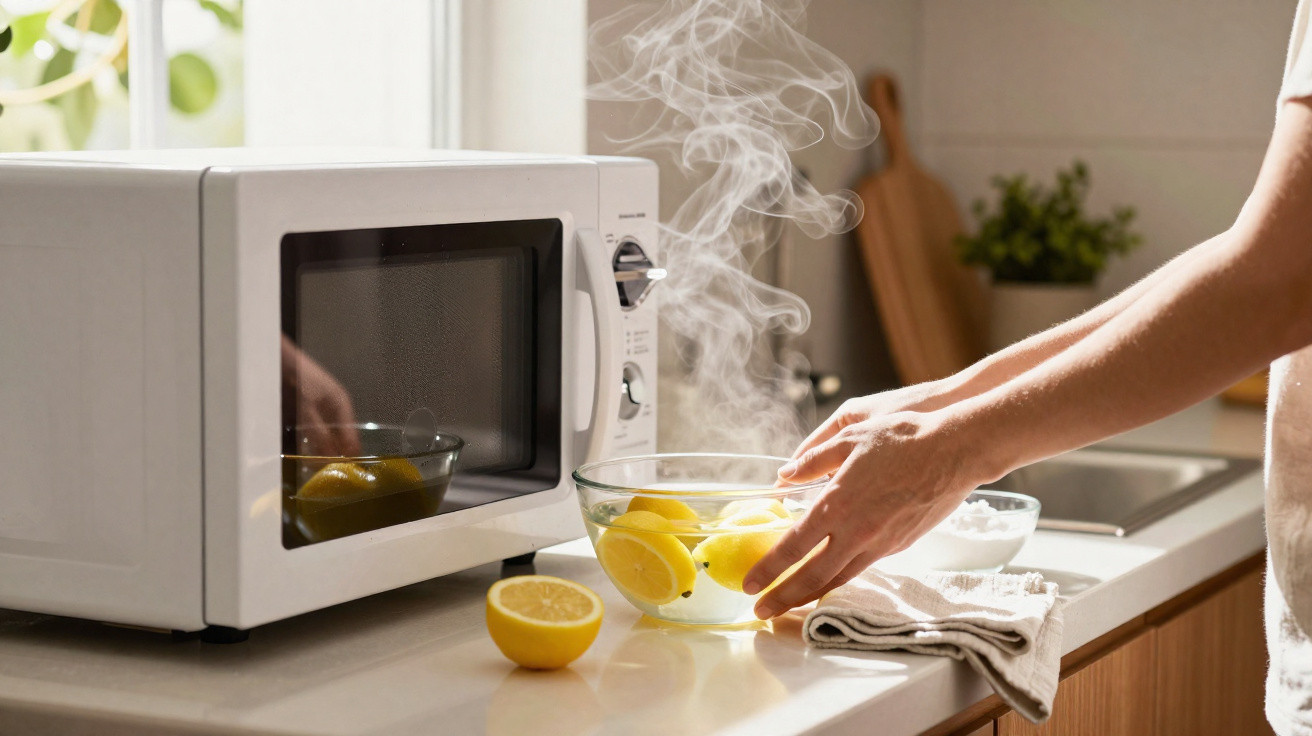
All it takes is an overflowing soup or a meal reheated a little too quickly for the microwave to look worn out: splashes on the walls, a lingering smell and a small ring of dried sauce on the turntable. We all know the moment when we close the door, telling ourselves we will deal with it tomorrow. Then tomorrow turns into the following week. Yet with a lemon, a bowl of water and five minutes to spare, the inside can become remarkably clean again, without scrubbing as though you were tackling a burnt saucepan. The fresh scent released when you open the door is almost a reward in itself. And the most surprising part is still to come.
The lemon heats up and dirt comes away
A dirty microwave often makes it seem as though you will need gloves, an abrasive sponge and a strongly scented cleaning product. In fact, the most common marks are not permanently stuck on: repeated reheating has mainly dried them out. Hot water vapour softens them, while the lemon leaves the appliance smelling fresher. This small, invisible but highly effective cloud of moisture does the work for you. It is a simple, almost reassuring method for evenings when you have neither the time nor the inclination to clean.
In a family kitchen, the scene is familiar: tomato sauce has splattered across the back wall, milk has left white marks near the door, and the turntable spins with a few crumbs stuck beneath it. After three minutes of heating a bowl of lemon water, followed by two minutes with the door closed, a quick wipe with a cloth is often enough. The marks lift away without much resistance, as though they never truly intended to stay. Even fish or spicy-food smells become less noticeable.
The explanation is very straightforward. As it heats, the water creates steam that settles on the cooler surfaces of the microwave; this moisture works into food residue and softens it. Lemon does not replace a professional degreaser when faced with a long-standing layer of grease, but its mild acidity helps freshen the whole appliance. Let us be honest: nobody really does this every day. A small routine after a kitchen mishap mainly prevents these stains from becoming a Sunday chore.
The five-minute microwave method, with no cleaning products
Start by pouring around 200 to 250 millilitres of water into a microwave-safe bowl. Cut a lemon in half, squeeze a little juice into the water, then place both halves in the bowl: heat on high for three minutes, then leave the door shut for a further two minutes. This gives the steam time to travel everywhere, including the corners that a sponge struggles to reach. Carefully remove the bowl, as it will be hot, then wipe the walls, door and turntable with a damp microfibre cloth.
The most common mistake is running the microwave for too long with too little water. In a rush, it is easy to forget the bowl, and the water can reduce far too much. It is better to stick to these few minutes and keep an eye on the appliance, particularly if it is old or especially powerful. Also avoid scouring sponges, as they may damage some interior coatings. If a mark remains, repeat a short cycle rather than scrubbing angrily. The right approach is the one that cleans without causing damage.
This routine works even better if you remove the turntable and wash it separately in hot, soapy water, then gently wipe the door seal. An old kitchen saying neatly captures the spirit of the method.
“When steam does the work, hands have less to fight against.”
- Use a glass or ceramic bowl, never a metal container.
- Add an extra slice of lemon if the smells are particularly strong.
- Wipe the microwave ceiling too: this is often where splatters go unnoticed.
A small habit that changes the feel of the kitchen
Cleaning your microwave with a lemon is hardly a domestic revolution, and that may be exactly why the tip is so pleasing. It fits into everyday life: between meals, before starting dinner, or just after noticing that a child has reheated hot chocolate without a cover. Five minutes is not much, but it avoids that slightly embarrassing feeling when a guest opens the door to warm up their coffee. A clean kitchen does not mean a perfect kitchen; it simply shows that people live there, eat there and enjoy returning to it.
This technique can also become a reflex after particularly messy dishes: gratin, soup, mashed potato, Bolognese sauce or vegetables in sauce. Lemon adds a subtle freshness without filling the room with a chemical fragrance. If a smell remains after cleaning, leave the door slightly ajar for a few minutes to let air circulate. Some people add a few drops of vinegar to the water, but lemon alone is enough for routine maintenance. The aim is not to turn cleaning into a ceremony, only to make the task less unpleasant.
There is something satisfying about seeing an everyday appliance look clean again without a complicated arsenal of products. The lemon already sitting in the fruit bowl suddenly has another purpose, and the bowl of hot water is a reminder that the most practical solutions are often the least sophisticated. You can even pass this habit on at home: whoever caused the splashes starts the lemon bowl before coming to the table. It is not a strict rule, just a small habit that makes daily life easier. And everyone probably has their own tip for making that fresh feeling last.
| Key point | Detail | Added value for the reader |
|---|---|---|
| The lemon and water pairing | A bowl of water with lemon juice and pieces of lemon creates scented steam. | Clean without using multiple cleaning products. |
| The right timing | Three minutes of heating, then two minutes of resting with the door closed. | Residue softens and wipes away more easily. |
| The final step | Wipe the walls, ceiling, door and turntable with a soft cloth. | A cleaner microwave, without scratches or lingering odours. |


Comments
No comments yet. Be the first to comment!
Leave a Comment