
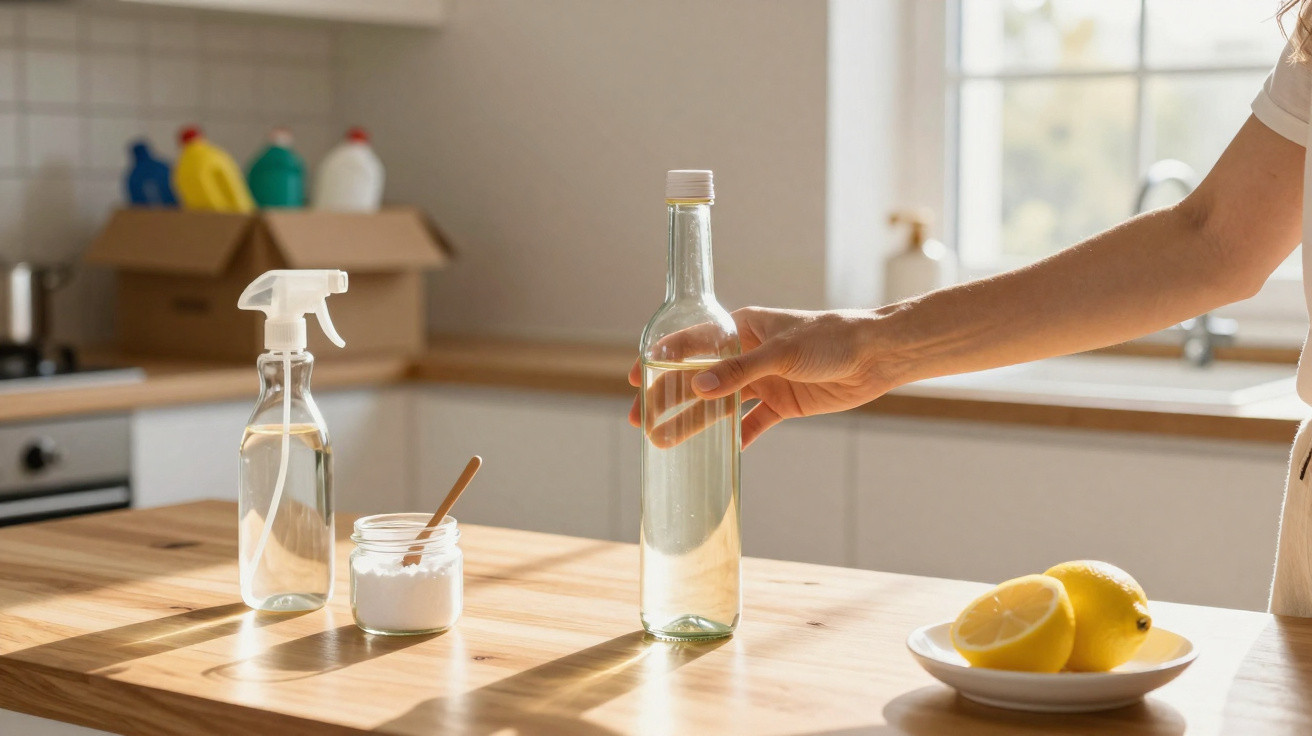
The bottle was sitting there, wedged behind the sponge and an almost empty washing-up liquid bottle. It was ordinary white vinegar, bought without much thought for less than £2. That morning, after spending ages scrubbing a shower screen clouded with limescale using an expensive spray, trying something else finally seemed worthwhile. Within minutes, the glass had regained a clarity that had seemed lost, while the tap was gleaming again-without artificial fragrance or dramatic foam. We all know the moment when we wonder why we have collected so many products beneath the sink. White vinegar is not a miracle solution for everything, but it remains one of the home’s simplest, most effective and most economical cleaners. It certainly deserves better than being left at the back of a cupboard.
White vinegar: the understated household champion we overlook
In many kitchens, white vinegar is mainly linked with salad dressings, preserving jars or an old-fashioned tip from a grandparent. Yet its sharp smell conceals a genuine ability to break down limescale marks, soap deposits and some greasy dirt. The change can be noticeable after the first wipe on a bathroom tap: dull marks disappear, the metal regains its shine and there is no need to add yet another plastic bottle to the cleaning supplies. Its effectiveness comes down to its acidity. It works on the mineral deposits left behind by water, particularly in hard-water areas.
The kettle is often where the most convincing test takes place. When a white film builds up on the base, many people assume they need a dedicated descaling product, although a mix of water and vinegar will usually do the job. Use half white vinegar and half water, heat it without boiling it for too long, then leave it to work for around 30 minutes before rinsing several times. The residue lifts away in one go. A one-litre bottle often costs between 50p and £1.50, whereas some targeted sprays can easily cost more than £4 or £5.
There is nothing magical about this result. Limescale consists mainly of calcium carbonate, which reacts when it comes into contact with a mild acid such as vinegar. Commercial products marketed for showers, taps or toilets frequently rely on the same principle, but with added fragrance, colourants and more elaborate packaging. White vinegar is not necessarily “better” for every purpose, but it can do the same job with far less fuss. Sometimes, that is precisely what a home needs.
The white vinegar cleaning habits that make a real difference
To clean a shower screen, pour slightly warmed white vinegar into a spray bottle and apply it to the marked areas. Leave it for 10 to 20 minutes, rub gently with a non-abrasive sponge, then rinse with clean water. Finish with a microfibre cloth to avoid streaks. For seals, place a piece of kitchen roll soaked in vinegar over the area for a few minutes before cleaning. This is especially handy after a week of quick showers, when nobody has had time to dry the surfaces. Let’s be honest: hardly anyone really does that every day.
Even so, it is important not to use it indiscriminately. White vinegar is acidic, so it is unsuitable for marble, natural stone, certain delicate seals and waxed surfaces. Repeated use at too strong a concentration can also gradually damage rubber components. It is wiser to test it on an inconspicuous spot first, particularly on a worktop or an antique piece of furniture. Many disappointments result from using a product incorrectly, rather than from a lack of cleaning power. Gentle, regular cleaning is often preferable to a heavy-duty session every six months.
Another common mistake is mixing vinegar with any available product in an attempt to “boost” its performance. Never combine it with bleach: doing so can release dangerous gases. Keep that rule in mind, even on the days when cleaning has to be squeezed in between appointments.
“A good household cleaner is one you understand well enough to know when not to use it too.”
- Use it undiluted on heavily built-up limescale, with care.
- Dilute it with water for everyday surfaces.
- Always rinse items that come into contact with food.
- Avoid marble, granite, natural stone and bleach.
Fewer bottles and more common sense at home
The real appeal of white vinegar goes beyond everyday cleaning alone. It encourages us to look differently at the cupboard full of sprays making highly specific promises: one for glass, one for toilets, one for stainless steel and one for soap marks. Cutting down this small arsenal does not mean accepting a less clean home. Above all, it can make cleaning routines clearer, cheaper and quicker. One well-chosen product can tackle many ordinary problems, from shower heads and dull windows to the washing-machine drawer.
At a time when packaging quickly piles up, this habit may seem almost unremarkable-and that is its strength. White vinegar will not replace a suitable disinfectant when one is required, nor a specialist product for a delicate material. It offers something different: a practical option for routine maintenance, without turning every mark into a complicated task. Perhaps the next bottle lingering beside the sink deserves a second look. And in your home, which modest product has already rescued a chore you had put off for weeks?
| Key point | Detail | Added value for the reader |
|---|---|---|
| Anti-limescale action | White vinegar effectively dissolves many mineral deposits. | Cleaner taps, glass and appliances at a low cost. |
| Sensible use | It is suitable for compatible surfaces, but not for marble or natural stone. | Avoid unpleasant surprises and protect delicate materials. |
| Economical alternative | One inexpensive bottle can replace several specialist sprays. | Fewer purchases, less plastic and a simpler routine. |

Comments
No comments yet. Be the first to comment!
Leave a Comment