
It is 10.40 pm, the house is almost asleep, and the bedroom door chooses that exact moment to let out its long, dramatic “eeeeek”. We all know the sound: it appears when you return from the shops, during a child’s nap or just before an important call. You open the door by three centimetres, hold your breath and hope… but nothing changes. The good news is that a squeaky door does not necessarily point to a major fault or mean a weekend of DIY lies ahead. In many cases, two minutes, something from a drawer and a careful movement are all that is needed. Quiet can return far sooner than you might think.
Why a door starts squeaking without warning
A squeak nearly always comes from dry friction in the hinges: those small metal parts that go unnoticed until they begin to complain. Each time the door opens, the pin turns inside its housing; once the thin coating that helped it move smoothly has worn away, metal rubs against metal and the noise begins.
It is not always caused by an old door. A new door can start squeaking after only a few months, particularly in a damp room such as a bathroom or utility room. Moisture-laden air, dust and tiny bits of debris find their way into the hinges, turning an ordinary movement into a squeaking concert.
It is easy to assume that the door itself is at fault, when the issue may be limited to an area no bigger than a fingernail. Watch it open slowly: if the sound begins within the first centimetre, the top hinge is often the likely culprit; if it happens halfway through, the lower hinge also deserves attention. This quick check stops you treating everything at random.
The quick method: the right product in the right place
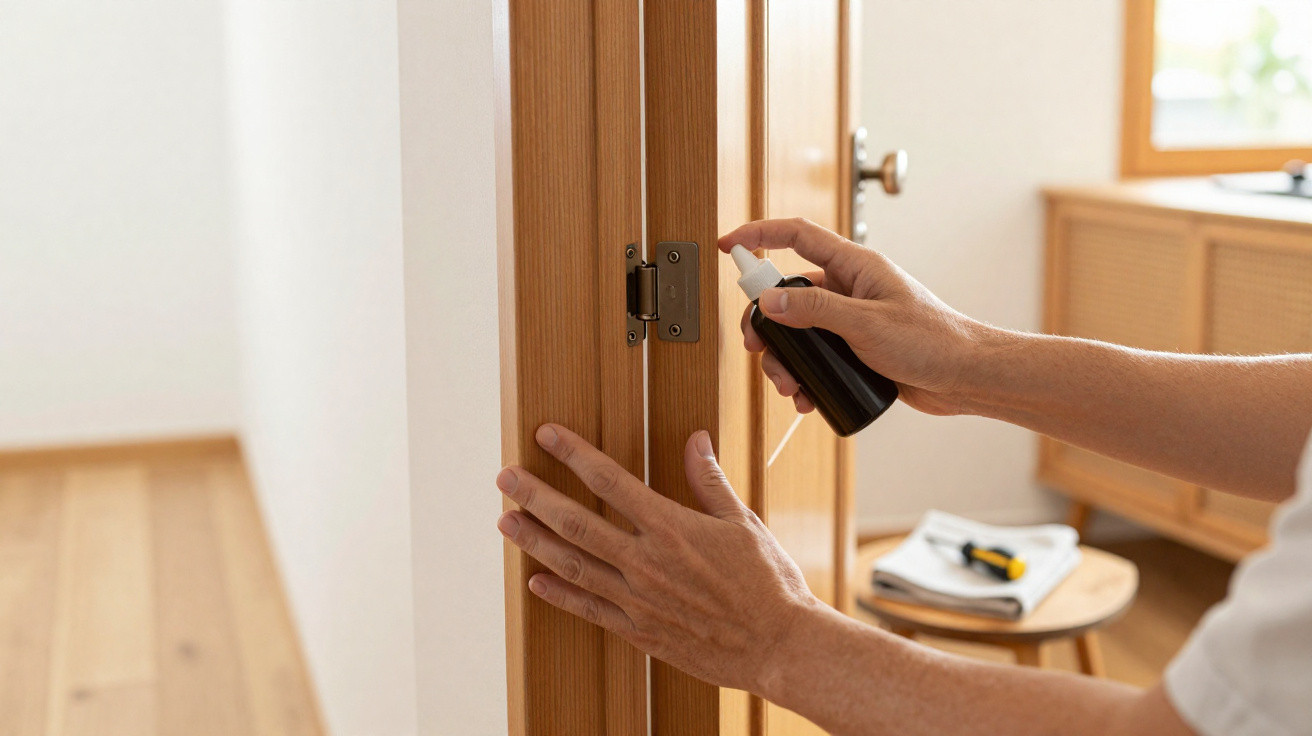
Start by opening the door as wide as possible so that you can reach the hinges easily. Put a cloth or piece of paper beneath the hinge, then apply a very small amount of lubricant to the visible metal pin: one drop of household oil, spray lubricant or even candle wax softened between your fingers can do the job.
If you have none of these to hand, a graphite pencil can come to the rescue. Rub the pencil lead generously over the accessible part of the pin and into the small gaps in the hinge: graphite is naturally slippery. To be honest, nobody really does this every day, but this makeshift solution works surprisingly well.
Then open and close the door around ten times, without slamming it, to spread the product through the hinge.
“A silent door does not require much effort, only a little precision,” a tradesperson often says when fixing a troublesome hinge.
Keep these straightforward pointers in mind:
- One drop is enough: too much product attracts dust.
- Wipe away anything that runs onto the wood or floor straight away.
- Check every hinge, even when only one seems noisy.
Mistakes that make a door squeak for longer
The most common instinct is to spray a large amount of product over the whole hinge, then shut the door believing the issue has been solved. The sound may indeed vanish at first. A few weeks later, though, it returns because the excess grease has trapped dust, hair and residue, creating an unpleasant paste around the hinge.
Avoid cooking oil as well, even if there is a bottle sitting on the worktop. Olive or sunflower oil may help for an hour, but it eventually oxidises, thickens and can sometimes leave a lingering smell. A graphite pencil, white candle or product made for mechanisms is a better choice.
If the squeak remains after this simple step, inspect the door’s alignment. A door that rubs against its frame, catches on the floor or has loose hinge screws needs a different adjustment. Gently tighten the screws with an ordinary screwdriver if you have one; there is no need to force them, as wood does not respond well to rough handling.
Restoring peace without turning it into a major job
The reassuring thing about a squeaky door is that it usually provides a clear warning before it becomes truly irritating. A faint squeal in the morning, a sharper sound on rainy days or unusual resistance: these clues often indicate nothing more than a dry mechanism. Two minutes of attention can prevent months of annoyance.
The best time to act is not necessarily when the noise has become unbearable. While cleaning, changing a curtain or noticing dust around a hinge, take a moment to open the door slowly. This tiny action can become a useful, almost unnoticed habit, much like checking a battery or tightening a handle.
There is also something very human about this small repair: it lets you take control of an everyday irritation. The squeak that woke the baby, disrupted working from home or announced every trip along the hallway is not inevitable. If the tip works in your home, it is probably worth passing on to someone who has lived with a noisy door for years.
| Key point | Detail | Benefit for the reader |
|---|---|---|
| Identify the noise | The squeak most often comes from a dry or dusty hinge pin. | Avoid looking for a complex fault when simple friction is to blame. |
| Lubricate sparingly | Household oil, pencil graphite or candle wax can help. | Make a quick repair without buying complicated tools. |
| Check the alignment | A rubbing door may have loose screws or be slightly out of line. | Know when a squeak calls for a slightly more precise adjustment. |




Comments
No comments yet. Be the first to comment!
Leave a Comment