
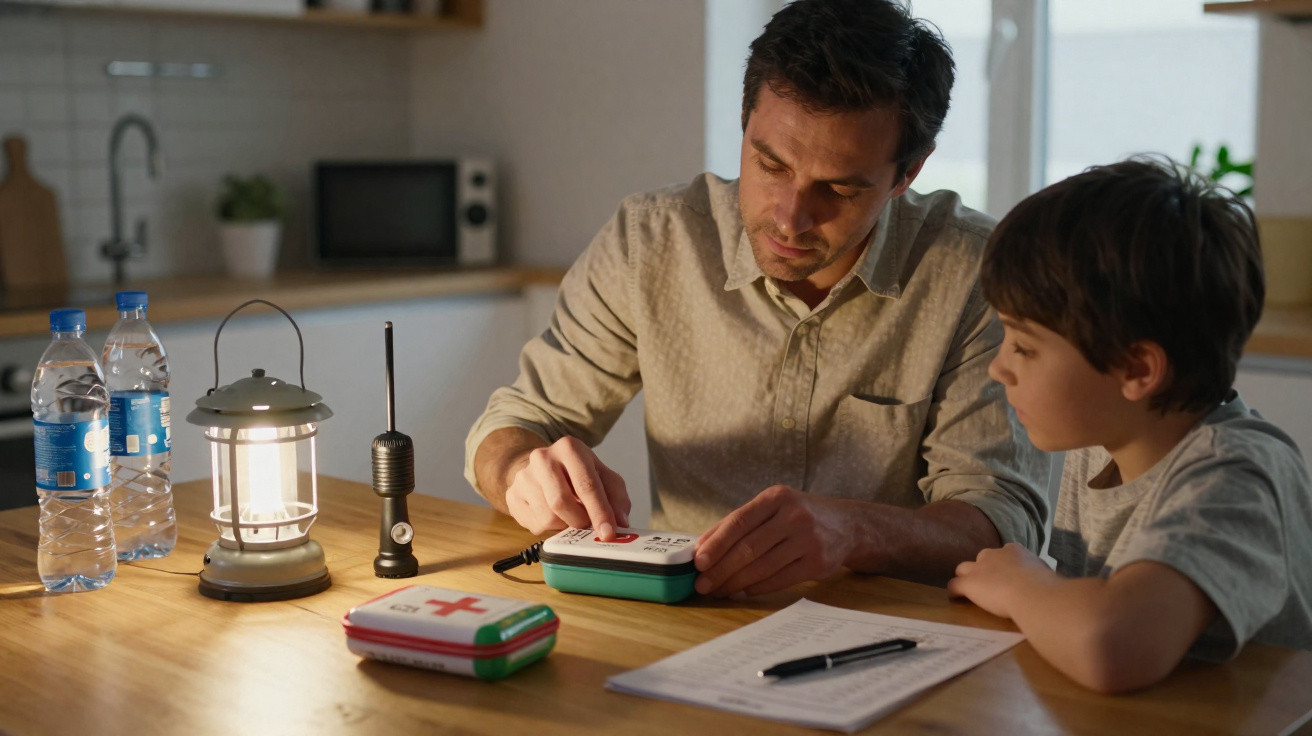
At 7.12 pm, rain is hammering against the windows when everything suddenly goes off: the router, the lights, the hob and the gentle hum of the fridge. An odd silence settles over the flat. You feel around for your phone, wonder how much charge it has left, and remember that the torch is probably buried in a box somewhere in the cellar. We all know how an everyday power cut can turn into a small adventure within minutes. An outage will not necessarily last long, but in winter, the cold and darkness rapidly alter the atmosphere. It is better not to be caught unprepared.
When the home goes dark, everyday essentials suddenly matter
Civil Protection encourages households to assemble a 72-hour emergency kit, enabling them to manage independently for three days during a major incident. A power cut may, of course, be short-lived and limited to one area, but it can also occur as part of a wider event: severe weather, flooding, heavy snow, a storm or an issue affecting the network. In those circumstances, everyday comfort vanishes at an almost absurd pace. There is no lighting in the hallway, card payments may no longer work in some shops, and mobile coverage or communal heating can sometimes be lost too. The right response is not panic, but a return to simple practical steps. Those steps begin with a few very ordinary items.
Drinking water is the first essential in this kit. Guidance shared by the authorities recommends allowing roughly six litres per person: two litres a day for three days, enough for drinking, basic cooking and minimal washing. A household of four can therefore aim for 24 litres without turning the living room into a warehouse. Bottles kept somewhere cool and easy to reach already make a genuine difference. During severe weather, electricity is not always the concern that lasts the longest: tap water supplies may be disrupted or declared unsafe to drink. Keeping a reserve means avoiding a rushed trip out into the cold or onto difficult roads.
The second item-or, more accurately, the second vital supply-is non-perishable food. Tinned goods, fruit purée, biscuits, dried fruit, ready-to-eat soups, UHT milk and meals requiring only limited heating can all be chosen according to individual habits and dietary needs. The point is not to buy food that nobody enjoys and leave it untouched on a shelf for ten years. It is better to use the supplies as part of normal meals and replace them as they are used. Honestly, hardly anyone does this every day. However, checking expiry dates once or twice a year, especially before winter, is enough to prevent discovering a tin of ravioli forgotten since 2018.
The 7 items that can genuinely transform the first few hours
The third item is a torch, ideally kept somewhere every member of the household knows about. A phone may help for a few minutes, but using its torch drains valuable battery power and leaves your hands less free. A sturdy torch, tested before the cold weather arrives, lets you move around without tripping, reassure a child or check a consumer unit safely. The authorities also recommend spare batteries, making them the fourth item not to overlook. Finding that a battery is flat precisely when it is needed is a frustratingly familiar experience. Keep them beside the torch, rather than in a mystery drawer at the other end of the home.
The fifth item is less dramatic but extremely useful: a battery-powered radio. When a power cut disrupts the internet, television and sometimes the mobile network, it remains a direct way to follow local advice and developments. Radio stations broadcast alerts, information on the opening of reception centres, roads to avoid and official local authority recommendations. A compact radio is inexpensive and takes up very little space. It is also worth writing down the frequencies of local radio stations on paper: in the dark and without a connection, digital habits are surprisingly easy to lose. A hand-cranked or wind-up radio can provide an additional option, although it does not replace a supply of batteries.
The sixth item is a way to recharge your phone: a charged power bank, a suitable cable and, if possible, a charger for the car's 12 V socket. Civil Protection includes a phone among the communication tools that should be preserved, as it allows you to contact relatives or emergency services when the situation requires it.
“Prepare a 72-hour emergency kit”: the public authorities' message rests on a straightforward idea-keep enough to live without immediate assistance during the first few days.
For a winter power cut, also keep the following within reach:
- a warm blanket or warm clothing, the seventh essential for reducing heat loss;
- personal medicines and a small first-aid kit;
- a lighter or matches, used carefully and never for makeshift heating;
- copies of important documents, some cash and emergency numbers written on paper.
Preparing without alarm: a habit that reassures the whole household
An emergency blanket, a thick throw, woollen socks or a jumper set aside for the kit: the recommended seventh item can seem almost mundane, until the heating fails to come back on. In cold conditions, it is better to bring everyone together in one room, close doors to unused rooms and wear several layers rather than look for a risky solution. Never use a barbecue, brazier or combustion appliance indoors for warmth: carbon monoxide cannot be seen or smelled, and it can be fatal. Candles also require constant supervision and a stable surface, well away from fabrics.
The easiest approach is to gather the seven items in a clearly labelled box near an exit or in an easily accessible cupboard. Water, food, a torch, batteries, a battery-powered radio, a power bank and a warm blanket: this basic set addresses the most immediate difficulties without requiring a huge budget. Households with a baby, an older person, a pet or someone receiving treatment should add what their day-to-day needs require: infant formula, pet food, spare glasses, prescriptions, medicines or medical equipment. This is not catastrophising. It follows the same logic as keeping an umbrella close by when the sky turns very dark.
Before the first cold snaps, take ten minutes to charge the power bank, test the radio and check that the torch actually switches on. Also think about vulnerable relatives and friends, particularly those who live alone: a call before an outage can prevent a great deal of worry while it lasts. Official guidance states that 112 or 18 should be called only in an emergency, and that the network operator should be contacted to report an electrical fault. At other times, conserving phone battery, following reliable information and staying warm will make the wait easier to manage calmly. The 72-hour emergency kit does not claim to solve everything; it gives you some room to act, which is already significant.
| Key point | Detail | Benefit for the reader |
|---|---|---|
| The 7 basic items | Drinking water, non-perishable food, a torch, batteries, a battery-powered radio, a power bank and a warm blanket. | Meet immediate needs: drinking, eating, seeing, staying informed, communicating and retaining warmth. |
| The 72-hour benchmark | Civil Protection recommends being able to manage for three days with an accessible emergency kit. | Avoid rushed shopping trips and unnecessary travel during a major disruption. |
| Winter checks | Test equipment, charge the power bank, replace water and food, and adapt the kit for vulnerable people. | Turn a theoretical list into a solution that can actually be used on the evening everything goes dark. |




Comments
No comments yet. Be the first to comment!
Leave a Comment