
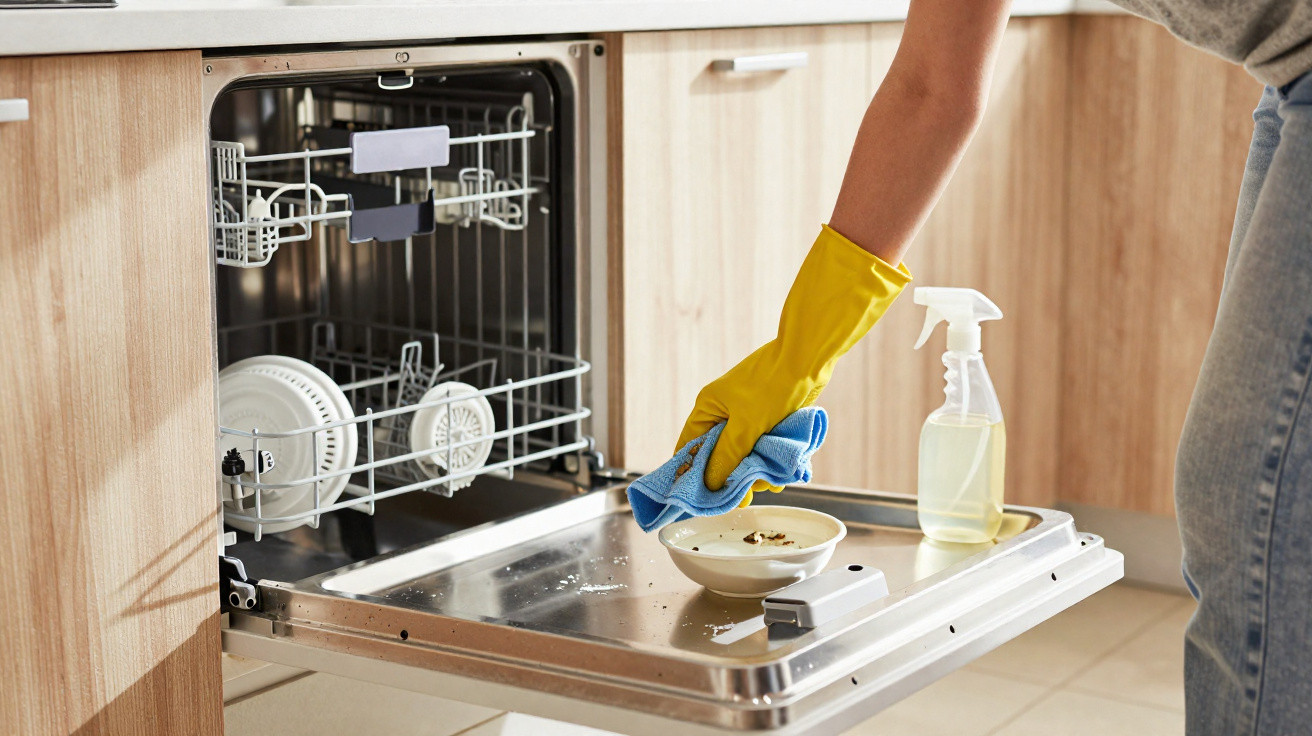
A machine used for washing every day can retain moisture, food deposits and micro-organisms in areas that are seldom checked.
At first glance, a dishwasher seems clean by nature. It is exposed to hot water, detergent and repeated rinsing. Even so, its interior is not sterile. Debris trapped in the filter, lingering dampness on seals and hard-to-reach pipes provide favourable conditions for microbial communities. Regular, targeted maintenance can significantly limit this issue.
Dishwasher seals collect much of the build-up
In 2018, researchers examined 24 household appliances. They found bacteria and fungi on every rubber seal tested. This area warrants particular attention because it stays damp long after a wash has finished, while also collecting splashes of grease, sauce and detergent.
Specialists refer to this as a biofilm. It is a thin layer made up of micro-organisms, water and the sticky substances the organisms produce themselves. Once established in this matrix, microbes are better able to withstand rinsing and standard cleaning products. It may not be apparent initially. A greyish film, dark spots or a musty smell should be taken as warning signs.
“The door seal is not merely a sealing component: it is one of the dampest areas and among those least reached by water jets.”
Scientific studies have identified bacteria from the Pseudomonas, Escherichia and Acinetobacter groups in particular. Yeasts from the Candida group were also present in the samples. Some so-called opportunistic species may cause difficulties for people with severely weakened immune systems. The risk remains low in a healthy household, but the findings underline the value of routine cleaning.
Short cycles are not always enough
Economy programmes use less water and electricity. They commonly wash at between 30 and 45 °C over a longer period. This is practical for everyday use, especially with lightly soiled dishes. However, these temperatures do not always remove deposits that have settled in the corners of the tub, filter or spray arms.
Inside the appliance, conditions change constantly: heat, water, alkaline products, regenerating salt and then drying periods. Only certain species can adapt to this environment. They include dark yeasts, sometimes known as black yeasts, which can survive in demanding conditions.
Opening the door immediately after a cycle finishes may also release a plume of hot steam. Recent research suggests that extremely fine particles could be carried into the kitchen air. There is no need for alarm. A sensible approach is to wait for a few moments, then ventilate the room if it is small or poorly aired.
Three steps to clean overlooked areas
Effective maintenance does not require complicated products. Above all, it depends on consistency and on cleaning components that receive insufficient water during normal cycles.
- Clean the seal and door edges. Use a soft toothbrush in the fold of the rubber with hot water and a little soft soap. A cloth lightly moistened with diluted white vinegar can help dissolve limescale marks. Avoid applying a large amount of harsh product, as the rubber could deteriorate over time.
- Rinse the filter every week. Remove it after consulting the appliance manual. Clear away debris with a small brush, rinse it under very hot water and inspect the housing at the bottom of the tub. A few grains, pieces of label or food remnants are enough to maintain an unpleasant smell.
- Clear the spray arms and run an empty wash. Once a month, inspect the small openings in the arms. A wooden toothpick or fine brush can remove trapped particles. Then run the empty appliance at 60 °C or above, using citric acid suitable for this purpose.
“A hot maintenance cycle carried out every month complements, rather than replaces, daily low-temperature programmes.”
Why the filter needs frequent checks
The filter catches waste to prevent it from circulating through the pump and pipework. When it becomes clogged, water is distributed less effectively. Dishes may come out dull, with a lingering smell or tiny pieces of residue. This is not solely a hygiene matter: a clean filter also supports washing performance and may prevent excess consumption.
After rinsing it, allow the filter to dry for a few minutes before refitting it. Use this opportunity to wipe the area beneath the lower basket. It can sometimes hold cloudy water that is not obvious at first glance.
Leaving the dishwasher door ajar limits dampness
When a programme ends, leave the door slightly open unless the appliance manual advises a different method. This allows air to circulate inside the tub and reduces condensation on the walls. This straightforward habit cuts down odours and slows the development of mould.
Sponges, brushes and cloths left near the sink require the same care. They often stay damp for longer than the appliance itself. Rinse them thoroughly, wring them out and leave them to air-dry. A heavily worn or foul-smelling sponge should be replaced.
Mixtures to avoid inside the tub
White vinegar, bicarbonate of soda and citric acid are widely used for household cleaning, but they should not be mixed indiscriminately. Vinegar and bicarbonate of soda react with one another immediately, largely cancelling out their cleaning effect. Use them separately where necessary.
Never combine a chlorine-based product with vinegar, citric acid or an acidic descaler. This combination may release irritating fumes. For an appliance with heavy limescale deposits, a product recommended by the manufacturer is often the safest option. A clean seal, an unobstructed filter and a properly dried tub already make up a robust routine for keeping dishes hygienic every day.




Comments
No comments yet. Be the first to comment!
Leave a Comment