
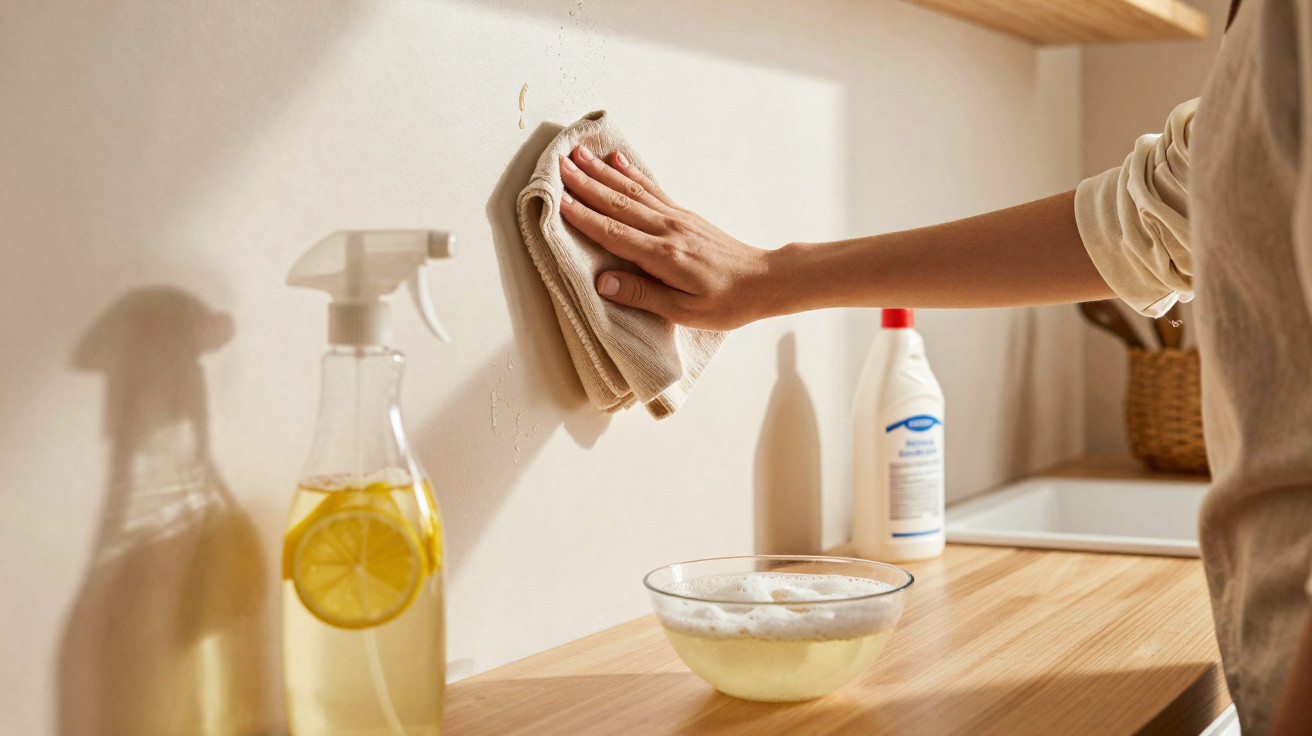
Sometimes, all it takes is a slightly lively dinner to notice it: near the hob, level with the saucepan handles, the wall seems to have changed colour. There is a shiny halo, a small dark splash, then that almost invisible film that catches the morning light. You scratch at it with a fingernail, tell yourself it will come off later, and the mark settles in. In a kitchen, grease stains do not signal poor housekeeping; they reflect real life: onions browning, sauces splashing and meals made in a hurry. The trouble is that the wrong approach can leave a mark more noticeable than the grease itself. Yet there are straightforward, gentle and genuinely reassuring solutions. The wall can recover its original appearance.
Why grease quickly becomes embedded in kitchen walls
We all know the moment when a wall looks clean from afar but, under angled light, reveals darker patches around the hob. Hot grease travels further than expected: it combines with steam, settles as tiny droplets and creates a sticky layer on the paint. Dust then clings to it, producing the grey or yellowish stain that can sometimes feel slightly tacky.
In one flat, Claire had spotted an odd line behind her coffee machine, despite never frying anything. The cause was less dramatic: everyday cooking steam and an extractor hood that was rarely switched on early enough. Depending on household habits, an area less than a metre from the hob can be hit by splashes several times a week. Over time, matt paint soaks up this mixture like a discreet sponge.
The type of paint makes all the difference. A washable satin finish will usually withstand gentle cleaning, whereas an old matt wall, or one painted with a coat that is too thin, can mark with the slightest rubbing. A wall likes neither haste nor miracle remedies. Before reaching for a powerful degreaser, assess the surface, check whether the stain is fresh and accept one down-to-earth truth: nobody really cleans their kitchen walls every day.
The gentle method for removing grease stains without stripping paint
First, remove dust from the area using a clean, dry microfibre cloth. This prevents dust from turning into mud on the wall. Next, prepare a bowl of warm water with a few drops of mild washing-up liquid, with no bleach or overly strong fragrance. Barely dampen a non-abrasive sponge or cloth, wring it out thoroughly, then dab the stain from bottom to top. The key word is gentleness: the wall needs cleaning, not soaking.
It is tempting to persist when a halo will not shift, particularly when it sits just above the worktop. However, overly vigorous circular motions can polish matt paint and sometimes leave a shiny patch that cannot be concealed. Instead, pause for two minutes after the first pass, then repeat using a clean cloth. When grease is recent, this alternating approach is often enough. If it is old, several light passes are preferable to one enthusiastic heavy-duty scrub.
Before treating a large stain, try the mixture behind furniture or in an inconspicuous corner. This may seem like an ordinary precaution, but it prevents unpleasant surprises on fragile, dark or ageing paint.
“When a stain resists, reduce the force of the movement and increase your patience: on a painted wall, that is almost always the best strategy.”
- Use warm water, never hot water, so that the paint does not soften.
- Opt for a white or pale cloth to prevent colour transfer.
- Dry the area with a clean microfibre cloth after every damp pass.
- Avoid green scouring pads, scouring powder and heavily alcohol-based wipes.
Products to avoid and small habits that make all the difference
Bicarbonate of soda, white vinegar and black soap have an almost magical reputation in kitchens, but none is suitable for every type of paint. Bicarbonate of soda can act as a mild abrasive, especially when used as a paste. Vinegar, meanwhile, may dull certain finishes or weaken paint that is already porous. For a grease stain on a wall, diluted washing-up liquid is often the most sensible option because it breaks down grease without harshly attacking the surface.
Degreasing sprays designed for ovens or hobs are riskier still. They work well on stainless steel, tiles and glass, but their alkaline formula can leave bleached marks, drips or dull areas on a painted wall. One reader said she had wanted to clean “just a little spot” behind her cooker: five minutes later, the grease stain was gone, replaced by a paler circle. It is better to proceed slowly than repaint an entire section of wall.
Prevention does not require turning the kitchen into a laboratory. Switch on the extractor hood a few minutes before cooking, then leave it running after the meal; open a window whenever possible and wipe the wall near the hob once a week with a slightly damp microfibre cloth. A temporary splashback behind a particularly active frying pan can also make a difference. These are modest, almost invisible habits that stop stains from becoming a Sunday chore.
A clean wall does not mean a static kitchen, without aromas or pans singing on the hob. Rather, it means staying on top of these small marks before they take over, both visually and mentally. If a halo remains despite gentle cleaning, the paint may simply have reached the limit of what it can withstand; a targeted touch-up, using the right shade and a suitable roller, may then be less noticeable than relentless use of household products. Many people also discover that even a short splashback protects the most exposed areas better than they expected. Between a simmering meal and a wall catching a few splashes, there will always be a little life. The trick is not to let that life build up.
| Key point | Detail | Added value for the reader |
|---|---|---|
| Act without scrubbing hard | Use a wrung-out microfibre cloth and warm water with a few drops of washing-up liquid. | Removes the greasy film while reducing the risk of a shiny mark or stripped paint. |
| Test before cleaning | Carry out a test in a hidden corner, especially on old or matt paint. | Prevents visible discolouration over a large area. |
| Prevent new stains | Switch on the extractor hood early and lightly clean exposed areas every week. | Reduces grease build-up and discouraging deep-cleaning jobs. |



Comments
No comments yet. Be the first to comment!
Leave a Comment