
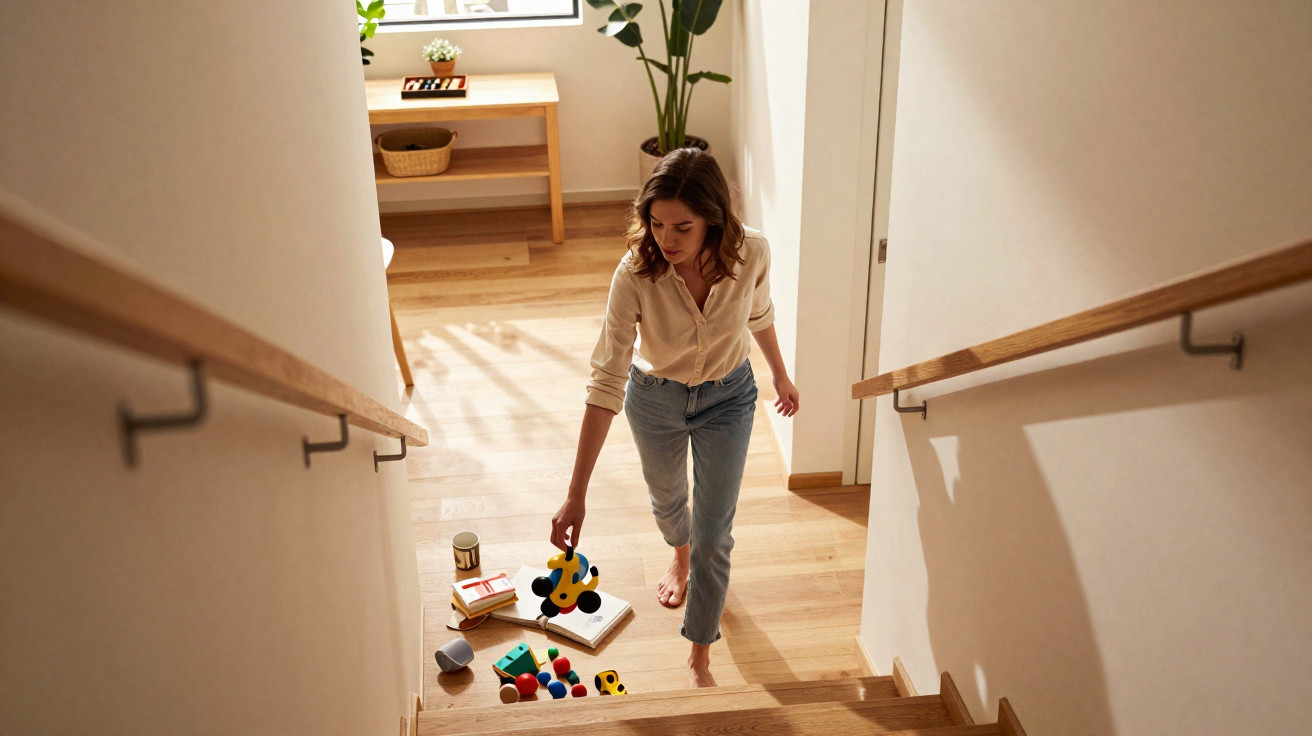
It is 7.12 pm, dinner is simmering, a jumper is draped over the back of a chair and two glasses have been sitting on the coffee table since yesterday. We all know that moment when the house suddenly looks untidy, even though it feels as if we tidied up “recently”. The most frustrating part is not the dust or the washing-up; it is the sense of chasing clutter without ever quite catching up with it. What if the answer were not to clean more, but to alter one almost unnoticed action during the day? One very simple habit can make the atmosphere lighter, ease your nerves and reduce the mental load. It requires neither a colour-coded schedule nor a 6 am alarm. It starts whenever you get up to leave a room, and it changes a surprising amount.
The habit that stops clutter taking hold
The rule can be summed up in one sentence: never leave a room empty-handed. On your way from the bedroom to the kitchen, take the forgotten glass from the bedside table; when passing the hallway, put any stray shoes back in their basket. It may seem trivial, perhaps even too easy to make a difference. Yet these small actions remove the items that make a room feel messy and draining, even when it is otherwise clean.
For Sophie, a mother of two, the change began with one mug. Every morning, she would leave her cooled coffee beside the sofa, only to find it in the evening surrounded by a pile of papers and a few toys. She began taking it with her whenever she went to the kitchen, without giving it another thought. After a week, she noticed that her living room looked tidy for longer. It was not cleaning; it was simply a habit while moving around the house.
Clutter does not appear overnight: it builds up item by item through unfinished actions. A jacket put down “for two minutes”, post opened on the worktop or a towel left in the bathroom can quickly create a snowball effect. The brain then sees a mountain where there were initially only three small things to put away. This rule stops the pattern at its source, before tidying becomes a Sunday chore.
How to use the empty-handed rule without making life harder
Start by noticing the routes you take most often: bedroom to bathroom, living room to kitchen, hallway to sitting room. Whenever you use one of these routes, take two seconds to look around and pick up an item that belongs in the next room. There is no need to make a detour or search for something to put away. The action should stay natural, almost lazy: you are going there already, so you may as well take along what needs to go there.
A common mistake is turning this idea into a permanent tidying mission. You set off carrying five things, open a cupboard, start sorting cables, then forget why you went to the kitchen in the first place. Let us be honest: nobody really does that every day. The best version of this habit is modest: one item, occasionally two, and only when they have an obvious place at the other end.
For the habit to last, every everyday item needs a simple, accessible “return point”. A basket for throws, a tray for keys and loose bits near the door, or a bin in the children’s bedroom: these small arrangements prevent things being left in a corner while you wait for a better moment.
“A tidy home is not one where nothing ever moves; it is one where objects can easily find their place again.”
- Keep a laundry basket where clothes actually get dropped.
- Put a small wastepaper bin near the post.
- Set aside a tray for items that need to move to another room.
A calmer home without adding a minute to your schedule
The nicest benefit is not always visible in a photograph: it is the sense of calm created by a room that is not overflowing. Coming home to a clear table, a sofa without clothes on it and a sink that is not full will not solve every problem from your day, of course. But it removes one small irritation, the kind that quietly drains your energy. Tidying becomes part of moving around, rather than a task put off until later.
This routine can work with children and housemates too, provided it is not presented as military rules. One sentence is often enough: “Are you going to your bedroom? Take your book with you.” Over time, the action becomes familiar. It is not about demanding a perfect home or monitoring every forgotten sock. A lived-in home is still a home where people live, complete with crumbs after an afternoon snack and bags dropped down too quickly.
There will be days when nothing gets put away because tiredness, an unexpected event or bad news takes up all the space. That is not a failure. The next day, the mug will make its way to the kitchen, the throw will go back into its basket and the room will already feel able to breathe a little more easily. The real time saving lies there: no longer having to spend a full hour fixing the build-up of twenty small oversights. A clean home is not necessarily the one you scrub most often, but the one where clutter does not have time to settle in.
| Key point | Detail | Added value for the reader |
|---|---|---|
| Never leave a room empty-handed | Take an item that belongs in the next room | Reduces build-up without adding a cleaning session |
| Keep the action to one or two items | Avoid turning every trip into a major tidying task | A realistic habit that is easy to maintain, even on busy days |
| Create visible return points | Baskets, catch-all trays and bins placed in the right locations | Items return to their place without effort or hesitation |

Comments
No comments yet. Be the first to comment!
Leave a Comment