
It is 9.40 pm, dinner is over, and someone opens the microwave to warm up a mug of tea. Then the light exposes everything: a splash of tomato sauce on the side wall, a few grains of rice stuck to the turntable, and a slightly stale smell that is hard to identify. We all know the moment when we nearly close the door again, telling ourselves we will deal with it tomorrow. Yet with a lemon, a bowl of water and three minutes, cleaning can be surprisingly straightforward. Often, the hardest part is not scrubbing; it is getting started.
Lemon and steam: a more effective pairing than it seems
A dirty microwave can look as though it needs a lengthy cleaning session, involving an abrasive sponge, a strong product and a certain amount of frustration. In fact, food residue mainly dries out because it has been reheated repeatedly, layer upon layer, until it creates a stubborn little crust. Steam does what your arm would rather not: it gently softens splatters on the walls, ceiling and door.
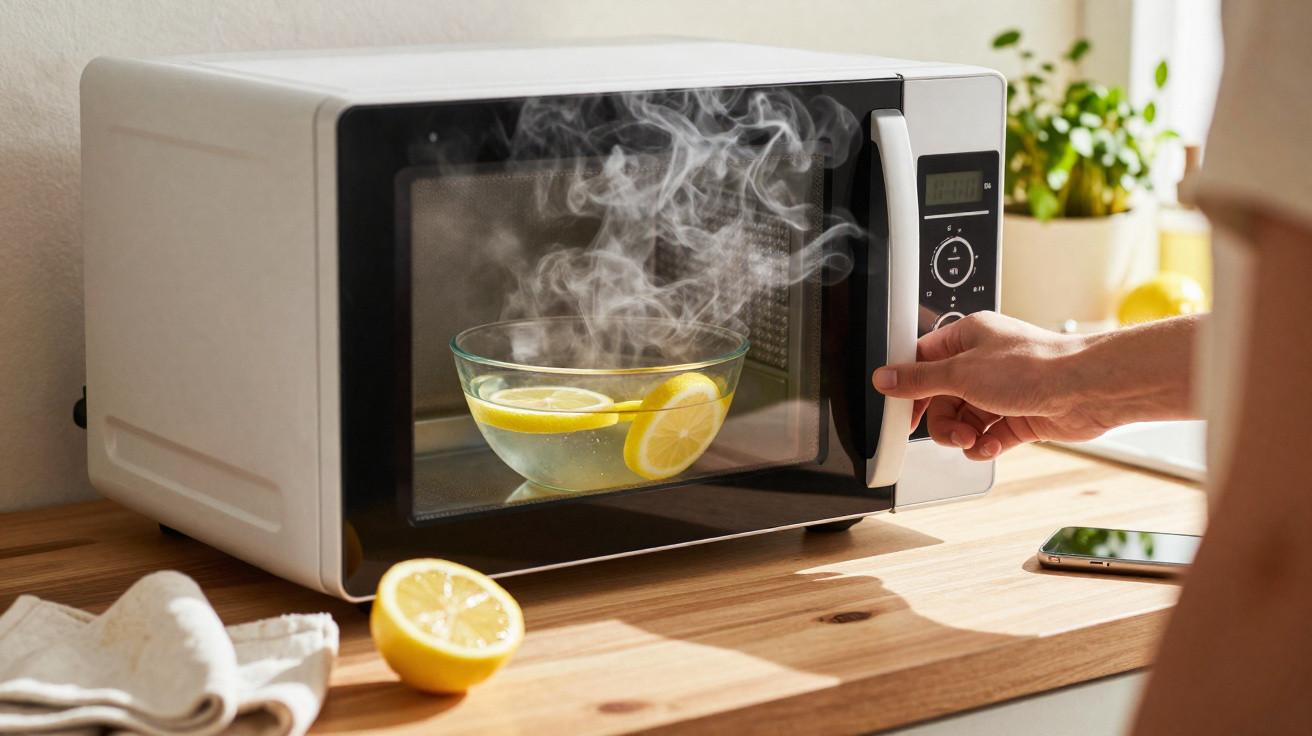
The process is almost ordinary: slice half a lemon, place it in a bowl of water, then heat it for three minutes on medium or high power, depending on the appliance. In a family kitchen, this technique will often lift a splash of soup or melted cheese without ten minutes of determined scrubbing. Lemon also leaves behind a fresh scent, far more pleasant than an overly perfumed degreaser.
The principle is straightforward: as the water heats, it creates steam that settles on the microwave's cooler surfaces. That moisture works its way into dried-on dirt and makes it less likely to stick, while the lemon's mild acidity helps neutralise some lingering smells. It is not magic, simply household physics put to good use. Once the door is open, a damp cloth will often succeed where a dry sponge would have failed.
The three-minute method without overdoing it
Choose a microwave-safe bowl that is deep enough to prevent spills, then pour in about 250 millilitres of water. Add the slices from half a lemon, or squeeze in its juice and leave the peel in the bowl, before heating it for three minutes. Once the cycle ends, keep the door closed for a further two minutes: this short wait keeps the steam in the cavity so it can properly do its job.
When the bowl has cooled slightly, remove it carefully, as the water may be very hot, and wipe the walls with a microfibre cloth. Do not overlook the underside of the turntable or the door seal, two areas where greasy marks can remain unobtrusive until they suddenly become obvious. Let us be honest: nobody really does this every day, but making it a weekly routine already changes the appearance of the appliance.
One common mistake is running the microwave for too long with too little water, in the belief that it will save time. It is better to keep an eye on it the first time, as every model heats differently and a nearly empty bowl can become scorching hot. Older dirt may need a second steaming session or a gentle wipe with a non-abrasive sponge; do not scrape the interior coating or interfere with the vents and technical openings.
“Once the steam has done its work, cleaning becomes a light task rather than a chore put off until later.”
- The right bowl: use microwave-safe glass or ceramic, never a metal container.
- The right amount: filling the bowl halfway or two-thirds full reduces the risk of boiling over and spills.
- The right habit: leave it for two minutes with the door shut before wiping; this is when the steam works best.
- The right cloth: choose a soft microfibre cloth or gentle sponge to protect the inner coating.
- The right timing: act before splatters are baked on again during later meals.
A small habit that also improves the feel of the kitchen
A clean microwave will not turn a Tuesday evening into a magazine scene, but it does make everyday tasks less unpleasant. Reheating a meal, melting butter or making a bowl of warm milk becomes more enjoyable when opening the door does not reveal marks from the previous meal. This lemon method is reassuring, too: it avoids spraying a household cleaner inside an enclosed space intended for heating food.
You can adapt the routine to real life, without aiming for a flawless kitchen. Five minutes after a splattery dish, a bowl of lemon water is often enough to stop the mark from settling in for weeks. Lemon can be replaced with diluted white vinegar, although its smell is stronger; for many people, citrus retains that clean, bright quality that makes them want to do it again.
What is striking, ultimately, is the imbalance between the effort involved and the result. Three minutes of heating, two minutes of waiting and a few wipes with a cloth: the imagined chore becomes an almost peaceful habit. In homes where the microwave is used several times a day, this tip can even become a shared reflex, passed on with the words: “Just put a lemon in with some water, you’ll see.”
| Key point | Detail | Added value for the reader |
|---|---|---|
| Lemon steam | A bowl of water containing half a lemon is heated in the microwave for three minutes. | Dried residue softens without harsh products or intensive scrubbing. |
| Waiting time | The door remains closed for around two minutes after heating. | The steam stays concentrated in the cavity and improves cleaning. |
| Regular care | A quick clean after splattery dishes prevents build-up. | The microwave stays cleaner, smells fresher and takes less effort to maintain. |


Comments
No comments yet. Be the first to comment!
Leave a Comment