
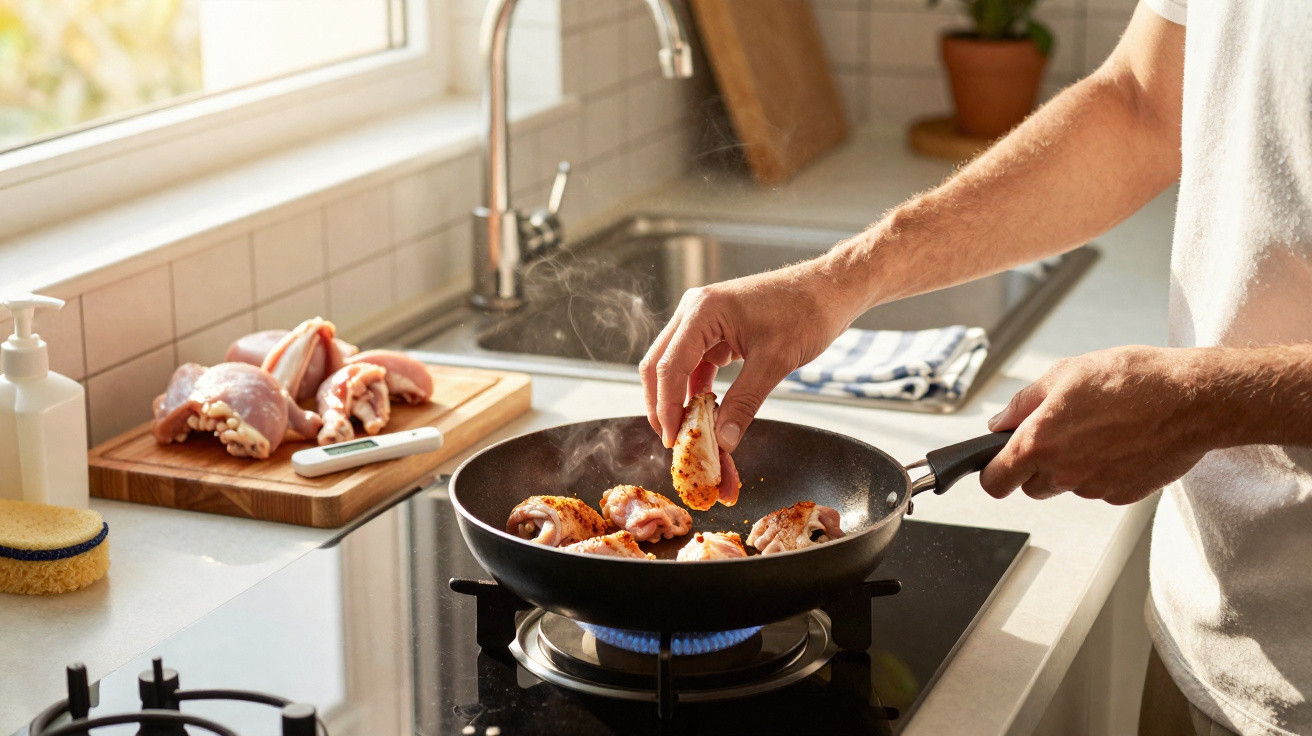
The chicken is sitting in the sink, still cold, with the crumpled packaging in your hand. Out of habit, many people turn on the tap: a quick rinse under water feels cleaner and almost reassuring, particularly when the smell of raw meat is lingering in the kitchen. We all know that moment when we want to do the right thing before making dinner for children, friends or simply ourselves. Yet this habit, sometimes learned at home, can turn a few invisible droplets into a genuine health risk. Running chicken under water does not make it safer. It can even contaminate everything around it. It is a slightly uncomfortable truth, but a very real one.
Rinsing chicken: a habit that creates a false sense of cleanliness
When faced with a raw chicken fillet, the idea seems perfectly logical: we wash vegetables and rinse salad leaves, so why would we not wash meat? In the sink, water may carry away a small trace of blood or a piece of skin, leaving us with the impression that we have cleaned up before cooking. The issue is that bacteria do not vanish like a visible stain. They spread. And they are far harder to spot than a forgotten piece of fat on a chopping board.
Food safety authorities, including the French Agency for Food, Environmental and Occupational Health & Safety (Anses), have warned for years that raw poultry may contain bacteria such as Campylobacter or Salmonella. When chicken is rinsed, splashes can travel several dozen centimetres beyond the sink, landing on the tap, draining board, tea towel or an apple placed a little too close. A study frequently referenced by US health bodies found that this practice could contaminate kitchen surfaces to a very high extent. You cannot see it, which is precisely what makes it deceptive.
Water from the tap does not genuinely remove microbes attached to the meat. Instead, it may spread them around the immediate area, where your hands, utensils and ready-to-eat food will subsequently go. Cooking, on the other hand, is the step that effectively destroys bacteria on chicken, provided it is thorough enough. Water creates an illusion of control; heat actually does the job. That is the crucial difference, and it may spare you a very unpleasant evening.
What to do instead, without turning your kitchen into a laboratory
The simplest approach starts as soon as you open the pack: take out the chicken, place it straight into a dish or onto a chopping board reserved for raw food, then discard the packaging. If the meat is damp, gently pat it dry with kitchen paper instead of holding it under running water. Put the paper straight into the bin rather than leaving it on the worktop. Then wash your hands with soap and water for at least twenty seconds. It sounds basic, but it is the action that makes all the difference.
Many people worry about serving chicken that is “not clean” if they have not rinsed it. That concern is understandable: it often stems from deeply rooted family habits, sometimes passed down lovingly by a mother or grandmother. Let us be honest: nobody manages every one of these steps flawlessly every day. The point is not to make anyone feel guilty, but to swap one automatic reaction for another. Clean the sink after handling the meat, certainly. Run the chicken under the tap, no.
Cooking the chicken right through is your best ally: the flesh should no longer be pink and the juices should run clear, although a kitchen thermometer remains the most reliable option, showing around 74 °C at the centre of the meat. Do not wash chicken: cook it properly. Keep one simple rule in mind too: raw food must never come into contact with ready-to-eat food.
“Cooking is the only effective way to destroy bacteria present in raw poultry meat.”
- Use a chopping board specifically for raw chicken, or wash it straight after use.
- Clean the tap, sink and worktop with a suitable product.
- Keep salad, bread and fruit away from the preparation area.
- Change the tea towel if it has touched your hands or a contaminated surface.
The truly “clean” step happens before and after cooking
Skipping the rinse does not mean taking less care in the kitchen; quite the opposite. It means focusing on the measures that genuinely matter: keeping chicken chilled, not leaving it on the table for two hours, separating utensils and cooking without rushing. In an everyday kitchen, with a cluttered sink and a phone ringing at the worst possible time, these details are what make the difference. The risk is not dramatic, but it is real.
There is also a certain relief in knowing this rule. There is no longer any need to run the tap, scrub every splash while worrying that you have missed a corner, or believe that a chicken breast has to emerge “washed” before it is fit to cook. Food hygiene does not always look the way we expect it to. It is about prevention, not a visible gesture that offers false reassurance.
Next time you open a pack of chicken, simply notice the instinct that draws you towards the tap. It is neither foolish nor shameful: it is human, learned and automatic. Then put the meat in its dish, wash your hands, clean anything that has been touched and let cooking do its work. This small change can also become a useful conversation at the table, especially with people who still believe that rinsing inevitably means better protecting their family.
| Key point | Detail | Benefit for the reader |
|---|---|---|
| Do not rinse | Water spreads bacteria that may be present on raw chicken. | Reduces the risk of contaminating the sink and worktop. |
| Cook right through | A temperature of around 74 °C destroys the most common bacteria. | Makes it possible to eat chicken with confidence, without relying on a false safety measure. |
| Keep raw food separate | Chopping boards, hands, knives and surfaces must be cleaned after handling. | Protects ready-to-eat food, such as salad or bread. |

Comments
No comments yet. Be the first to comment!
Leave a Comment