
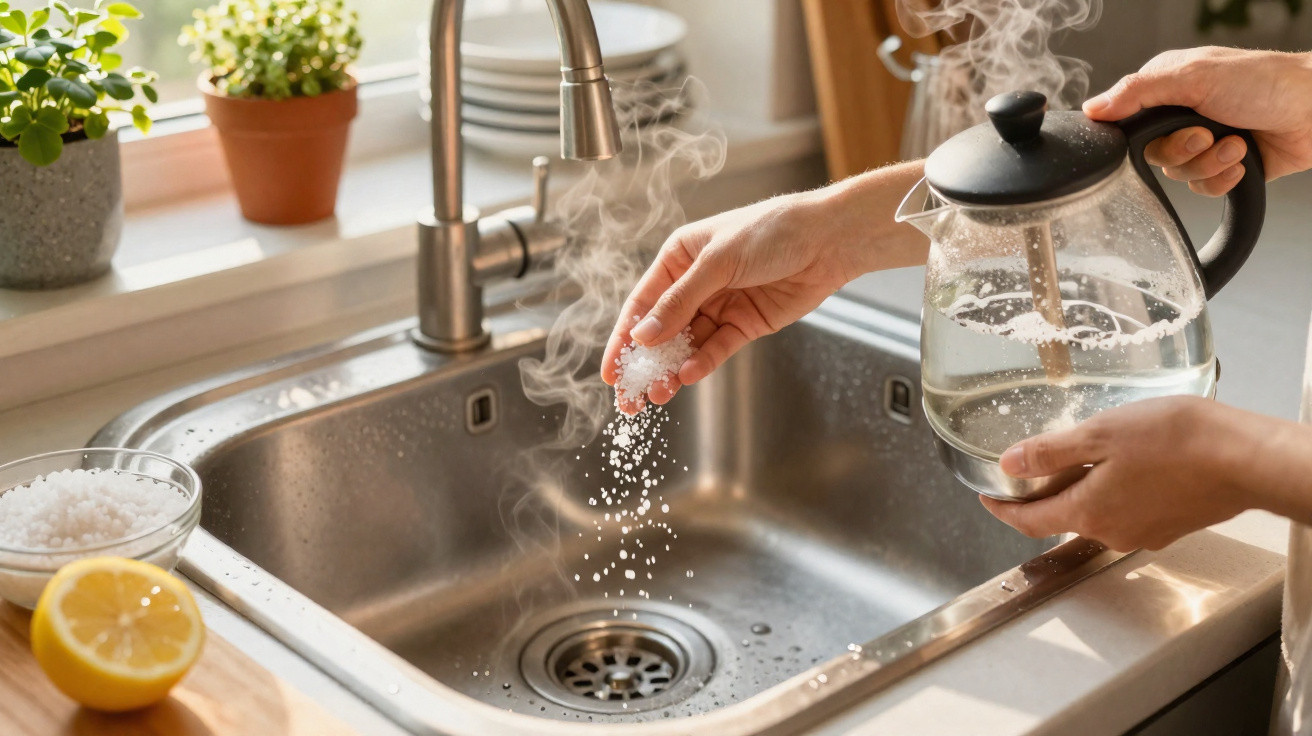
One evening, after rinsing a slightly greasy plate, a heavy smell suddenly rises from the sink. You open the window, eye the plughole suspiciously, then add a little washing-up liquid in the hope that the issue will simply disappear. We all know the moment, especially when the kitchen looks clean but the air tells a different story. The usual instinct is to buy a heavily scented product, although a straightforward solution may already be in the cupboard: coarse salt and a pan of boiling water. Ten minutes can be enough to leave the sink smelling fresher. It is also a surprisingly satisfying task.
Why the smell returns at the worst possible time
The odour does not necessarily mean that the drain is completely blocked, even if that is the first thought that comes to mind. It is often caused by an unglamorous combination of food remnants, cooled grease, coffee grounds, soap and trapped moisture, all of which cling to the plughole and U-bend. Over time, this build-up feeds bacteria, which produce that sour smell, sometimes resembling egg or an old damp cloth.
In a family kitchen, it can develop quickly after a weekend of lots of cooking. A frying pan rinsed too hastily, a few crumbs of cheese or the last of a sauce slipping into the sink: it takes very little to form a greasy film inside the pipe. Depending on the household's habits, a poorly maintained plughole may start smelling within just a few days, particularly in warm weather.
The issue is that cold water runs through without properly shifting residue stuck to the pipe walls. Grease quietly hardens into a thin, waxy layer and catches everything that follows. It may not be visible, but it is there. Boiling water helps soften this build-up, while coarse salt provides mild abrasion as it travels through the drain.
The coarse salt and boiling water method that freshens the kitchen
The technique is almost disarmingly simple: put around three to four tablespoons of coarse salt straight into the plughole, then leave it for five minutes without running any water. Next, bring one litre of water to the boil and pour it in slowly in two or three stages, allowing the heat to move through the pipe. The aim is not to flood the sink all at once, but to loosen grease gradually.
This tip works especially well when the smell is recent and the water is still draining normally. Let us be honest: nobody really does this every day, nor is there any need to. Once a week, or after a particularly greasy meal, this simple routine can often prevent the U-bend from becoming a small haven for food deposits.
Take care with delicate installations, however. If you have very old pipes, a cracked sink or plastic plumbing that you are unsure about, use very hot water rather than vigorously boiling water. A plumbing professional puts it this way:
“The right maintenance cleans without causing damage: do it regularly, but do not turn the pipework into a laboratory.”
To make this a useful habit, remember these three points:
- remove visible food scraps before running the water;
- pour the coarse salt into a plughole that is as dry as possible;
- do not combine this method with chemical drain unblockers.
A healthy sink often comes down to small habits
Coarse salt and boiling water are not a replacement for professional action if the sink overflows, gurgles loudly or drains unusually slowly. In that situation, the blockage is probably deeper and should be dealt with using a plunger, by cleaning the U-bend, or with help from a professional. For mild odours, this routine remains an accessible, inexpensive option that is less harsh on the air in the home.
| Key point | Detail | Benefit for the reader |
|---|---|---|
| Coarse salt works mechanically | Its crystals travel with the hot water and help dislodge some of the small residues collected in the plughole and the first few centimetres of pipe. | An everyday solution, with no special bottle to buy and no artificial fragrance designed to temporarily conceal the odour. |
| Water should be poured slowly | Pouring it in stages gives the heat time to soften the grease instead of immediately running into deeper pipework. | The method works more effectively and reduces splashing, especially when the sink is full of utensils or washing-up. |
| Consistency is better than excess | A light weekly routine is generally more helpful than an improvised deep clean once the smell has been established for a long time. | It helps prevent unpleasant surprises before a dinner, after returning from holiday or when guests arrive at home. |





Comments
No comments yet. Be the first to comment!
Leave a Comment