
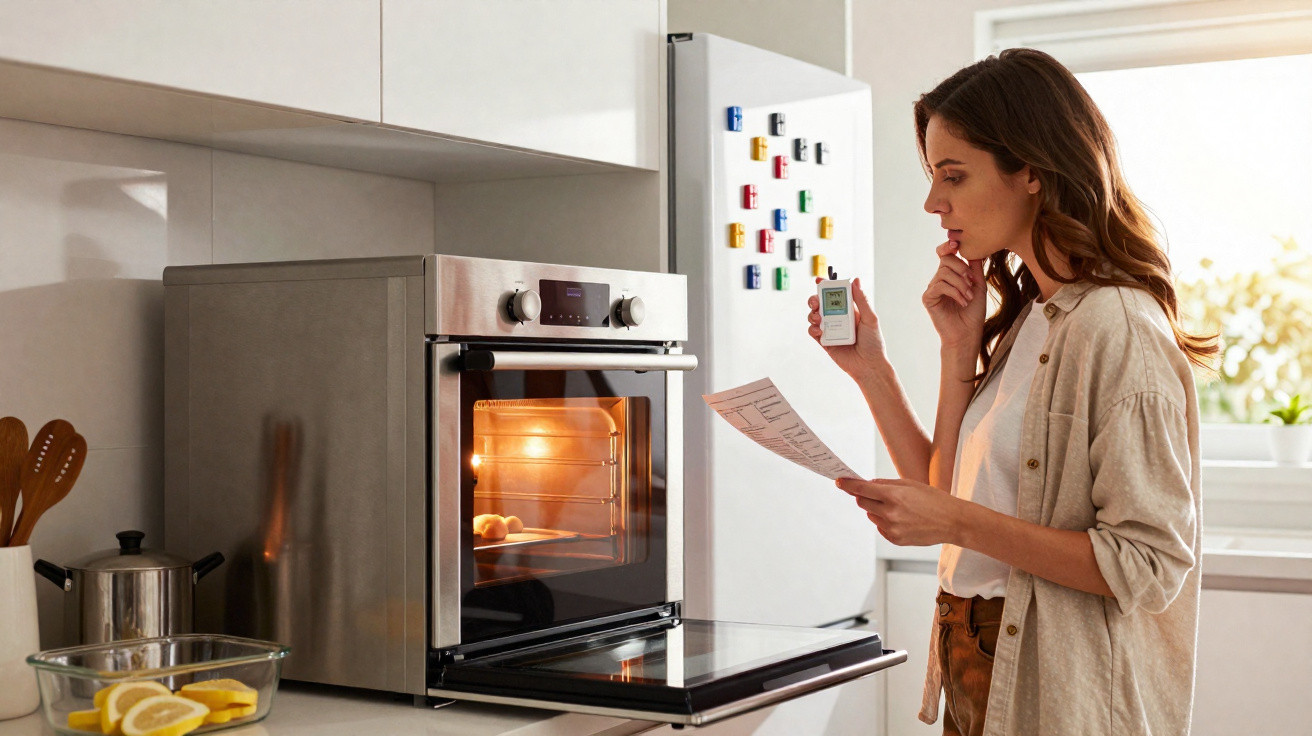
In almost every kitchen, it sits quietly in its usual spot – yet it can push up your electricity bill more than almost any other appliance.
When people think of energy-hungry household appliances, the fridge or tumble dryer usually comes to mind first. However, the real cost trap is often right next to them: the electric oven. It seems harmless and is indispensable, but at certain times it can draw as much power as 65 fridges running at once.
Why the electric oven is a hidden energy giant
The technical reason is straightforward: an oven has to heat its air and components to high temperatures, then maintain that heat for a prolonged period. This uses substantial amounts of energy. A fridge works in precisely the opposite way. It keeps an already cold, well-insulated interior at temperature and therefore requires far less power.
A typical electric oven uses 2,000 to 5,000 watts, while a standard fridge usually needs only 300 to 800 watts.
When operating at full output, such as during intensive preheating, the oven draws these wattages for an extended period. If its peak load is scaled up and compared with the continuous output of a single fridge, the striking figure emerges: for a short time, an oven can use as much electricity as 65 working fridges.
The difference becomes even clearer over a month. Depending on household size, cooking habits and the duration of baking, an oven uses roughly 40 to 90 kilowatt-hours each month. In a study of 100 households in California, the electric oven accounted for up to 26 per cent of total annual electricity consumption in some cases – considerably more than the fridge.
Why ovens do not all use the same amount of electricity
Naturally, no two appliances operate in exactly the same way. Actual consumption depends on, among other things, the following factors:
- Power rating: The maximum number of watts the oven can draw.
- Size: The larger the cooking cavity, the more air needs to be heated.
- Insulation: Poor seals and thin walls allow heat to escape.
- Length of use: Someone baking for hours every day will pay more than a person who only makes a casserole on Sundays.
A compact countertop oven used solely for one pizza consumes noticeably less than a large built-in model regularly running for several hours to cook roasts or bake bread. Even so, the pattern is much the same: the electric oven is nearly always among the kitchen's biggest electricity users.
Four simple habits that save electricity immediately
The good news is that you do not need to change your diet or buy a new appliance to make noticeable electricity savings. Just a few regular oven habits can reduce your costs considerably.
Batch your oven cooking instead of preheating repeatedly
Preheating is one of the costliest stages of using an oven, as the appliance is running at full power. If you put just one dish into a hot oven each day, you are repeatedly starting from scratch. It is more sensible to cook several items one after another.
For example, if you bake a lasagne in the evening, follow it immediately with a tray of vegetables or bread for the next morning. This makes use of the heat already available and saves at least one complete preheating cycle.
Four adjustments with a major effect
Numerous small changes in behaviour add up. These measures in particular can deliver quick savings:
- Switch the oven off 5–10 minutes earlier
The residual heat inside the oven is generally more than enough for casseroles, cakes or part-baked rolls. During this period, the oven uses no further electricity while the food still finishes cooking. - Open the door as rarely as possible
Each look inside lets hot air escape. The thermostat detects the drop in temperature and immediately raises the heating elements again. Where available, use the oven light and viewing window instead. - Use suitable cookware and bakeware
Dark, heavy baking trays and tins absorb heat more effectively and retain it for longer. This reduces cooking time. Glass dishes often take slightly longer, increasing electricity use. - Avoid standby mode consistently
Modern appliances can still use electricity in standby mode, whether for the clock, display or network functions. Fully disconnecting the oven with a switched socket or mains switch can save a noticeable amount over several months.
Simple habits such as switching off earlier or keeping the door closed cost nothing – and have a direct effect on your electricity bill.
How does the oven compare with a tumble dryer and fridge?
The tumble dryer is widely considered a classic energy guzzler, and with good reason: many models operate at 4,000 to 5,000 watts. The difference from an electric oven lies more in how it is used. A dryer runs on defined programmes – 60 or 90 minutes, then it stops. Oven use is often more spontaneous, temperatures are changed during cooking and the door is opened repeatedly. As a result, its heating elements work less predictably and often for longer than necessary.
Most people assume that because a fridge runs day and night, it must be the most expensive appliance. In reality, this is not necessarily the case. A modern fridge has much better insulation, operates at far lower power and repeatedly switches off once it reaches its target temperature. Over the course of a year, the oven therefore uses more electricity than the fridge-freezer in many households.
Older appliances – an unobtrusive cost trap
Ovens age over time. Heating elements become less efficient, seals turn brittle and temperature control becomes inconsistent. The result is that the oven takes longer to reach temperature and struggles more to maintain it. This raises consumption without it being immediately obvious.
If you are already considering modernising your kitchen, look for a good energy-efficiency rating and robust insulation when choosing a new appliance. The higher initial price can often pay for itself sooner than expected through lower ongoing electricity costs.
How to tell whether your oven uses too much electricity
A simple plug-in energy monitor can give you a fairly accurate idea of your oven's actual electricity consumption. A short test is enough:
- Connect the oven to the energy monitor.
- Preheat it to a typical temperature, around 180 or 200°C.
- Bake a typical dish for 30–60 minutes.
- Read the number of kilowatt-hours used on the display.
You can use this figure to calculate what a particular dish genuinely costs to cook and identify the days when batching oven cooking is especially worthwhile.
Practical tips for everyday kitchen use
Some foods can be prepared much more efficiently in other appliances. An air fryer, a small microwave with a grill function or a modern combination steam oven often use less electricity than a large oven, particularly for small portions.
If you live alone or as a couple, consider whether you genuinely need to use a large built-in oven all the time. Many smaller countertop appliances reach high temperatures quickly, saving both time and energy.
The smaller the portion, the less sensible a large oven becomes – a single bread roll rarely justifies 2,000 to 3,000 watts.
Key terms and connections explained briefly
- Watt (W): Indicates how much power an appliance draws at a particular moment. A high wattage means a high instantaneous load on the electricity grid.
- Kilowatt-hour (kWh): A measure of the energy actually consumed. Electricity suppliers use it to calculate charges.
- Residual heat: Heat that remains inside an appliance after it has been switched off. Using it actively saves electricity.
Understanding these figures makes it easier to organise everyday life more deliberately. Your electricity bill will then seem less random and instead reflect your kitchen habits with considerable accuracy.
The oven remains an essential appliance for bread, roasts, cakes and much more. The key is not to treat it as a harmless appliance that simply looks after itself. With a few conscious choices, you can turn this hidden energy giant into a well-controlled tool that serves your household without quietly driving up your electricity costs.





Comments
No comments yet. Be the first to comment!
Leave a Comment