
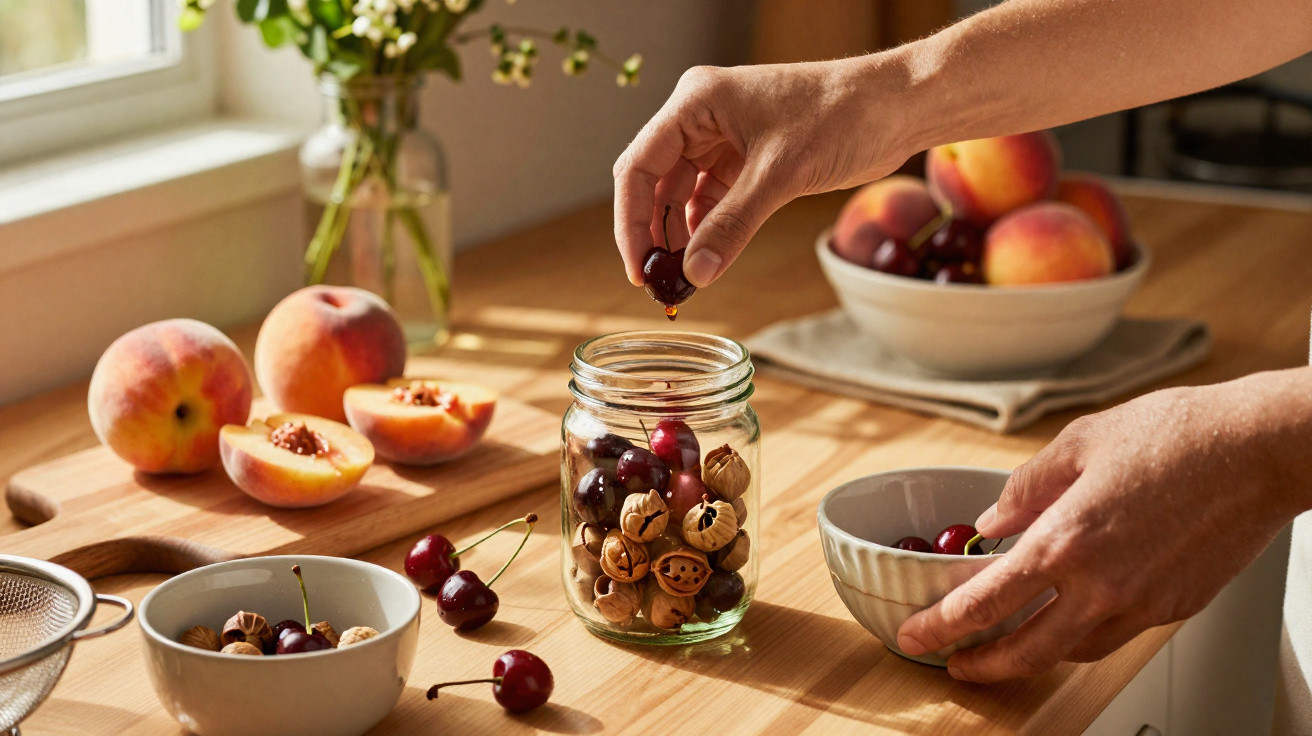
The peach on the plate was so ripe that juice ran over my fingers. In the sink, the skins were piling up, while cherry stones sat on the chopping board like tiny marbles. Usually, they go wordlessly into the bin, somewhere between coffee filters and vegetable trimmings. But that evening, my hand paused above the bin. What if these stones could do more than feel sticky for a moment before disappearing?
It was an odd moment, almost embarrassingly ordinary: the bin liner half open, the kitchen still warm from cooking, and a podcast playing in the background that I had, once again, not properly listened to. Then came the question: could something as inconspicuous as a fruit stone still be put to good use? It was a quiet thought, yet one that proved surprisingly hard to shake.
Once you start noticing details like these, you quickly realise that the kitchen holds more hidden potential than we tend to think.
Why peach and cherry stones are far too good for the bin
Most of us regard stones as exactly what they appear to be: waste. Sticky, sometimes irritating leftovers that interrupt the pleasure of eating. We spit them out, wipe them away and throw them out. End of story. Except that the story is actually a little longer. Stones are small stores of material. They have weight, structure and a history. Used properly, they can even bring a touch of magic to an otherwise ordinary kitchen.
Anyone who has held a handful of clean, rinsed cherry stones will notice it immediately. They roll between your fingers, cool and unexpectedly smooth. It is the point at which you think: it is strange that most people discard these without a second thought. This very unremarkable leftover can later provide warmth, carry a fragrance, weigh down pastry or serve as a quiet little organising aid amid kitchen chaos. Suddenly, the bin liner no longer seems like the only logical destination.
Let us be honest: nobody meticulously sorts their stones every day and plans grand projects around them. Life is busy, and everyday life clings to us like apricot jam on the edge of the table. Even so, a few simple habits can turn peach and cherry stones into small treasures. The principle is straightforward. Stones are hard, heat-resistant and remarkably good at retaining warmth. They are free raw materials for items we might otherwise buy at a cost. They also remind us that the kitchen is not merely a place for consumption, but a small workbench for reusing things.
From fruit stone to kitchen helper: useful ways to use stones
A classic starting point is to wash cherry stones thoroughly, dry them, then use them as filling. The best-known version is, of course, a cherry-stone cushion, but there is a less twee kitchen-focused take on it. Sew a narrow cushion from a small fabric bag, an old tea towel or a retired linen napkin, fill it with clean cherry stones, and you have a flexible heat pad for your neck or lower back - or, more practically, for gently helping yeasted bakes to rise. Warmed at a low temperature in the oven, the stones hold a mild warmth for a long time and work like a quiet helper in the background.
Many people underestimate how versatile stones can be as miniature weights. A small, well-filled bag of cherry stones can weigh down vegetables during blanching, keeping them submerged. It can also be used for blind baking when you do not have traditional ceramic baking beans at home. Placed on the pastry, a bag of cleaned, dry stones stops the base from puffing up. And yes, this is one of those tricks that you will later insist you have always known.
Peach stones are larger, heavier and rougher to the touch - which is exactly what makes them interesting. Wash and dry them, then collect them in an attractive jar, and they become a kind of natural “ice” for cold bowls or small serving platters. Leave them in the freezer for a few hours, then put them in a metal or glass bowl beneath, for example, a dessert bowl. The stones keep the cold going longer than a damp cloth placed underneath the bowl. It is not high-tech, more of a simple country-kitchen solution - but it is surprisingly effective.
Practical ideas: what you can make with peach and cherry stones
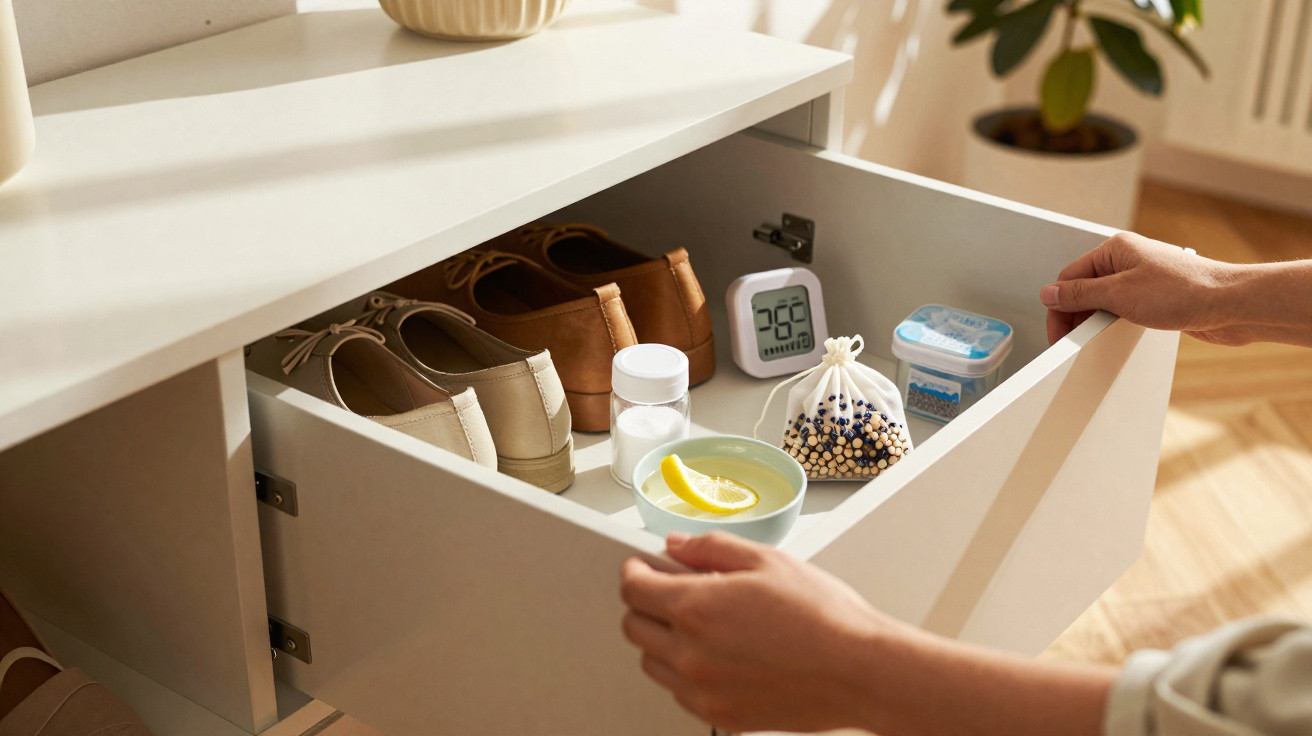
One of the most rewarding uses is a scented bag for a kitchen drawer. Take cleaned, completely dry cherry stones, place them in a small fabric bag and add a few drops of vanilla extract or a pure essential oil, such as citrus or lavender. Close it and leave it for a day. The bag can sit among napkins, baking tins or cutlery, releasing a light, unobtrusive scent. Unlike artificial fragrance stones, you can regularly “top up” the bag, while the stones retain the aroma for a surprisingly long time.
A second, very down-to-earth use is to employ stones as dry “moisture catchers” in damp corners. An open jar of well-dried peach or cherry stones, placed in a larder or beneath the sink, can help absorb minimal moisture and soften odours a little. It is no replacement for a professional product, but sometimes that small extra is enough to stop a cupboard smelling musty. If that sounds too esoteric, simply use the same stones as decorative filler in a jar holding wooden spoons, whisks and spatulas. They provide useful stability and create an unexpectedly warm look.
Many people are unsure about what happens when stones come into contact with food. A sober approach is useful here. The stones themselves need to be clean and genuinely dry before being reused - otherwise, they will go mouldy. It is not witchcraft, merely a matter of a baking tray, some patience and a low temperature. There is something else that needs to be said clearly: the inner almond-like kernel of many stone fruits contains cyanogenic compounds. So please do not crack them open, eat them or grind them into flour. The outer shell, on the other hand, is perfectly fine as a heat store or weight. Sometimes a healthy respect for “household myths” also keeps us from poisoning ourselves.
“Stones are like the preserving jars in our grandparents’ cellar - only when you keep them do you realise how often they are missing from everyday life.”
- Cherry-stone cushions for the kitchen: sew small bags, fill them with washed, dry cherry stones and use them to retain heat for yeasted dough or to warm your hands while washing up.
- Peach stones as cold packs: collect them in a bag, freeze them and place them beneath bowls that need to stay cool during a barbecue.
- Scented stones in a jar: mix stones with vanilla, cinnamon sticks or dried citrus peel, then leave them uncovered in a kitchen cupboard.
- Weight bags for blind baking: a heatproof fabric bag filled with stones replaces baking beans and prevents shortcrust pastry bases from puffing up.
- An organising aid: weigh down a tall glass with stones and use it as a stable holder for slim kitchen utensils that would otherwise keep falling over.
What remains when the peach is gone: small rituals against automatic waste
Once you consciously begin collecting stones, you notice how quickly routines shift. Instead of flicking a stone straight into the bin, you briefly put it in the sink, rub it clean and set it aside. It is a tiny moment of attention in a day that often runs on autopilot. A few individual stones eventually become a handful, then a jar, perhaps even a whole bowlful. It may seem trivial - and that is exactly where its appeal lies. Things that would otherwise remain unseen suddenly acquire weight, quite literally.
This is not some grand environmental gesture or an Instagram-ready zero-waste project with flawless aesthetics. It is more a small, quiet counterweight to the automatic throwaway habit we all know. And yes, let us be honest: nobody truly does it every day, especially not in stressful periods. Still, it can feel good to remember that the option exists. Rather than feeling guilty when everything does end up in the bin, you can appreciate the days when a few stones find their way into a new life.
Perhaps that is the real added value: keeping stones is a tiny ritual that grounds us. For a second, it makes us slow down and look more closely. A peach stone becomes a heat store, a cherry stone becomes a carrier of fragrance, and a jar full of stones becomes a quiet symbol of how an apparently worthless leftover can suddenly become useful. The next time you stand over the bin with a handful of stones, a small thought may interrupt you: does this really need to be thrown away - or might something new be starting here?
| Key point | Detail | Benefit for the reader |
|---|---|---|
| Heat and cold storage | Cherry stones for cushions, peach stones as cold packs beneath bowls | Saves money on ready-made products and makes the kitchen more flexible to use |
| Natural weights | Bags of stones for blind baking or weighing down vegetables | Produces better baking results without specialist equipment |
| Fragrance and organisation helpers | Stones in fabric bags or jars with scents and kitchen utensils | Improves atmosphere and order in the kitchen with simple means |
FAQ:
- Can I use all stone-fruit stones in this way? The hard outer shell of peach, nectarine and cherry stones can be used as long as you clean and dry it thoroughly. You should not eat or process the inner almond-like kernel.
- How do I dry stones properly? After washing, spread them over a tray and dry them in the oven at around 80–100 °C until completely dry. Alternatively, leave them uncovered to air-dry for several days, turning them regularly.
- How many stones do I need for a small cushion? For a small cherry-stone cushion, approximately 15 x 20 cm, roughly 300–400 g of stones is sensible. Depending on their size, this is about what remains from several kilograms of cherries.
- Can stones come into direct contact with food? When used as weights for blind baking, they should remain inside a fabric bag rather than being placed loose on the pastry. Closed jars or bags are the better choice for decoration or fragrance.
- How long do projects made with stones last? Properly dried stones can be used for several years. If they smell, become discoloured or damp, it is better to dispose of them and collect fresh ones.



Comments
No comments yet. Be the first to comment!
Leave a Comment