
The lighting was spot on, the table had been laid and the food genuinely resembled the picture in the recipe.
Then you lifted a wine glass and noticed it: a stubborn white mist, like a fingerprint that refuses to disappear. You buffed it with a tea towel. You washed it again with washing-up liquid. Still nothing. The glass looked worn out, as though it had endured far too many dishwasher cycles and lost all interest in sparkling.
Social media is full of crystal-clear glasses that reflect light like diamonds. At home, meanwhile, your tumblers can seem as if they have been dunked in milk. You begin questioning everything. The wrong sponge? The wrong detergent? The wrong approach to life?
The solution is far less complicated. It is probably already sitting unnoticed in your kitchen cupboard.
The simple kitchen staple that revives cloudy glasses
The everyday ingredient that can return cloudy glasses to a mirror-like gleam is plain white vinegar. It is neither luxurious nor elaborate: simply the sharp liquid you pour over chips or use to descale the kettle when it occurs to you.
Its mild acidity works by dissolving the mineral deposits and soap film that gradually attach themselves to glass. What appears to be irreversible damage is often only a fine layer of limescale stubbornly hanging on. Remove that layer and the glass beneath can look nearly new again.
It can feel like a small magic trick. Within minutes, you move from “I should probably throw these out” to “Wait, were they always this clear?” And there is no need to buy a specialist dishwasher product with a glossy label and an equally glossy price.
Consider Jess, a 34-year-old from Manchester, who was convinced she had spoiled her whole set of wedding glasses. Hard water had left a chalky veil over them all, particularly the delicate stems she loved. She tried hand-washing, changing detergents and even polishing with a microfibre cloth until her fingers ached.
One night, while browsing cleaning forums, she saw a comment from someone who insisted that soaking cloudy glasses in warm water and vinegar worked. With little to lose, she filled a washing-up bowl, added a generous glug of white vinegar and lowered in three of her most misty-looking glasses, without expecting much.
Fifteen minutes later, she rinsed them beneath the tap and held them to the light. The result was unmistakable. The haze had vanished. The glass seemed brighter and lighter, as though a layer had been lifted away. She then spent the rest of the evening soaking every glass she owned.
There is a simple explanation. Hard water deposits calcium and magnesium on glass, particularly when your dishwasher’s rinse cycle is not quite performing properly. Dishwasher tablets may also leave a thin film if they fail to dissolve completely. Given enough time, these two combine to create that persistent white cloud.
Vinegar contains acetic acid. This acid breaks down mineral deposits gently, without scratching or harming the glass surface. Think of it as a reset for your glassware. Rather than polishing the glass itself, you are removing the buildup that has been making it look dull.
Sometimes, what we describe as “ruined” is simply “covered in things we can’t see properly”. Clear away the coating and the reality becomes visible.
How to restore shine with vinegar – step by step
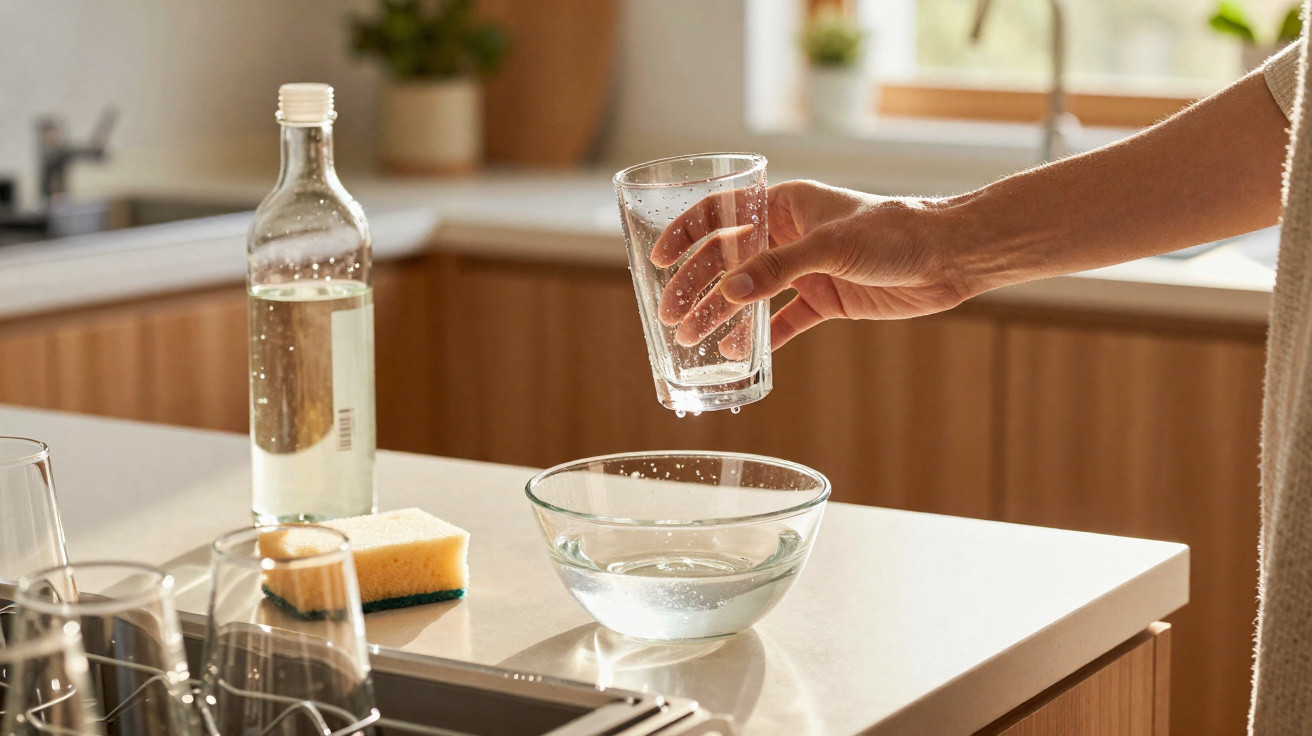
Begin with an easy soak. Fill a washing-up bowl or sink with warm water. Pour in a large splash of white vinegar – around one part vinegar to three parts water if you prefer measurements, or simply “a good glug” if you do not. Swirl the mixture with your hand before carefully placing the cloudy glasses inside.
Leave them there for 10 to 20 minutes. Do not scrub yet or make a heroic effort; let the vinegar slowly work on the film attached to the surface. Once the time is up, rinse every glass under clean, warm water and hold it to a window or lamp.
In most cases, the haze will disappear immediately. If one glass remains slightly dull, soak a soft cloth in undiluted vinegar and rub the stubborn areas before rinsing once more. Dry it by patting with a lint-free towel, or leave it upside down to air dry on a clean rack.
This is not about turning your home into a cleaning programme. Most people simply do not have the energy for that. Particularly cloudy glasses may require two or three treatments before they return to their best. That is perfectly fine: see it as a gradual rescue rather than an instant miracle.
Using less dishwasher detergent can also help. Extra soap does not produce cleaner glasses; it often creates more residue instead. Every so often, run the dishwasher on a hotter programme to remove hidden buildup inside the appliance.
Keep an eye on rinse aid, too. It can either help enormously or be the reason glasses develop odd streaks. If you put vinegar in the rinse-aid compartment, use white vinegar only and avoid overfilling it. Your dishwasher was not made to serve as a pickling jar.
Scrub gently. Abrasive scourers may scratch glass, and once scratches are present, vinegar cannot restore a showroom finish. A soft sponge or microfibre cloth is all that is required. And yes, leaving glasses in the sink overnight occasionally will not ruin them. Let’s be honest: nobody really does this every day.
“I thought I needed a new dishwasher. Turns out I just needed vinegar,” laughs Tom, a renter in Leeds. “My landlord definitely doesn’t need to know how close I was to blaming his appliances.”
For an easy guide during cloudy-glass emergencies, use this quick reference:
- Soaking time – 10–20 minutes in warm water with white vinegar.
- Stubborn spots – rub with a vinegar-damp cloth, then rinse.
- Prevention – use less detergent, clean your dishwasher filter monthly.
- Hard water areas – repeat a vinegar soak every few months.
- What to avoid – harsh scourers, boiling water on delicate glass, coloured vinegar.
When shine feels like a small everyday luxury
There is something unexpectedly satisfying about picking up a glass and watching it catch the light cleanly, free from a dull chalky film. It will not transform your life, but it can alter how an ordinary drink feels at the end of a long day. A clear glass of water can suddenly seem almost… generous.
We pay more attention to these small details than we tend to admit: a spotless mug, an unscratched plate or a glass that appears ready for visitors even when nobody is coming. They are small reminders that the objects around us still have some life left in them. In a world that encourages us to replace things rapidly, bringing an old glass back to a shine offers a quiet satisfaction.
Practically speaking, choosing vinegar over heavy-duty chemicals means fewer products taking up cupboard space and fewer mysterious residues on the things you drink from. Emotionally, it is a reminder that a basic, almost old-fashioned answer can solve modern problems. We have all looked around the kitchen and wondered, “Is this all just slowly getting worse?” Sometimes the answer is surprisingly gentle.
You may begin with a single cloudy wine glass, then end up soaking every tumbler, jar and vase in the house. You might pass the tip on to a friend who insists their dishwasher is “cursed”. Or you may keep it to yourself: a little piece of household magic that brings daily life one step closer to the version you imagine while scrolling through perfect tablescapes online.
| Key point | Detail | Benefit for the reader |
|---|---|---|
| White vinegar | Dissolves mineral deposits and soap film on glass | Restores dull glasses without replacing them |
| Warm soak | 10–20 minutes in a water-and-vinegar mixture, followed by rinsing | A straightforward method to repeat without specialist equipment |
| Prevention | Less detergent, dishwasher maintenance and occasional hot cycles | Reduces the return of white haze and helps glassware last longer |
FAQ:
- Can vinegar damage my glasses? White vinegar is mild and safe for most glassware when used in short soaks. Avoid soaking delicate, hand-painted or gold-rimmed pieces for long periods and test on one item first if you’re unsure.
- How often should I do a vinegar soak? For hard water areas, every two to three months is usually enough. If your water is softer, once or twice a year may keep glasses clear.
- Can I put vinegar directly in my dishwasher? You can run an empty cycle with a cup of white vinegar on the top rack to clean the machine. For regular rinsing, use small amounts and only in the designated rinse-aid area, checking your manual first.
- What if the cloudiness doesn’t go away? If vinegar doesn’t help, the glass may be permanently etched from repeated heat and harsh detergents. In that case, the damage is in the glass itself, not just on the surface.
- Does the type of vinegar matter? Use clear white vinegar only. Balsamic, cider or coloured vinegars can leave stains and smells you don’t want on your glassware.




Comments
No comments yet. Be the first to comment!
Leave a Comment