
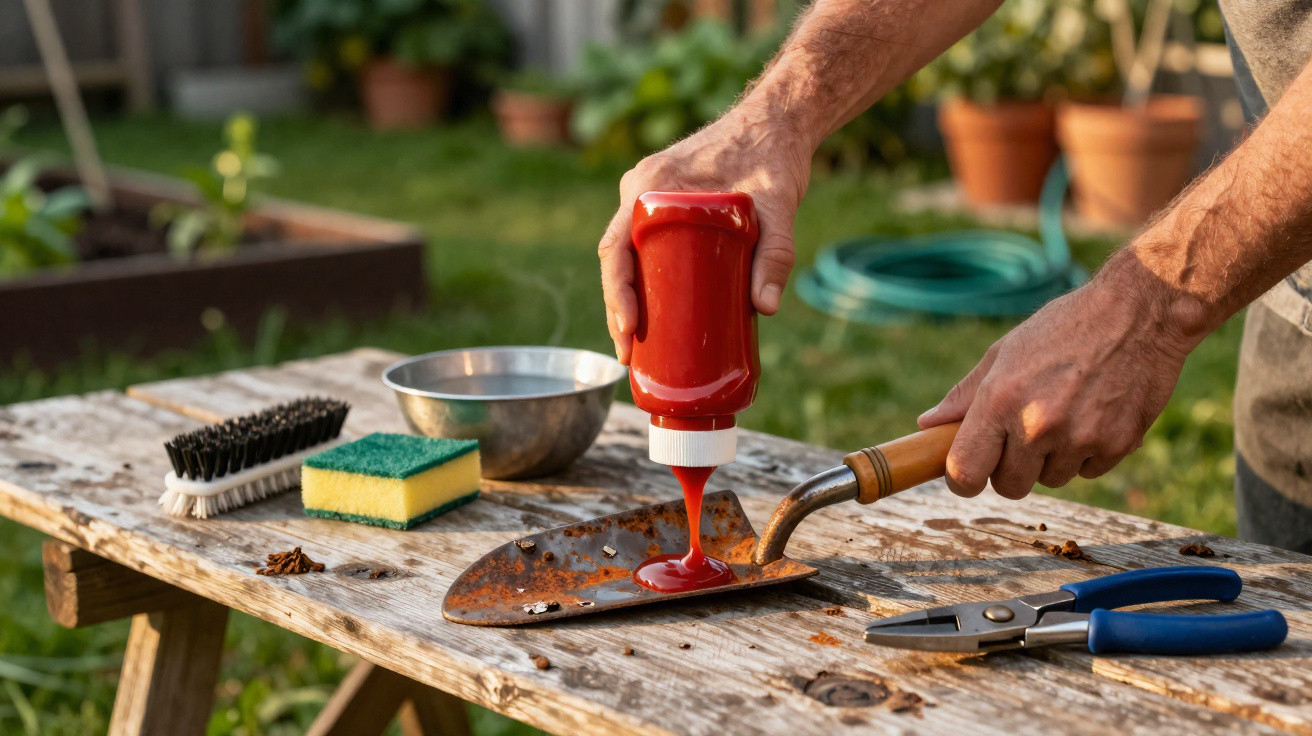
That sticky red bottle lurking at the back of the fridge could be more useful in the shed than alongside your chips this spring.
Across gardening forums and social media, ketchup has become an unexpected talking point in discussions about removing rust. Although it may sound like a joke, the idea has steadily appeared in English-language gardening magazines and among eco-conscious gardeners. They say this everyday condiment can freshen up dull, orange-speckled blades without relying on harsh chemicals or expensive products.
Why ketchup is finding its way into garden sheds
The attraction for many home gardeners is straightforward: spend less, use something already in the house and steer clear of powerful chemical sprays. Following a wet winter, secateurs, trowels and hoes commonly emerge covered in orange specks, prompting people either to throw them away or reach for a strong rust remover.
A number of gardening specialists suggest another approach. They believe ketchup can treat light rust while being kinder to soil life and less concerning for gardeners trying to maintain a largely organic plot. Rather than taking industrial cleaners into the garden, they simply turn to the fridge.
Using ketchup on rusty tools offers a low-cost, low-tox option that can keep solid metal gear in service for years longer.
The trend also mirrors a wider interest in household cleaning methods. People who use vinegar, baking soda or essential oils indoors are applying similar thinking to their garden equipment. In its early stages, rust can be surprisingly receptive to these treatments.
How burger sauce works on rusty metal
Ketchup is not a miracle product, but its ingredients can work quietly on certain kinds of rust. It is generally made with tomatoes and vinegar, as well as salt, sugar and spices. In this case, two components are particularly important: the natural acids.
- Tomatoes contain a modest amount of citric acid.
- Vinegar supplies acetic acid.
These are both weak acids and far less aggressive than the products used in vehicle repair workshops. When metal has only light rust, they can slowly loosen the thin surface layer of iron oxide.
The mild acids in ketchup loosen light rust so that a cloth, brush or fine sandpaper can remove it without heavy grinding.
Its mild effect means that healthy metal underneath is unlikely to be removed in the process. This makes ketchup appropriate for garden tools with faint orange haze or light spotting, rather than severe pitting.
Step-by-step: using ketchup on rusty garden tools
Gardeners who rely on this technique tend to follow a similar process. Careful preparation, patience and thorough cleaning afterwards are essential.
Preparation matters more than you think
Begin by cleaning the tool. Soil and dried sap left on a blade can prevent the ketchup from reaching the rusty sections.
- Remove dry mud and plant material with a brush.
- If the tool is oily, wash it in warm soapy water.
- Dry it completely with an old towel to avoid creating new rust.
With the tool clean and dry, it is ready for ketchup:
- Apply a thin coating over the rusty parts, using only enough to cover the metal.
- Use a gloved finger, old spoon or rag to spread it across every orange area.
How long to leave it on
The required contact time varies according to how serious the rust is.
| Rust level | Suggested ketchup time | Extra work needed |
|---|---|---|
| Light speckles | 15–20 minutes | Wipe with cloth or soft brush |
| Visible patches | 45–60 minutes | Rub with fine sandpaper or a scouring pad |
| Stubborn, older rust | Up to 4–6 hours, checking often | More vigorous abrasion, possible repeat treatment |
Place the tool on a tray or a piece of cardboard while the ketchup is working. During longer treatments, some gardeners use a slightly thicker coating and inspect it every hour, ensuring that it does not dry out fully.
Rinse, neutralise and protect
Once the waiting period has passed, the hands-on stage begins:
- Scrub away the softened rust with a cloth, brush or fine sandpaper.
- Rinse with clean water until all ketchup, salt and sugar have been removed.
The sugar and salt are more important than they may appear. Sugar can remain sticky and draw in moisture, while salt can accelerate corrosion when left on metal. Removing every trace is therefore vital.
After a lengthy ketchup treatment, some mechanics advise briefly dipping the tool in water mixed with a spoonful of baking soda. The baking soda helps to slightly neutralise any acidity that remains. Dry the tool immediately, then apply a protective finish:
- Wipe the cleaned metal with a small amount of light oil, such as linseed or camellia oil.
- Buff off the excess using a cloth, leaving a light film rather than a greasy surface.
The final oil layer acts as a barrier between damp air and bare metal, slowing the return of rust.
When ketchup works – and when it does not
The ketchup method is most effective on tools that remain structurally sound. It can produce a noticeable improvement where a blade has only slight speckling or a thin orange film across its surface.
The situation is different once corrosion has eaten far into the metal. Signs to look for include:
- Uneven, flaky patches that crumble under pressure.
- Blades that are thin, bent or notched.
- Pruner joints that no longer align as they should.
For these problems, sanding, wire brushing or dedicated rust-removal products will normally be faster and more effective. Replacing the tool can sometimes be the safest option, particularly where a weakened blade may break when pressure is applied.
How ketchup compares with other household rust treatments
Ketchup is only one kitchen staple that gardeners use in the shed. Other common cupboard ingredients are also frequently tested, each bringing different benefits and drawbacks.
- White vinegar: contains stronger acetic acid and can tackle more stubborn rust, but may etch metal when tools are soaked for too long.
- Lemon juice: supplies citric acid and is often paired with salt to speed up the effect, although this can increase the chance of fresh corrosion.
- Baking soda paste: alkaline and mildly abrasive, it is more useful for polishing lightly tarnished surfaces than breaking down substantial rust.
Ketchup sits in the middle: more controllable than straight vinegar, yet more active than plain baking soda.
For gardeners uneasy about leaving a tool in pure vinegar overnight, ketchup can be a gentler introduction. The sauce is visible, the treatment area is easy to manage and the process can be stopped quickly if necessary.
Safety, soil health and practical risks
Those seeking alternatives to strong chemicals often raise the same question: what residue is left on equipment that will soon be used in beds and borders? Heavy-duty rust-remover residues may find their way into soil near vegetables or plants grown for pollinators.
In comparison, ketchup and other food-based cleaners can feel less worrying, but they are not entirely harmless. Salt and sugar may still cause issues if tools are not rinsed properly. Sticky blades collect additional dirt, while salt residue can hasten corrosion on tools that are left unattended.
There is a personal safety consideration too. Even weak acids can irritate the eyes and skin, despite being contained in tomato pulp. It is sensible to wear gloves, use eye protection while scrubbing and ensure reasonable ventilation in a small shed, particularly during longer sessions involving several tools.
Keeping garden tools rust-free after ketchup treatment
One ketchup treatment may save a cherished pair of pruners, but regular habits are what keep tools clean and sharp. A basic routine can make a considerable difference:
- Wipe blades after every use, especially after cutting wet or sappy stems.
- Keep tools off the floor in a dry location instead of propping them against a damp shed wall.
- Apply a light coating of oil to metal parts at the beginning and end of the main gardening season.
- Tighten screws and clean moving joints so that water cannot collect in concealed gaps.
Many gardeners include rust prevention in their winter maintenance. On a wet afternoon, they arrange their secateurs, hoes and spades, tackle orange marks with ketchup or vinegar, sharpen the edges and hang each item up tidily. This modest amount of effort can feel more rewarding than purchasing a replacement tool every year.
From viral hack to useful gardening practice
TikTok clips and lively online threads may have helped ketchup gain attention, yet the principle behind the method is established and testable. Weak acids, gentle abrasion and rapid drying are all familiar parts of rust control. The unusual element is simply that the acid source normally sits next to your chips.
Anyone interested in trying it could begin with an inexpensive hand fork or a second-hand trowel. It will not turn the item into a mirror-polished collector’s piece, but many gardeners say the improvement is enough to keep it useful for another season. In a shed filled with neglected metal, that inexpensive bottle at the back of the fridge can suddenly seem worth keeping.

Comments
No comments yet. Be the first to comment!
Leave a Comment