
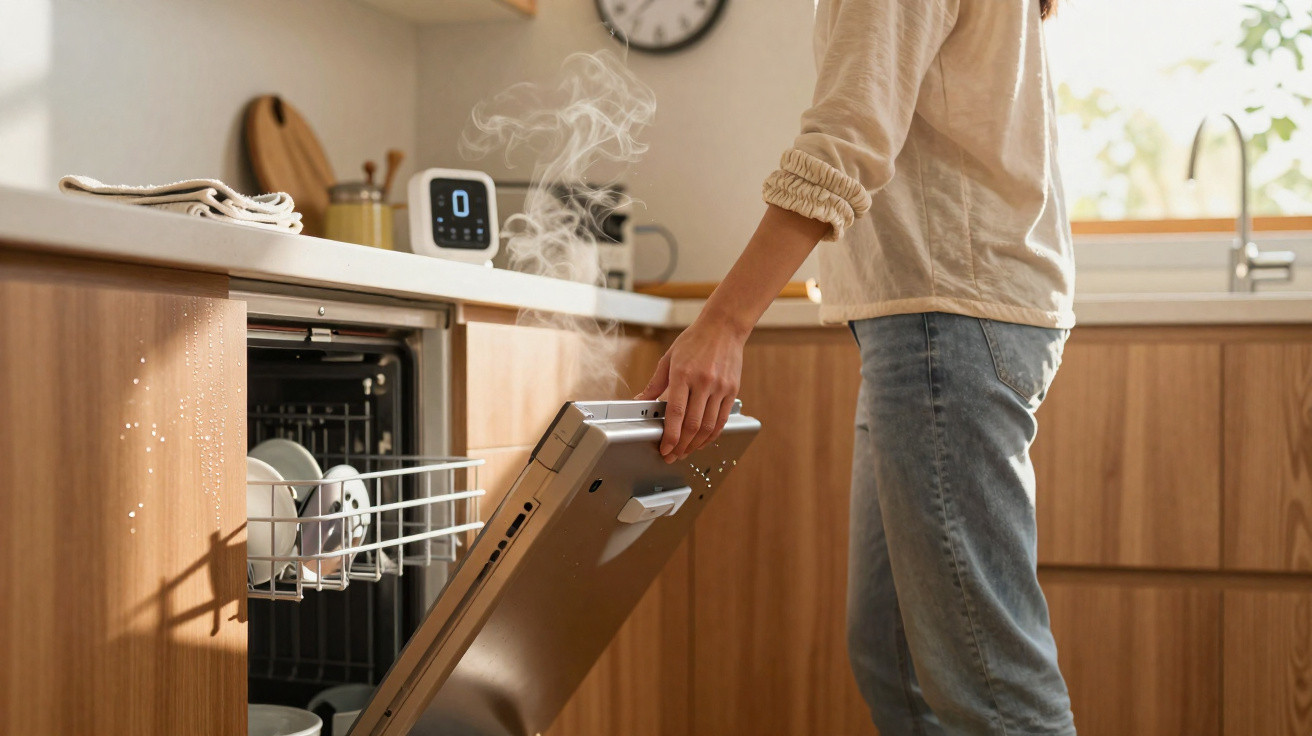
The dishwasher beeps, the display reads “End” – and the door is instinctively pulled open. This is precisely where opinions differ in kitchens across the UK. Some people swear by opening it immediately, while others leave the appliance closed for a while. Bosch has now clarified which approach is better and why this seemingly harmless action can affect both kitchen furniture and energy use over time.
Why you should not open the dishwasher door straight away
A dishwasher operates with hot water and plenty of steam. Once the cycle ends, the interior is often still well above room temperature. Opening the door immediately releases that steam all at once – and that is where the issue begins.
According to Bosch, the appliance should be allowed to cool down slightly after the programme has finished before the door is opened.
The machine is already drying the dishes, while steam builds up inside. If the door is opened as soon as the programme ends, the moist air rushes into the room. It may seem harmless at first, but it can have consequences, particularly in fitted kitchens with plenty of wooden elements.
Damp steam versus kitchen furniture
In many kitchens, dishwashers are installed directly beneath a wooden worktop or beside cabinets with veneered fronts. The humidity from the hot interior settles not only on tiles and glass, but also on these surfaces.
- Wood can swell and warp.
- Coated surfaces can gradually develop unattractive edges.
- Seals and adhesives age more quickly when regularly exposed to moisture and temperature changes.
What may sound like a minor detail can add up to visible damage over the years. This is exactly why Bosch and other manufacturers recommend giving the dishwasher a little time to “breathe” after the programme ends – but with the door still closed.
How long should the dishwasher be left after a cycle?
Manufacturers rarely specify an exact number of minutes, but one thing is clear: this does not mean waiting for an hour, only allowing a short cooling period. For appliances with automatic door opening, Bosch bases the timing on the temperature inside the machine.
On many models, the door opens only once the dishwasher interior has reached around 42 degrees. This is substantially cooler than the temperature during the main wash or final rinse, so the burst of steam when it opens is correspondingly less intense.
As a rule of thumb: waiting a few minutes until the appliance has noticeably cooled reduces escaping steam and helps protect the kitchen.
If your appliance does not have automatic door opening, a practical guide can help: after the signal sounds, leave the dishwasher shut until the front feels normal to the touch again rather than hot.
Faster drying – yes, but with care
Many people open the door as soon as the programme finishes for an understandable reason: the dishes appear to dry more quickly. Steam escapes into the room, droplets run off, and plates seem ready to use sooner.
That effect is real – but it simply transfers moisture from the appliance interior into the kitchen. Anyone living in a small flat or an open-plan kitchen will notice it quickly: misted windows, damp worktops and air that feels clammy.
When opening early can be worthwhile
Opening the door immediately should not be condemned in every situation. In certain circumstances, it can make sense:
- If the dishwasher is freestanding rather than integrated into kitchen furniture.
- If there are no sensitive wooden cupboard fronts or worktops directly beside it.
- If a window or extractor hood is nearby and you can ventilate straight away.
- If there is a lot of plastic in the dishwasher, which tends to dry less effectively anyway.
Even then, an intermediate step is advisable: wait briefly until the dishwasher interior is no longer extremely hot, then open the door only a small amount – ideally with a window left ajar.
What Bosch, Siemens and others do about it technically
Manufacturers have been aware of the issue for some time and have developed solutions. Many newer models include intelligent drying functions designed to ease the balance between fast drying and protecting kitchen furniture.
Bosch calls one such technology “Eco drying”. The door does not spring open as soon as the programme ends; instead, it opens automatically once the temperature inside has fallen significantly. According to the company, around half of its current range includes this function.
Siemens uses a similar concept called “autoOpen Dry”. Here too, the door opens only after a delay. The instruction manuals contain a clear warning:
Warning: Escaping water vapour can damage fitted furniture. Allow the appliance to cool slightly after the programme has ended before opening the door.
So, if you own a modern appliance, it is worth checking the programme settings carefully. These automatic functions can often be switched on or off. When in doubt, consult the manual rather than relying on habit.
How to use your dishwasher while protecting materials
A few straightforward habits can make everyday dishwasher use much kinder to your kitchen materials – without requiring any specialist knowledge.
- Do not rush to act when the programme ends; wait a few minutes.
- If the appliance has automatic drying, switch this function on.
- Open the door only a small amount at first rather than pulling it fully open.
- Where possible, leave a window ajar or briefly air the room when opening it.
- Wipe down the worktop and cupboard fronts occasionally if condensation collects.
This helps the kitchen stay looking good for longer, while the dishwasher operates as intended without placing unnecessary strain on its surroundings.
The science behind the steam: a brief technical look
During the final rinse, many programmes wash the dishes with particularly hot water. The high temperature kills bacteria and improves drying. Hot air inside the appliance absorbs moisture from the dishes – creating the dense steam present at the end of the cycle.
As the air inside the dishwasher cools gradually, some of this moisture condenses again on the walls or drips back to the bottom of the machine. The more time this process is given, the less moisture reaches the kitchen.
If you open the door too soon, the moist air escapes outside in one rush instead of remaining in the appliance. The dishwasher itself generally copes well with this, as it is designed for it – but the kitchen furniture around it often does not.
Everyday practical examples
One classic situation is this: the dishwasher runs overnight on the Eco programme, and the door is opened immediately in the morning before coffee. The warm air meets a cool worktop, condensation forms and runs beneath crumbs and tea towels. Over time, the material suffers, without anyone necessarily recognising the connection straight away.
Another example is a small open-plan kitchen where the machine is running while the heating is turned up during winter. Opening the door straight away makes the room climate change noticeably for a short time – the air feels heavier and the windows mist up faster. In this case, it is particularly worthwhile opening a window briefly or, at the very least, opening the door a small amount only after breakfast.
More convenience, less risk: is upgrading your appliance worthwhile?
If you are already considering buying a new dishwasher, the question of the door can be included in the decision. Models with automatic door opening and adapted drying programmes significantly reduce the risk to the kitchen.
At the same time, modern appliances are often more economical in both water and electricity use. Combined with sensible use – running full loads, choosing suitable programmes and using the right detergents – operating costs fall noticeably.
Ultimately, it comes down to one small everyday action. Whether the dishwasher door is pulled open immediately or remains closed for a little longer helps determine how long cupboard fronts, worktops and fitted kitchen units continue to look good. Following manufacturers’ advice can, in the best case, avoid costly refurbishments – while still leaving you with clean, dry dishes in the cupboard.


Comments
No comments yet. Be the first to comment!
Leave a Comment