
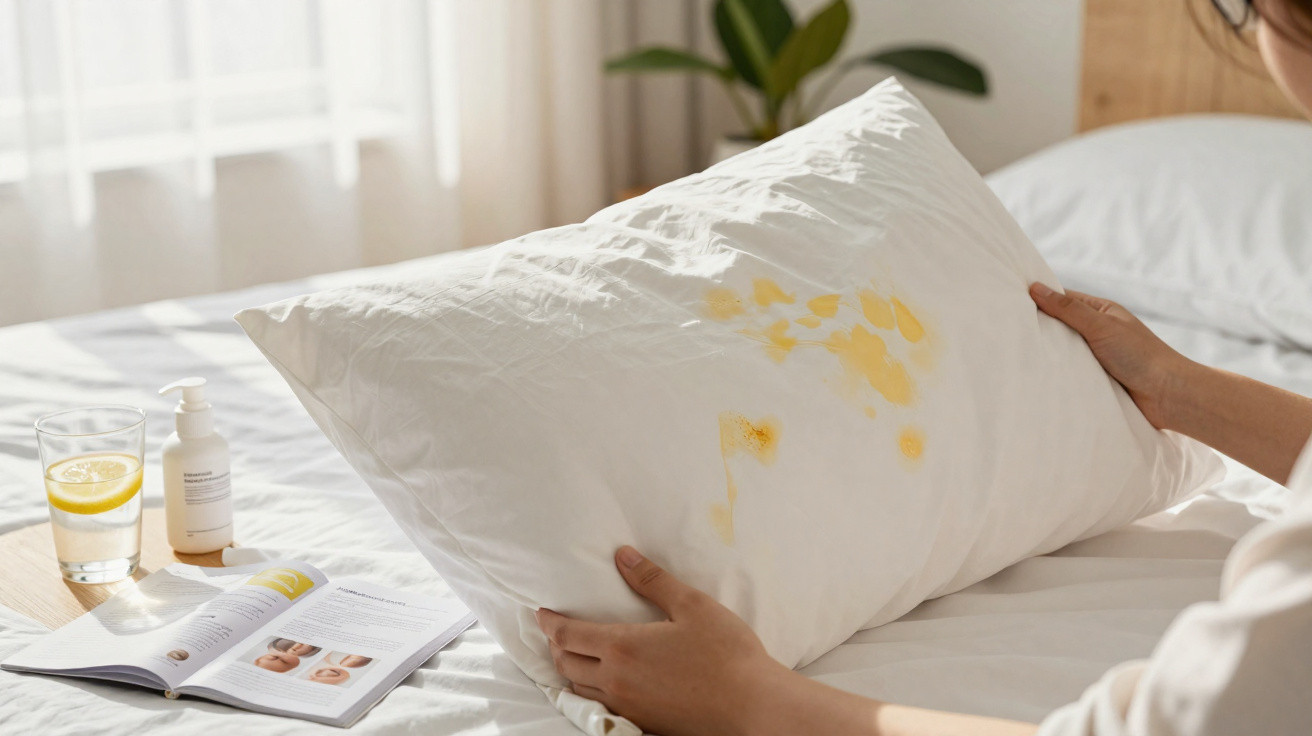
Removing the pillowcase in the morning can reveal yellowed patches and unattractive marks, which often come as a shock. Many people mentally dismiss the sight - “it’s just sweat” - turn the pillow over and carry on sleeping. Yet there is more to it than an appearance issue: discolouration can reveal a great deal about hygiene, health and sleeping habits.
What really causes yellow stains on pillows
Yellow discolouration does not develop overnight; it builds up gradually, layer by layer. During every stage of sleep, the fabric absorbs small amounts of fluid that become increasingly visible over time.
Essentially, yellow pillow stains are a cocktail of sweat, skin oils, saliva and cosmetic residue - kept at the ideal temperature by body heat.
The most common causes at a glance
- Sweat and skin oil: The body cools itself while sleeping, causing us to perspire. At the same time, the skin and scalp release sebum.
- Saliva: Many people drool slightly during sleep, particularly when lying on their back or side.
- Dead skin cells: Skin constantly renews itself, and tiny flakes end up in the pillow.
- Hair products and facial skincare: Oils, serums, creams and hairspray leave deposits that can discolour over time.
Even a newly washed pillowcase cannot keep everything out. Over the years, fluids seep into the filling - whether it is down, feathers, microfibre or foam - and can permanently stain the material.
When yellow pillows become a health concern
Yellowed pillows are unappetising to look at in any case. The more important question is: what is actually living inside them? The combination of warmth, moisture and skin flakes creates a small ecosystem.
Dust mites, bacteria and fungal spores love the warm, damp conditions in old, stained pillows - especially if they are rarely cleaned.
Possible effects on the airways
- Allergic reactions: Morning sneezing fits, itchy eyes or a blocked nose can indicate dust, dust mites and their droppings in the pillow.
- Asthma symptoms: People with asthma often react sensitively to mould spores and dust-mite allergens.
- Night-time tickly coughs: Fine particles can irritate the mucous membranes, particularly while lying down.
Anyone who repeatedly wakes with a blocked head and cannot identify the cause should consider not only pollen or household dust, but also their pillow.
Effects on skin and hair
Skin can also react to a “dirty” pillow. Your face and hair rest against it for several hours every night, and that leaves its mark.
- Blemished skin and spots: Oil and sweat residue combined with bacteria can block pores.
- Irritation and redness: Sensitive skin may react to germs and deposits in the fabric.
- Scalp problems: A pillow that remains damp and poorly ventilated can encourage itching and dandruff.
Those who spend a great deal on skincare products and cleansing routines partly undermine their efforts if their pillow remains a magnet for bacteria.
How to prevent yellow stains from the outset
The good news is that a few straightforward habits can prevent much of the problem. The aim is to stop as much moisture and residue as possible from reaching the inside of the pillow in the first place.
| Protective measure | Everyday benefit |
|---|---|
| Use a pillow protector | An extra cover acts as a barrier against sweat and oil, and can usually be washed at 60°C |
| Change pillowcases regularly | Replacing them weekly - or more often if you sweat heavily - significantly reduces oil and dirt build-up |
| Air pillows every day | Moisture can escape, making it more difficult for dust mites to multiply |
| Plump up pillows | This loosens the filling, distributes moisture and helps it dry more effectively |
If you perspire heavily or go to bed with leave-in hair oils, you may need to change pillowcases every two to three days.
If the pillow is already yellow: how to clean it again
Once discolouration has appeared, check the care label first. Many pillows can be machine-washed without difficulty, while others require gentle treatment or cannot be washed at all.
Cleaning step by step
- Check the label: What wash temperature is permitted? Is tumble drying allowed or not?
- Pre-treat the stains: Dab more stubborn marks with a gentle oxygen-based bleaching solution or a mixture of water and mild stain remover.
- Choose the wash cycle: Use a delicate or gentle cycle, add only a small amount of detergent and, if needed, select an additional rinse to remove residue.
- Dry thoroughly: Use a tumble dryer on a low heat setting or air-dry the pillow. Pillows must be completely dry, otherwise mould may develop.
A slightly yellowed pillow can usually still be saved - a very heavily stained, musty one belongs in the bin.
A popular tip is to place the pillow by a window or on a balcony on a sunny day. UV light has a mild bleaching effect and reduces germs.
When you should replace your pillow for good
Many people keep their favourite pillow for far too long. At some point, no amount of washing can restore either its hygiene or support.
- The pillow quickly smells musty again despite washing.
- It has pronounced, widespread yellow or brown stains.
- The filling is clumped together or has become very flat.
- You increasingly wake with neck pain or a blocked nose.
As a broad rule of thumb, many sleep specialists recommend replacing a pillow every one to two years, depending on its material, how much you perspire and how it is cared for. High-quality pillows may last a little longer if they are consistently protected and washed.
The right pillow: cleanliness starts with the material
If you are already considering a replacement, choosing the right new pillow can make a substantial difference to sleeping comfort and hygiene.
What to look for when buying a pillow
- Material: People with allergies often choose synthetic fibres, memory foam or latex. These usually hold less dust and can sometimes be cleaned more easily.
- Washability: Ideally, the entire pillow - or at least its core - should be washable.
- Breathability: Air-permeable materials help prevent moisture from becoming trapped.
- Shape and support: A pillow that supports the neck and head properly reduces tension and promotes restful sleep.
A suitable, well-ventilated pillow not only stays fresh for longer but also retains less heat. This can reduce night-time sweating and, in turn, the likelihood of new stains.
What yellow stains reveal about your habits
The pattern of the discolouration is also worth examining. Small, irregular marks at the side often point to saliva. Large yellowish areas in the centre are more likely to indicate heavy sweating or an abundance of skin oil. Those who use plenty of hair oil or rich night creams will commonly notice marks around the forehead and temples.
Taking these signs seriously allows you to adjust the right factors: lighter bedding, a slightly cooler room temperature, less rich skincare immediately before bed, loose hair instead of a tight bun, and freshly washed pillowcases rather than thinking, “one more night will be fine”.
Practical tip: a small check that can make a big difference
A brief pillow check once a month is worthwhile: remove the case, inspect the pillow in daylight, smell it and run your hand over it. If it feels damp, has a musty smell or the stains look noticeably darker than they did a few months ago, it is time for a thorough wash - or a new pillow.
Yellow stains may seem insignificant, but they show what is happening out of sight. Responding to them can lead not only to more hygienic sleep, but often to calmer nights, clearer breathing, fewer skin problems and a better feeling when your head sinks into the pillow in the evening.

Comments
No comments yet. Be the first to comment!
Leave a Comment