
A scorched pan can turn an excellent meal into something that feels like a mistake. Black residue grips the surface, the sink becomes crowded, the sponge gives up, and your evening becomes a scrubbing match nobody wins. This is the calm, reliable chef’s technique that changes the outcome.
The steam had vanished long ago, leaving quiet, remorse and a faint scent of sugar smoked beyond saving. The pan seemed beyond rescue.
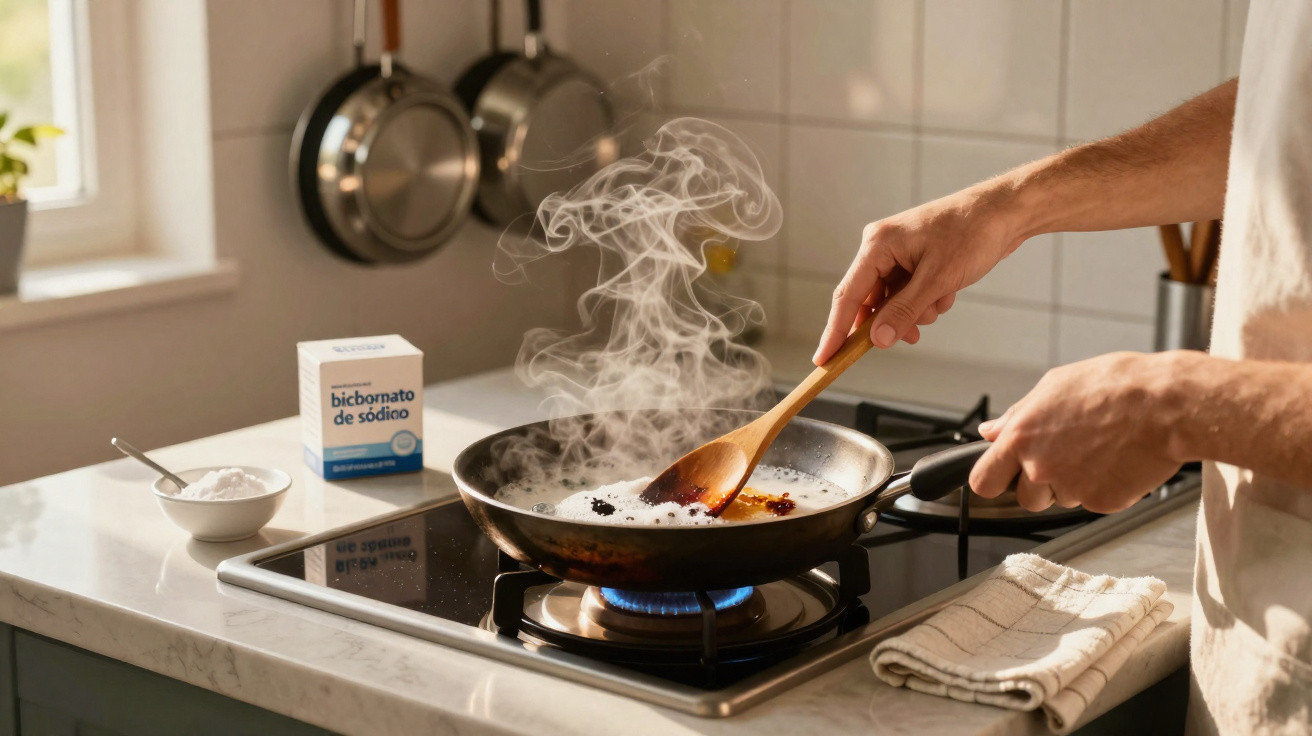
A chef friend lifted an eyebrow, as though I had ignored someone waiting at the door. They added water, scattered in a snowy layer of bicarbonate of soda and returned the pan to a gentle simmer. There was no fuss and no steel wool-only a patient fizz and the tap of a wooden spoon, like a knock at the door. Then the residue began to shift.
Burnt-on food is not the problem-the method is
Those dark, stuck-on scraps are concentrated flavour when you are making a sauce, but once dinner is over, they become the opposition. This chef’s trick does not rely on force: it brings food science back into play after the plates have been cleared. Let warmth and alkalinity handle the hard work, then remove only what is ready to come away.
At a small bistro in Shoreditch, I watched a sous-chef use the same technique five times after service, with the effortless rhythm of a habit learned under pressure. Water and bicarb, a low simmer, then an unhurried scrape that lifted sheets of blackened residue to the surface like autumn leaves. No spectacle, no damage, and the pans emerged bright enough to reflect a stripe from a tea towel.
Alkaline water disrupts the sticky bonds in caramelised sugars and polymerised oils, breaking their grip on the metal. Heat expands the burnt coating and encourages minute currents beneath its crust, while the fizz from bicarb helps raise debris and carry it to the surface. Rather than removing the burn by force, you release it through chemistry and patience.
The 5-minute bicarbonate simmer chefs rely on
Cover the burnt section with a shallow amount of water-roughly a finger’s depth-then add a tablespoon of bicarbonate of soda for every 20cm of pan. Place it over a low heat and simmer until a gentle spread of bubbles appears across the base. Use a wooden spoon to loosen the crust, simmer for 3–5 minutes, and leave it for another two minutes so the released pieces can soften further. Empty the pan, wipe it with a soft sponge and, for a final polish, make a quick paste with bicarb and a drop of washing-up liquid. Rinse, then dry it on a warm hob. This gentle “bicarbonate simmer” does the heavy lifting.
Everyone knows the point at which a sponge starts breaking apart, yet you carry on regardless. Stop there. If the residue remains after simmering, repeat the process once rather than scrubbing harder. This works well on stainless steel and enamel; treat non-stick surfaces more gently and do not let the water reach a rolling boil. Cast iron follows its own rules-remove the burnt food, but preserve the seasoning. Honestly, no one does this every single day.
Tiredness and haste can lead to a few easy mistakes. Do not scrub a dry pan with scouring pads while it is still extremely hot: this can pit the surface and make future burning more likely.
“Heat, water, and a pinch of alkali-treat it like you’re making a sauce to undo the sauce,” says London chef Mara Diaz. “If you’re sweating, you’re doing too much.”
- Works on stainless steel and enamel; use a light touch on non-stick.
- Choose bicarbonate of soda rather than baking powder for stronger alkalinity.
- Keep the process short for aluminium and avoid vinegar, which may dull its finish.
- Dry the pan over low heat at the end to stop new marks from developing.
A small change in how you clean burnt pans
Rather than treating a burnt pan as a failure, think of it as an encore: the heat that created the fond can also help free it. This technique changes your instinct from scrubbing first to softening first, particularly on busy weeknights when your patience is thinner than the sauce. Your pan lasts longer, your wrists get a break and the sink no longer resembles a battleground.
The approach also creates a brief mental pause that busy kitchens seldom offer. While the pan simmers, step away for a minute, clean the worktop, drink your tea and return to a task that is already half finished. The pan changes from an anchor into a feather, and you begin to rely on the method rather than elbow grease. There is a quiet pleasure in that exchange.
This is not magic; it is simply a learned practice. The first time you see the blackened crust curl up and float away, there is a small satisfaction in reclaiming something-time, ease and a little shine. Try it once and you will be convinced; use it regularly and your pans will show the difference. Cleaning is not a battle. It is a release.
| Key point | Detail | Benefit for the reader |
|---|---|---|
| Simmer with bicarbonate | Water + 1 tbsp bicarb per 20cm pan, 3–5 minutes on low | Loosens burnt-on food with minimal effort |
| Finish with a quick paste | Bicarb + a drop of washing-up liquid for a gentle polish | Restores shine without scratching |
| Match method to material | Stainless/enamel: ideal; non-stick: gentle; cast iron/aluminium: adapt | Protects your cookware and avoids damage |
FAQ:
- Can I use this on non-stick pans? Yes, but keep the treatment gentle: use low heat, a short simmer and only a soft sponge, without forceful scraping.
- Does baking powder work instead of bicarbonate of soda? It is less powerful and contains acids and starches; plain bicarb is the effective option for this task.
- What if the burn is really severe? Complete two or three simmering cycles, then leave a thicker bicarb paste on for 10 minutes before wiping gently.
- Do I need vinegar as well? No. Vinegar is acidic, the opposite of the alkalinity that breaks down burnt sugars and oils in this method.
- Will this damage aluminium or cast iron? For aluminium, use a short, low simmer and avoid vinegar; for cast iron, lift the burnt food carefully and re-oil the pan to safeguard its seasoning.


Comments
No comments yet. Be the first to comment!
Leave a Comment