

A recycling-based alternative is now emerging that takes a very different approach.
When renewing a driveway, many people instinctively turn to a large grey concrete slab again. It is expensive, impermeable and unforgiving – and no longer particularly forward-looking. Increasing numbers of homeowners want a surface that copes easily with cars and everyday use, allows water to drain through, reduces environmental impact and does not overwhelm the budget. Two recycled surfacing options stand out in particular.
Why a solid concrete slab can become a problem
Concrete is often seen as a permanent solution. The expectation is simple: pour it once and never worry about it again. In practice, however, cracks, standing water, heat, high costs and a poor CO₂ footprint are common concerns.
Cement production is estimated to account for almost one tenth of global CO₂ emissions – making it a major factor in climate protection.
There is another consideration too: sealed surfaces are increasingly facing political and legal restrictions. Local authorities are expected to limit soil sealing, while rainwater should soak away on site rather than overload drainage systems. A completely impermeable concrete cover does not fit that approach well.
Concrete is no longer a bargain financially either. In many areas, driveways with properly installed formwork and an attractive finish cost well into the double-digit euro range per square metre – and considerably more where preparation is complicated. If deeper cracks develop later, repairs can be expensive and difficult to conceal visually.
Recycled asphalt: a hard-wearing driveway surface at a lower price
One promising option for a practical new driveway is recycled asphalt, often known as RAP (Reclaimed Asphalt Pavement). Rather than disposing of old road asphalt, it is milled up, crushed, processed and laid again with a binder.
How recycled asphalt is produced
- Existing road surfaces are milled away.
- The reclaimed material is crushed, sorted and cleaned where necessary.
- It is then blended with fresh binder.
- The new layer is laid across the driveway and compacted.
Compared with entirely new material, this reuse reduces the need for raw materials, energy and water. The benefits are reflected in both its environmental footprint and its cost.
Recycled asphalt can reduce driveway costs per square metre to around one third of those for a high-quality concrete slab – while offering significantly greater flexibility in frost and heat.
Asphalt-based driveways generally last between 15 and 30 years. Unlike concrete, the material is somewhat more flexible when temperatures change. This makes large, unsightly cracks less likely.
Price range and options for environmentally conscious homeowners
For a conventional professionally installed asphalt driveway, costs generally sit within a mid-range bracket, depending on the region and construction required. Groundworks, the sub-base and the finished surface are often included.
Those placing even greater importance on environmental factors may consider specialist alternatives:
- Porous asphalt: allows water to pass through the layer in a controlled way, limiting puddles and easing pressure on drainage systems.
- Asphalt with a plant-based binder: replaces part of the traditional petroleum-based binder with bio-based components, improving the CO₂ footprint.
Both versions cost slightly more, but they provide stronger environmental credentials and often create a more pleasant surface – cooler in summer and with less splashback during rain.
Crushed concrete: an affordable, permeable option with recycling benefits
The second choice places even greater emphasis on low cost and drainage: crushed concrete, often supplied as recycled aggregate from old slabs. Former foundations, floor slabs and concrete surfaces are broken down and converted into a new construction material.
Turning old slabs into a new driveway surface
When buildings or paved areas are demolished, concrete no longer has to be sent to landfill. Instead, it is:
- broken up and sorted;
- cleared of larger contaminants;
- crushed into different aggregate sizes;
- delivered in bulk for spreading and compacting on site.
Alongside concrete fragments, the mix often contains sand, natural stone and mortar. Once properly compacted, these components improve its stability. Even so, the surface remains open enough for rainwater to percolate into the ground.
Recycled concrete used as a driveable surface can be up to 50 percent cheaper than traditional gravel or natural stone – a major advantage for long driveways.
Everyday advantages and drawbacks to consider
In daily use, crushed concrete performs much like a rustic gravel driveway. It supports the weight of cars, enables water to drain away and feels less harsh than a continuous slab. Maintenance requirements are manageable:
- Clear loose leaves and dirt regularly.
- Fill small holes or tyre ruts with fresh material.
- Recompact the surface occasionally using a vibrating plate or roller.
The downside is that the surface can create dust, especially in dry weather and where vehicles drive quickly. Individual stones also tend to migrate sideways into flower beds or towards the road. Anyone wanting to keep the façade clean and minimise dirt entering the house needs to account for this from the outset – for example, by installing edging, using a short section of another surface by the front door or defining clear vehicle routes.
Which solution suits which property?
The choice between recycled asphalt and crushed concrete depends largely on the location, intended use and personal preference. The following points can help guide the decision:
| Criterion | Recycled asphalt | Crushed concrete |
|---|---|---|
| Appearance | More enclosed, dark and road-like | Looser, gravel-like and more natural in appearance |
| Water permeability | Very good with a porous version; otherwise limited | Naturally highly permeable |
| Walking comfort | Smooth and even, suitable for pushchairs | Slightly uneven and unsuitable for heels |
| Maintenance | Low; check occasional cracks or edges | Requires regular topping up and recompacting |
| Price level | Mid-range, but substantially cheaper than a concrete slab | Very affordable, especially for long driveways |
Weeds, cleaning and the environment: what matters day to day
A permeable driveway brings a long-term benefit: water. Rain can soak into the soil, visibly helping groundwater recharge and the local microclimate. At the same time, it raises further questions: how can weeds and dirt be controlled without harming the environment?
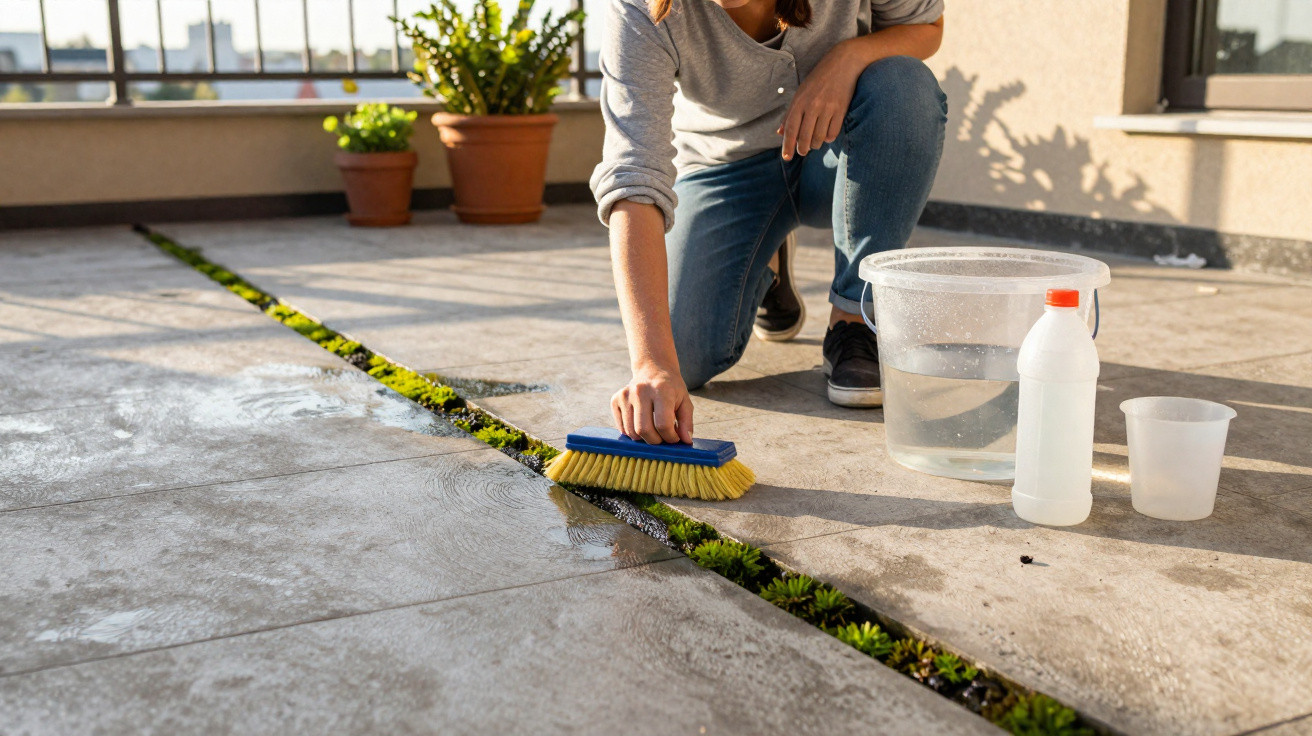
Out of habit, many people use home remedies containing salt and vinegar to keep joints or loose surfaces “sterile”. Specialists have warned for years against applying such mixtures widely on open ground. Salt damages soil organisms and plants and, in extreme cases, neighbouring areas. These mixtures are suitable only for completely sealed surfaces, and even then they should be used sparingly.
Gentler approaches are better suited to recycled surfaces:
- Remove unwanted growth manually with a scraper or joint brush.
- Flame small areas carefully, with fire safety in mind.
- Plant boundary areas deliberately to crowd out unwanted species.
Planning mistakes that can become expensive
Both alternatives depend on a sound sub-base. Cutting corners in the ground preparation can quickly lead to tyre ruts, depressions or puddles. The following are particularly important:
- sufficient load-bearing capacity in the ground;
- a frost-protection layer in colder regions;
- clearly planned drainage directing water away from the house.
Where there is a significant level difference between the road and the property, it is worth designing the driveway in sections. This helps prevent heavy rain from washing water and material downhill. Stone or metal edging keeps recycled concrete in place.
Combining the driveway and garden effectively
The design becomes particularly interesting when the driveway is no longer treated as an isolated feature beside the garden, but as part of an overall scheme. Recycled surfaces can create transitions that feel far more welcoming than a large expanse of concrete:
- Small green islands or planting strips break up asphalt areas visually.
- Recycled concrete can be paired with grass grid pavers to mark parking spaces.
- A swale along the edge can collect surface water and supply shrubs or ornamental grasses.
Careful planning delivers several benefits at once: less heat above the driveway, more habitat for insects, a more coherent overall appearance and lower wastewater charges where the local authority calculates fees according to sealed surface area.
Ultimately, it is worth viewing a driveway and its surface as more than a question of price alone. Recycled asphalt and crushed concrete reduce costs, lower CO₂ emissions and ease pressure on drainage systems – while turning an overlooked grey area in front of the home into a functional, considerably more climate-friendly part of the property.

Comments
No comments yet. Be the first to comment!
Leave a Comment