
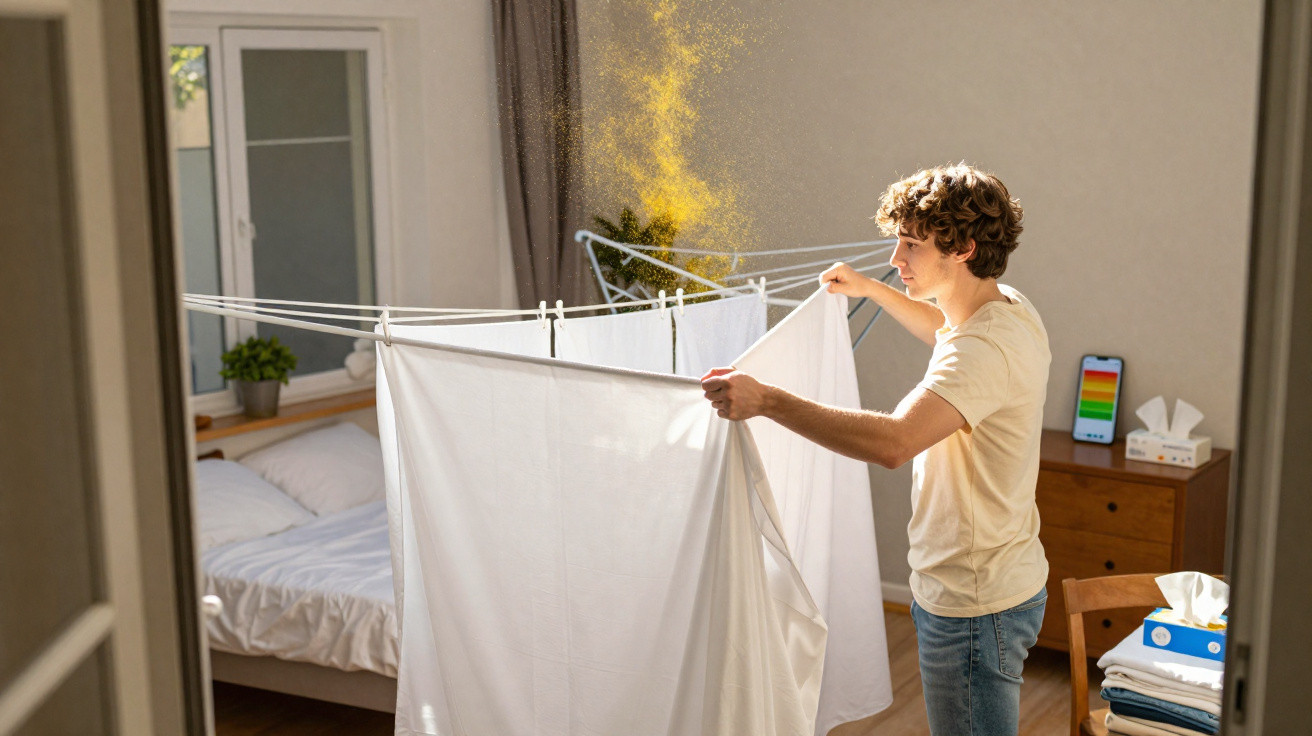
As the days grow longer, the clothes airer returns to the balcony or garden. Fresh air, free drying and a pleasant scent sound ideal. Yet this is precisely when an often-overlooked issue becomes more serious: pollen readily sticks to damp fabrics, especially around midday. If they are unlucky, allergy sufferers may even bring the trigger into bed with them.
Why clean washing suddenly becomes a carrier of pollen
In many areas, spring marks the real start of pollen season. Some trees begin as early as late winter: alder, cypress, yew, birch and other species release billions of tiny pollen grains into the air. For plants, these grains are essential for reproduction; for people with allergies, they can be a real strain.
Dry, sunny and windy conditions allow the particles to travel particularly easily. They do not simply remain airborne: they settle on every available surface, including window sills, car roofs, garden furniture and freshly washed clothes.
“Damp fabrics act almost like a magnet for pollen – from bath towels to pillowcases.”
A T-shirt still slightly damp on the line, or a sheet billowing in the breeze, can catch pollen grains with ease. Those items then end up in the wardrobe or straight in the bedroom. This means sufferers bring the cause of their symptoms into the very place where they should be recovering.
The difficult period: why midday is so problematic
In spring, many health authorities advise scheduling outdoor activities for the quieter times of day, either early morning or late evening. The reason is that airborne pollen concentrations rise considerably during the day, particularly in sunny, dry and windy weather.
From late morning into the afternoon – roughly between 10 and 15 – pollen levels are especially high in many regions. Some alerts even call for extra caution from 9 to 18 during periods of heavy exposure.
Leaving washing outside to dry during this window turns fabric into a highly effective collecting surface:
- The longer washing remains on the line, the more pollen can adhere to it.
- A light breeze continually carries in fresh particles.
- Sunshine dries fabrics quickly, but pollen can still remain attached to the fibres.
This effect is not limited to the balcony. It continues throughout everyday life: bed linen dried outdoors during the day is brought into the bedroom in the evening. Clothes coated in pollen may be worn against the body for hours. As a result, the original outdoor pollen exposure can extend for many additional hours indoors.
When spring reaches the bedroom
People who have never experienced seasonal rhinitis often underestimate how exhausting persistent symptoms can be. For sensitive individuals, even small amounts of pollen can make day-to-day life significantly harder.
Common symptoms include:
- persistent sneezing
- a runny or blocked nose
- itchy, red or watery eyes
- a scratchy throat and the urge to cough
- general tiredness and difficulty concentrating
The impact of pollen-laden washing is particularly noticeable at night. Anyone sleeping on pillowcases or sheets that were outside during the day is in direct contact with allergens for hours. Instead of providing rest, the night may bring a blocked nose, disturbed sleep and a heavy feeling on waking.
“The issue is not one walk – it is the constant proximity to the allergen, such as in bed or on the sofa.”
There are also further ‘invisible collection points’: jackets, scarves, hats, outdoor sofa cushions and car seats. All of these can pick up pollen and, in some cases, gradually release it back into indoor air.
How to adapt your March routine sensibly
The positive news is that many sufferers can noticeably ease their symptoms by changing a few everyday habits. The aim is not to avoid spring, but to deal more deliberately with peak exposure periods.
Dry washing more intelligently
- Dry indoors when the pollen index is high: A separate room is best, aired regularly once outdoor levels have fallen.
- Choose outdoor drying times carefully: If washing really must go outside, put it out very early in the morning or only in the evening, then bring it in promptly.
- Keep bed linen indoors during the main season: Fabrics that come into direct contact with the face should not be dried outside when pollen levels are high.
Keeping your home and clothes lower in pollen
Anyone already experiencing symptoms often benefits from a brief ‘arrival routine’ when they get home:
- Take off shoes at the door.
- Give jackets, scarves and bags a quick shake outdoors.
- Where possible, change clothes and avoid storing worn items in the bedroom.
- Wash your hair, especially before bed, so that less pollen reaches the pillowcase.
In the car, closed windows and a well-maintained cabin filter can help. For some sufferers, a higher-grade pollen filter may be worthwhile. Outdoors, sunglasses and, depending on the activity, a mask can keep some particles away.
Pollen, calendars and misconceptions: why the season seems to drag on
Many people with allergies have the same experience every year: symptoms improve at first, then a few weeks later everything starts again. The reason is the staggered release of pollen.
| Period | Typical main triggers |
|---|---|
| Late winter / very early spring | Alder, hazel, some cypress family plants, yew |
| March / April | Birch and other decididuous trees |
| Late spring / early summer | Grass pollen |
The body does not react to ‘spring’ itself, but to particular types of pollen. That is why advice such as “it gets better from April” may be right for one person yet completely wrong for another.
Anyone taking their symptoms seriously should ideally check regional pollen forecasts. Many services now provide maps and daily indices by region or even by town or city. On days with very high levels, extra care is worthwhile when drying washing outdoors, especially during the critical midday period.
Practical everyday examples
A typical situation is a family with mild hay fever enjoying the first genuinely warm weekend in March. They put the bed linen on the line for three hours at midday. That evening, everyone eagerly makes up the ‘fresh-air’ bed. During the night, several people complain of itchy eyes and blocked noses, although being outside had seemed reasonably manageable earlier in the day. The cause is the large amount of pollen that adhered to the damp fabric in that short time.
Another example is someone with a severe birch pollen allergy who decides to hang washing outside only in the morning before work and bring it in no later than 10. In addition, bed linen is consistently dried on an indoor airer during the peak period. After a few weeks, the result is clear: the symptoms have not disappeared, but they are substantially milder, especially at night.
What lies behind the warnings – and how you can use them
Health authorities tend to phrase their guidance cautiously. Nobody wants to give the impression that outdoor life should be banned. Even so, the core message is clear: everyday pollen exposure can be reduced considerably by avoiding peak times and deliberately protecting large allergen-collecting surfaces, such as damp washing.
Looking at the time of day, weather conditions and the pollen index can help with simple daily choices: Do I really need to hang the bed linen outside today? Would the clothes airer in the living room for two days be the better, if less romantic, option? For allergy sufferers, the period from 10 to 15 in March can make the difference between a fairly relaxed spring day and a night spent sneezing.

Comments
No comments yet. Be the first to comment!
Leave a Comment