
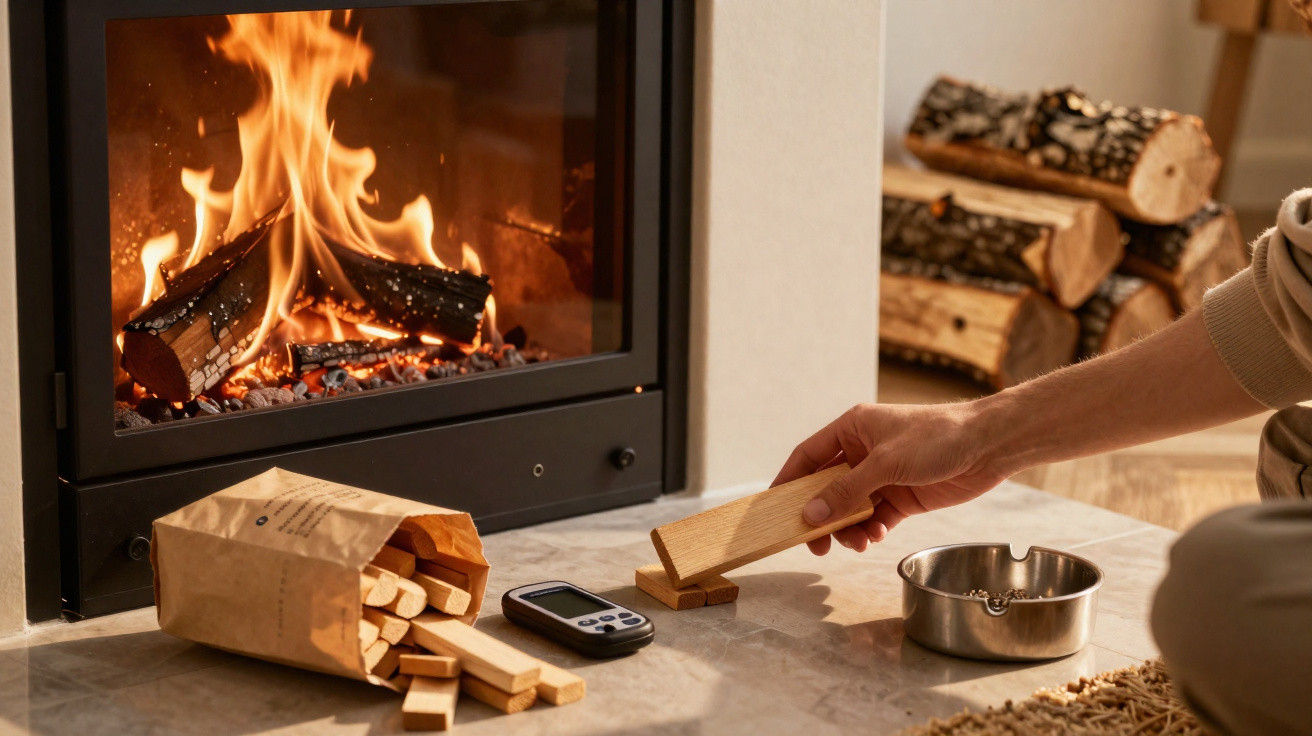
Many households are turning back to wood-burning stoves and fireplaces, whether because of gas prices, electricity costs or simply for the cosy atmosphere. Yet few people realise that one particular wood fuel can provide up to three times more usable heat in a stove than ordinary logs, while also saving storage space and reducing mess almost as a side benefit.
What compressed wood briquettes are really made of
The fuel in question is high-density wood briquettes: compressed pieces of firewood made from sawdust and wood shavings. These residues are already produced by sawmills, joinery workshops and the furniture industry. Rather than being discarded, they are compacted under immense pressure. No extra glue is added; the briquettes bind solely through pressure and the wood’s natural resins.
The result is an exceptionally consistent fuel: compact, dry, and always the same length and thickness. Shops generally sell it as “wood briquettes” or “compressed logs”, but in technical terms it is simply wood compressed to an extreme degree.
“Because of their low moisture content and high density, these fuels provide up to three times as much usable heat as conventional logs of the same mass.”
Why wood briquettes produce so much more heat
High calorific value due to low residual moisture
Even properly seasoned logs usually contain 20 to 30 per cent moisture. Some of their energy is therefore lost because the water must first evaporate before the wood can burn effectively. High-density wood briquettes generally contain less than 10 per cent moisture.
This gives them a calorific value of around 4.8 to 5.2 kWh per kilogram. Air-dried logs often achieve only 2 to 3 kWh per kilogram. This explains the frequently quoted claim that this fuel performs up to 300 per cent more efficiently. Considerably less material is needed to heat the same living space.
Consistent, predictable burning
Because briquettes are so dense and retain their shape, they burn far more evenly than a mixed load of logs with different thicknesses. The flame is steadier, the embers last longer, and the stove can be controlled more easily.
Anyone who previously needed to add wood every 30 to 40 minutes can often leave much longer intervals when using briquettes. As well as being more convenient, this makes it easier to maintain a stable room temperature.
Less ash, less soot and less cleaning
Another benefit is that cleanly pressed wood briquettes leave behind less ash and soot. The glass door of a wood-burning stove becomes dirty more slowly, while the flue passages do not clog as quickly. Cleaning the stove is simpler and, in many cases, required less often.
Naturally, this does not mean that chimney sweeps and related maintenance can be dispensed with, but wear on the stove and chimney flue is reduced. Over the long term, this may also have a financial effect.
How much do briquettes and logs differ?
The key differences can be clearly compared in the following overview:
| Feature | Wood briquettes (compressed) | Ordinary logs |
|---|---|---|
| Calorific value | approx. 4.8–5.2 kWh/kg | approx. 2–3 kWh/kg |
| Moisture content | below 10 % | 20–30 % is typical |
| Storage space required | very compact, up to four times less space | significantly more volume required |
| Ash production | low | comparatively high |
| Source material | industrial wood residues | timber from forests |
| Environmental impact | use of residual materials, controllable | dependent on forestry practices |
How to use high-performance wood fuels correctly
Anyone who simply throws a few briquettes into a cold stove is likely to be disappointed. This fuel needs to be handled slightly differently from traditional logs.
Lighting the stove properly
- Start the fire using small, very dry kindling and suitable firelighters.
- Only place one or two briquettes on top once a stable bed of embers has formed.
- Do not stack individual briquettes too tightly, so that air can reach their surface.
Many users report that the initial lighting process requires a little more patience, but that the stove then burns much more steadily and for longer.
Adjusting the air supply carefully
Air control in the stove is especially important when burning wood briquettes. Too much air causes them to burn away too quickly, while too little air leads to incomplete combustion and may produce more smoke.
Those using them for the first time should experiment a little on a cold, still day: gradually find the best air-vent setting and watch how the flame pattern and room temperature change.
Storage: dry really does mean dry
As briquettes leave production already very dry, they are more sensitive to moisture. The ideal storage conditions include:
- a well-ventilated, covered area such as a cellar or garage;
- a pallet or wooden battens underneath, so that nothing sits directly on the floor;
- protection from splashing water and high humidity.
Unlike logs, briquettes do not need to spend two years drying: they arrive ready to burn. Any moisture absorbed after delivery would therefore mean wasted potential.
Environmental considerations and possible risks
Many consumers wonder whether heating with wood briquettes is genuinely “greener”. Their raw material comes from wood-industry waste that would otherwise often be burned or disposed of. Compressing it creates a usable energy source that makes better use of existing resources.
When stoves are operated correctly, particulate and greenhouse-gas emissions are generally lower than with damp logs. Nevertheless, wood burning remains subject to strict rules in urban areas. Anyone living in a densely populated area should check local regulations carefully.
There is a risk with low-quality products: if briquettes are made from glued wood waste or treated chipboard, problematic substances may be released into the air. It is therefore worth checking certifications and the manufacturer’s information.
What do wood briquettes cost, and when do they pay off?
At first glance, prices per tonne often appear higher than those of ordinary firewood. However, once usable calorific value is taken into account, the picture often changes.
For example, if a household has previously burned ten cubic metres of stacked logs per season, then, depending on the stove and level of insulation, a substantially lower mass of briquettes may be enough. There is also less storage space needed, fewer transport trips and less dirt in the hallway.
They are particularly appealing to people without their own garden or yard. Anyone without space for large log piles but who still wants to enjoy a fireplace can reclaim a considerable amount of room with compact packs.
What buyers should check when purchasing wood briquettes
There is now a wide range of products available from DIY stores, heating-fuel merchants, fuel depots and online retailers. Quality can vary noticeably between products.
- Check for visible cracks and breakage: products that crumble excessively can indicate problems during pressing.
- Review the manufacturer’s details on residual moisture and the original material.
- Look for quality marks, such as standards confirming the wood type and purity.
- Before placing a large order, test one or two packs to understand how they behave in your own stove.
Anyone who already owns a modern wood-burning stove with a glass door will usually notice the difference straight away: the flame appears calmer, the glass stays clean for longer, and the same quantity of fuel creates noticeably more usable heat.
For many households, it makes sense not to switch entirely, but to combine fuels: light the stove with traditional logs, then add briquettes for the long ember phase. This brings together the familiar “crackling” sound with the high efficiency of compressed fuel, helping every fire deliver considerably more.



Comments
No comments yet. Be the first to comment!
Leave a Comment