
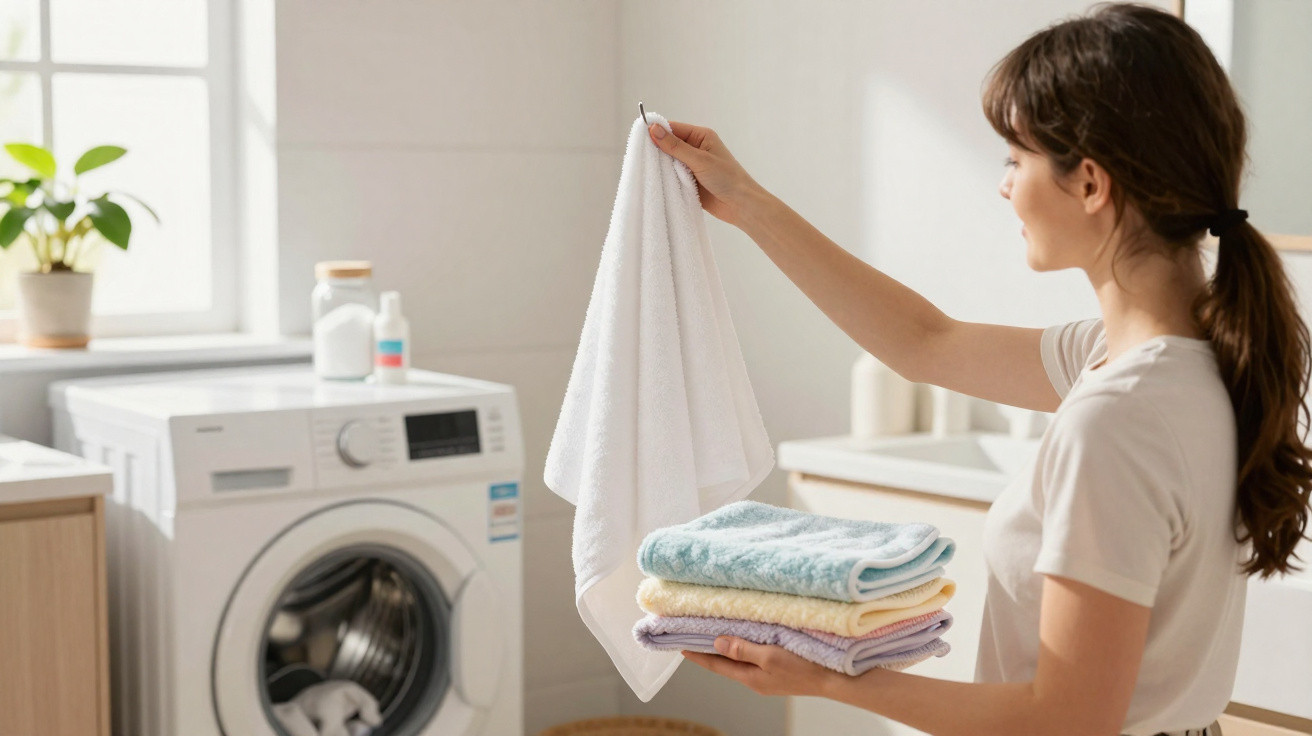
The recommended washing frequency is surprisingly high.
In many homes, towels are seen as harmless everyday essentials. You shower, dry yourself, hang the towel back up – job done. Some people wash them at the weekend, while others wait several weeks. Hygiene and microbiology specialists say this is well wide of the mark and can create unnecessary health risks.
Why towels become unhygienic sooner than you think
After a shower, skin feels clean, so it seems reasonable to assume that a towel picks up very little dirt. According to experts, this assumption is precisely why many towels remain in use for too long.
Every time you dry yourself, a used towel collects, among other things:
- dead skin cells
- skin oils and sweat
- traces of shower gel, shampoo, cream and make-up
This combination settles into the fibres, where it meets moisture and warmth. Especially in a poorly ventilated bathroom, this creates an ideal breeding ground for germs.
Experts report that towels can contain noticeably more bacteria after just two or three uses – long before they start to smell unpleasant.
A damp bath towel often remains clammy in the bathroom for hours and sometimes even days. The longer this continues, the more bacteria and fungi can multiply. Studies show that bacteria on a damp towel can double within minutes.
Health risks: when a soft towel becomes a breeding ground for germs
Most people do not initially notice the germs living in their towels. Even so, a towel that is consistently heavily contaminated increases the risk of various problems, particularly for those with sensitive skin.
Who should pay particular attention to clean towels
Experts advise changing towels more strictly if any of the following apply:
- a tendency towards acne, blemishes or irritated facial skin
- eczema, psoriasis or other chronic skin conditions
- open wounds, shaving cuts or scratched spots
- allergies and sensitive airways
- a weakened immune system, for example after surgery or with chronic illness
In these circumstances, contaminated towels can encourage skin irritation, inflammation or, in the worst cases, infections. This is particularly concerning with bacteria such as staphylococci, which can cause pus-forming inflammation under certain conditions.
How often towels really need to go in the washing machine
The good news is that you do not need a fresh bath towel every day or complicated specialist wash cycles. What matters is having a clear routine that suits how the towel is used.
Hygiene experts recommend washing bath towels after three to four uses at the latest, and washing smaller hand towels and sports towels considerably more often.
| Type of towel | Recommended washing frequency |
|---|---|
| Bath towel / shower towel | after 3–4 uses (often every 2–3 days) |
| Hand towel by the sink | every 1–2 days |
| Sports or sauna towel | after every use |
| Face towel / flannel | daily |
Anyone who showers twice a day or sweats heavily should shorten these intervals. A stricter routine is also worthwhile in households with young children, older people or individuals with existing health conditions.
When towels must be changed immediately
Regardless of the usual schedule, a towel should go straight into the wash if:
- it smells musty or “damp and stale”
- it has visible stains
- it has stayed very wet for a long period, such as after several showers in succession
- someone in the household has a contagious skin or gastrointestinal illness
Odours are a fairly dependable warning sign: if a towel smells “odd”, the germ load is usually already significantly higher.
How to keep towels fresh for longer
It is not only a matter of when towels are washed, but also how they are treated between washes. A few straightforward habits can make a significant difference.
Drying towels properly – the key to preventing bacteria
- Spread towels out fully after showering instead of leaving them bunched up over a hook.
- Where possible, hang them in a dry, well-ventilated place rather than in a permanently damp small bathroom.
- In winter, it is ideal to place them over a radiator or heated towel rail.
- Do not leave sweat-soaked sports towels in a closed gym bag for hours; take them out to dry promptly.
The faster the fabric dries, the less opportunity bacteria and fungi have to multiply substantially.
Washing temperature, detergent and fabric conditioner
For ordinary cotton towels, experts recommend a 60°C wash cycle. At this temperature, many modern detergents achieve their best hygienic effect without placing unnecessary strain on the fibres.
- Biological powder detergent is generally more effective against germs than colour detergent gel.
- Use fabric conditioner sparingly: although it makes the fabric softer, it can reduce absorbency.
- A splash of white vinegar in the rinse cycle can reduce odours and loosen the fibres slightly.
If you mainly wash at 40°C to save energy, it is advisable to wash towels at a higher temperature at regular intervals to reduce germs more effectively.
How long towels should remain in use at home
Over time, the fibres deteriorate: towels become thin, rough or less able to absorb moisture. Experts recommend replacing bath towels every two years on average – or sooner, depending on use.
Signs that a towel should be replaced include:
- it quickly becomes musty again despite hot washing
- the fibres are heavily matted or torn
- it dries noticeably less effectively than it used to
Older towels that are still clean can be reused effectively as cleaning cloths or car towels.
Towel hygiene rules for family life
One often overlooked issue is sharing towels. Families with children in particular often reach for whichever towel is closest.
Each person should have their own bath towel and at least one personal hand towel – clearly labelled or identifiable by colour.
This makes it harder for germs, fungi and viruses to spread within the household. If you regularly have visitors, it is best to keep a separate guest towel set that goes directly into the wash afterwards.
Common misconceptions about towel hygiene
“If it does not smell, it is clean”
Smell is a late warning sign. By the time a towel genuinely smells musty, many bacteria will usually already have accumulated. Relying on smell alone generally leads to lengthy intervals between washes that are problematic from a hygiene perspective.
“My skin is dry, so this does not apply to me”
Dry or sensitive skin also transfers cells, skin oils and tiny particles of dirt to a towel. Microorganisms are not concerned with whether a person tends to have oily or dry skin.
“Only children’s towels need frequent washing”
Children do indeed bring home plenty of dirt and germs, for example from nursery and school. However, adults also carry bacteria, viruses and fungal spores – through their feet, for instance, or after spending a day in closed shoes. A generous washing routine benefits every age group.
What a new towel-washing routine changes in daily life
People who suddenly wash their towels more often usually notice several changes quite quickly: their skin is less irritated, the typical “wet bathroom” smell disappears, and the bathroom feels fresher overall.
People with blemished skin or a tendency towards facial spots in particular often report improvements when they use a fresh face towel every day and change their pillowcase and bath towel more frequently.
For families, it can be helpful to link the new routine to simple rules: colour codes for each person, set washing days and enough spare towels in the cupboard. This turns a frequently underestimated detail into a reliable part of everyday health care.



Comments
No comments yet. Be the first to comment!
Leave a Comment