
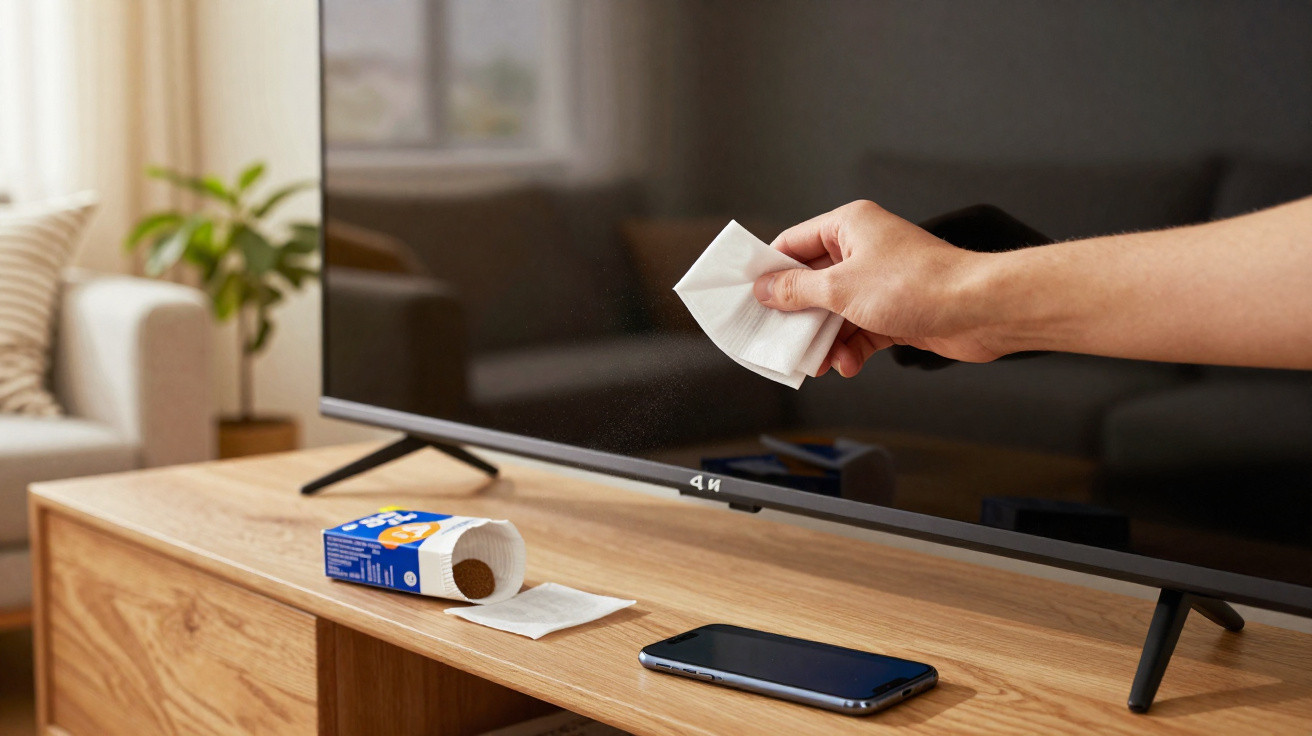
Many people reach for window cleaner, kitchen roll or costly specialist cloths, then later wonder why their displays have fine scratches and a dull finish. Yet a straightforward kitchen alternative costs only a few pence, is gentle on delicate coatings and still delivers a clearer picture – even on large 4K TVs and current smartphones.
Why screens appear dirty so quickly
Leave a television or monitor untouched for several days and it soon becomes obvious: a greyish film settles across the screen. There is a simple physical explanation. The surface can become mildly electrically charged, effectively attracting the tiniest airborne dust particles like a magnet. This effect is even stronger in dry rooms with substantial heating.
Fingerprints add to the problem. Every touch deposits skin oil and minute traces of dirt. This happens continually on touchscreens, including smartphones, tablets and laptops. Dust and grease then form a stubborn layer that seems to require pressure to remove. However, that pressure can damage sensitive LCD, LED and OLED panels, potentially causing distortion or bright patches over time.
“Modern displays are extremely sensitive to pressure, alcohol, ammonia and many household cleaners – the anti-reflective coating can suffer irreversible damage.”
Manufacturers explicitly caution against harsh cleaning products in their manuals. Window cleaner, multipurpose sprays and alcohol-based wipes can attack the coating, leave the image looking duller and make it more prone to fresh marks. Even so, these are precisely the products many households use on their televisions.
The overlooked solution: an ordinary coffee filter
The answer may be in the cupboard beside the coffee tin: a standard paper coffee filter. It should not be fabric or metal, but the thin, slightly textured filter paper. It may sound unremarkable, but it works surprisingly well.
Filter paper has a very fine, even texture. It is soft enough not to scratch the surface, while also being absorbent enough to lift grease and dust rather than merely spreading them around. Crucially, the filter is chemically neutral, so it contains no additives that could react with the coating.
“A dry coffee filter absorbs dust and grease without leaving streaks – like a disposable microfibre cloth made from paper.”
Compared with kitchen roll, a filter offers two distinct benefits: it produces very little lint and is less abrasive. Kitchen paper often contains wood fibres, which can act like tiny abrasive particles. These are what create the dreaded micro-scratches that only become visible in backlight or during dark scenes.
How affordable the coffee filter method really is
The saving becomes clear when you do the maths. On average, one coffee filter costs less than two pence. Even if a fresh filter is used for every cleaning session, the annual cost will generally remain below £1.
For comparison:
- Specialist screen cleaning wipes: around 10 to 30 pence per wipe




Comments
No comments yet. Be the first to comment!
Leave a Comment