
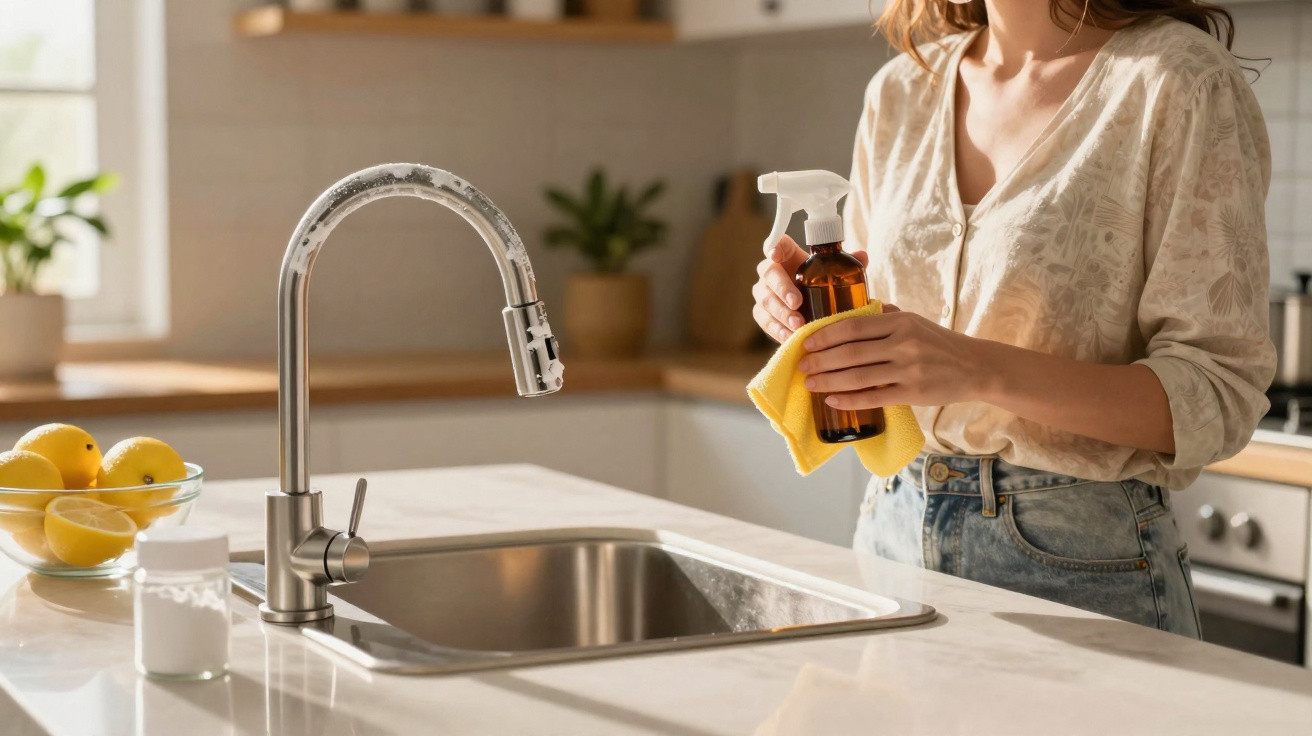
The smell was the first thing I noticed: that harsh, manufactured “clean” scent that somehow lingered on the bathroom tiles long after they had dried. My fingers felt a little taut from the bleach spray I had used the previous evening, alongside that familiar combination of satisfaction and a headache after a thorough scrub. The tiles looked acceptable… for roughly two days. Then the strange dull coating returned, taunting me from the shower screen and the area around the basin. I scrubbed more aggressively, bought “stronger” products and told myself I would maintain a weekly deep clean. But honestly, nobody keeps that up every single day. The buildup always came back, just as thick as before, as though I had achieved nothing. One evening, frustrated but intrigued, I asked myself another question: what if it was not dirt causing the problem at all?
The moment I realised my “clean” home was creating its own dirt
The shift happened as I polished the bathroom mirror with another “anti-limescale, anti-streak, ultra-shine” spray. I wiped it, buffed it and stood back… only to see them again. Streaks. Cloudy patches. Tiny marks with edges that looked almost greasy on the glass. I had cleaned that mirror only the day before, yet it looked as if somebody had breathed over it while holding a cup of coffee. Soon I spotted the same thing everywhere: on the tap, shower screen and kitchen worktop. Everything looked glossy for one day, then became faintly tacky, as if an invisible coating had appeared overnight.
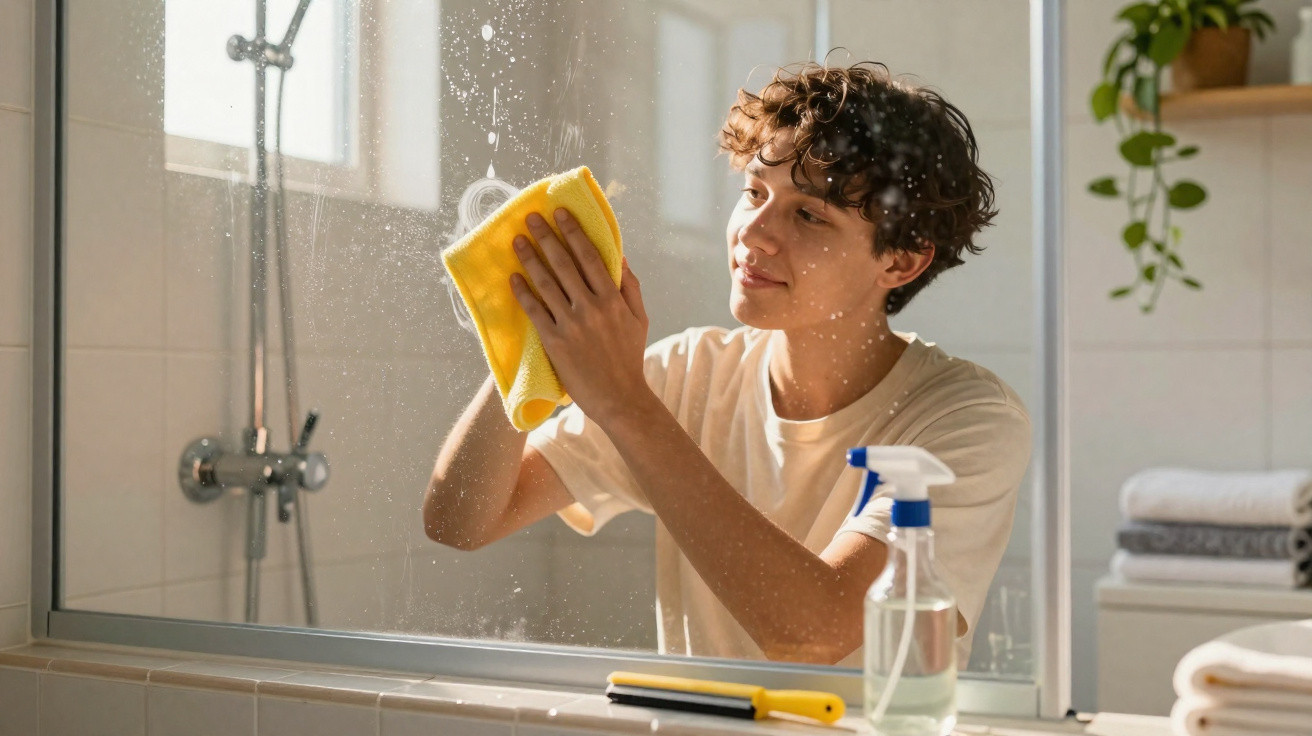
One afternoon, I watched water gather on the shower wall and noticed something I had been overlooking. Instead of running neatly down the tile, the droplets clung and moved slowly, leaving pale, milky marks behind. That was when a plumber friend casually said, “Your water’s pretty hard, you know that, right?” He pointed out the white scale on the showerhead, the cloudy circles inside the kettle and the rough texture on the tap. It was not simply “dirt” reappearing. Minerals in the water were combining with soap scum and… the cleaning product I had not completely rinsed away. Without realising it, my own routine was creating the coating I was trying to remove.
After looking into it, the explanation seemed straightforward, if slightly embarrassing. Many powerful cleaners are formulated to cling to grime and surfaces while they “work”. On porous materials, or tiles with even minor scratches, that adhesive formula can leave behind a microscopic coating. Hard-water deposits then stick to it. Body oils and dust then attach to the minerals. Suddenly, daily wiping with a harsh spray was not stopping buildup; it was helping to create it. The more “heavy duty” the product, the tougher that unseen base layer could become. I wasn’t losing the war on dirt; I was laying down the battlefield myself.
The day I replaced force with strategy
My first change was extremely simple: I stopped automatically choosing the strongest bottle beneath the sink. I picked one mild cleaner with a light fragrance that I genuinely did not mind using, and made it my regular product. I then altered the way I cleaned the bathroom. Rather than spraying every surface, I dealt with the real issue first: residue. I used hot water, a clean microfibre cloth and slow, careful wiping to remove what had been sitting there for months. There was no satisfying foam and no “power clean” smell. I simply made repeated passes until the cloth came away less dirty. Only after that did I apply a small amount of gentle cleaner, then rinse it properly. The surfaces immediately felt different beneath my fingertips: less artificially squeaky and more truly smooth.
In the kitchen, one small adjustment made an enormous difference: I rinsed. Rather than spraying, wiping and leaving, I spent an additional 20 seconds going over the surface with a damp cloth after using any product. Initially, it seemed unnecessary. Yet after a week, I realised the worktop no longer had that irritating gripping sensation when I slid a plate across it. Glasses stopped leaving faint rings, and the hob no longer developed a sticky grey halo around the burners. It may sound like a minor detail, because it is. That is simply the truth. But that small detail meant there was no longer a sticky layer for the next mess to adhere to. My “deep cleans” became shorter because far less baked-on history was clinging to every edge.
The more significant change was mental. Instead of treating my home as a never-ending fight against dirt, I began to view it as a collection of surfaces facing particular problems. Bathroom glass? The problem was not “filth”, but minerals and soap scum. Kitchen worktops? Grease, sugars and leftover product. Floors? Dust and residue from all the cleaners I had dragged across them for years. Once you identify the actual problem, the tools you choose also change. I added a small shower squeegee, a water filter for the kettle and two cloths reserved solely for rinsing. There was no drama and no miracle trick: just fewer chemicals, more effective habits and less buildup. The remarkable part was how quickly everything remained cleaner for longer once I stopped attacking it so aggressively.
What works when you stop using nuclear sprays
The approach I settled on is almost dull in how simple it is. First, I ask whether I am dealing with dirt, grease, minerals or product residue. Then I use the mildest option that will work for that specific category. For mineral buildup, the chalky white coating, I apply a little diluted vinegar to glass or tile, leave it for a few minutes and rinse thoroughly with clean water. For kitchen grease, I begin with warm soapy water and reach for a stronger degreaser only if the pan looks as though it has survived a barbecue explosion. The rule is: strong only when needed, never as a default. Once an area has been “reset” this way, everyday care becomes remarkably easy-a quick wipe with a damp cloth, perhaps a drop of mild cleaner, and nothing more.
My biggest former mistake, and one I see often, was layering products. I would use a descaler, followed by disinfectant, followed by a perfumed spray “for the smell”. With the best intentions, we can literally build up a gummy coating that clings on for dear life. There is also a tendency to scrub harder when a surface looks dull, as though elbow grease will solve chemical buildup. Usually, it merely scratches the surface and gives the next layer more to stick to. If this sounds familiar, you are not alone. We have all had that moment of kneeling on the bathroom floor and wondering why we bought three separate bottles for the same tile. Moving away from that pattern felt like a quiet relief.
“Once I stopped trying to bully my house into looking clean, it started staying clean on its own,” a friend told me when I shared my experiment. “I swapped five bottles for two and suddenly my bathroom doesn’t smell like a swimming pool.”
- Choose one gentler, all-purpose cleaner for most tasks instead of a range of “specialised” strong products.
- Rinse surfaces with clean water after using any product, especially glossy products promising “long-lasting protection”.
- Spot hard water by looking for white scale on taps, cloudy glasses and stubborn film on the shower.
- Use straightforward tools: a shower squeegee, microfibre cloths and a small scrubbing brush for corners.
- Keep heavy-duty cleaners for occasional, targeted rescue jobs rather than weekly cleaning routines.
A home that no longer fights back
What surprised me most was not giving up harsh cleaners. It was the sensation of living in a space that no longer seemed to resist me. The bathroom does not stink of chemicals after every shower. My hands are not dry and tight after spraying ten different “solutions” onto one basin. The glass still develops spots and the floor still gathers crumbs, but the mess no longer feels bonded to the home itself. It comes away easily. A quick wipe really is just… a quick wipe.
Occasionally, when I open the cupboard and see how much emptier it has become, I think about the days I stood in the cleaning aisle searching for the “ultimate” descaler or “maximum strength” degreaser. I now read the back of a bottle differently. Impressive promise words matter less to me than what will remain on my surfaces afterwards. That small shift in attention changed how my home feels under my hands and, honestly, how I feel while living in it. If you have ever wondered why your home becomes grimy again so quickly, perhaps you are not failing at cleaning. Perhaps the buildup is not dirt at all, but the ghost of every product you have sprayed and walked away from.
| Key point | Detail | Value for the reader |
|---|---|---|
| Identify real buildup | Distinguish between dirt, grease, minerals and product residue before selecting a cleaner | Reduces over-cleaning and limits the need for harsh products |
| Use gentler routines | One mild cleaner, thorough rinsing and simple tools such as microfibre cloths and a squeegee | Surfaces remain cleaner for longer with less effort and less skin irritation |
| Reserve strong cleaners | Save heavy-duty products for rare, targeted tasks instead of weekly use | Avoids hidden film buildup and supports a healthier home environment |
FAQ:
- Question 1 How can I tell whether buildup comes from hard water or product residue? Hard water commonly leaves a white, chalky or cloudy film that feels rough or crusty. Product residue is generally slicker or stickier and often appears streaky, particularly on glass or worktops.
- Question 2 Can I genuinely clean my home without using strong cleaners at all? For everyday cleaning, yes, in most homes. Mild cleaners, hot water and suitable tools deal with 90% of messes. Strong products still have a place for uncommon, stubborn problems such as old limescale or burnt-on grease.
- Question 3 How frequently should I use descaler in a hard-water area? Once you have completed an initial deep clean, many people find that light descaling every 4–6 weeks on taps and showerheads is enough, alongside daily or every-other-day rinsing or squeegeeing.
- Question 4 Are “all-in-one” sprays a poor choice for buildup? Not necessarily, although many contain gloss agents or “protective” coatings that can attract dust and minerals over time. If you use them, rinse or buff afterwards with a damp cloth to remove any residue.
- Question 5 What is the easiest first step if I feel overwhelmed? Select the surface that frustrates you most-often the shower glass or kitchen worktop-and, for two weeks, use only a mild cleaner there with thorough rinsing. Observe how it responds before altering anything else.



Comments
No comments yet. Be the first to comment!
Leave a Comment