
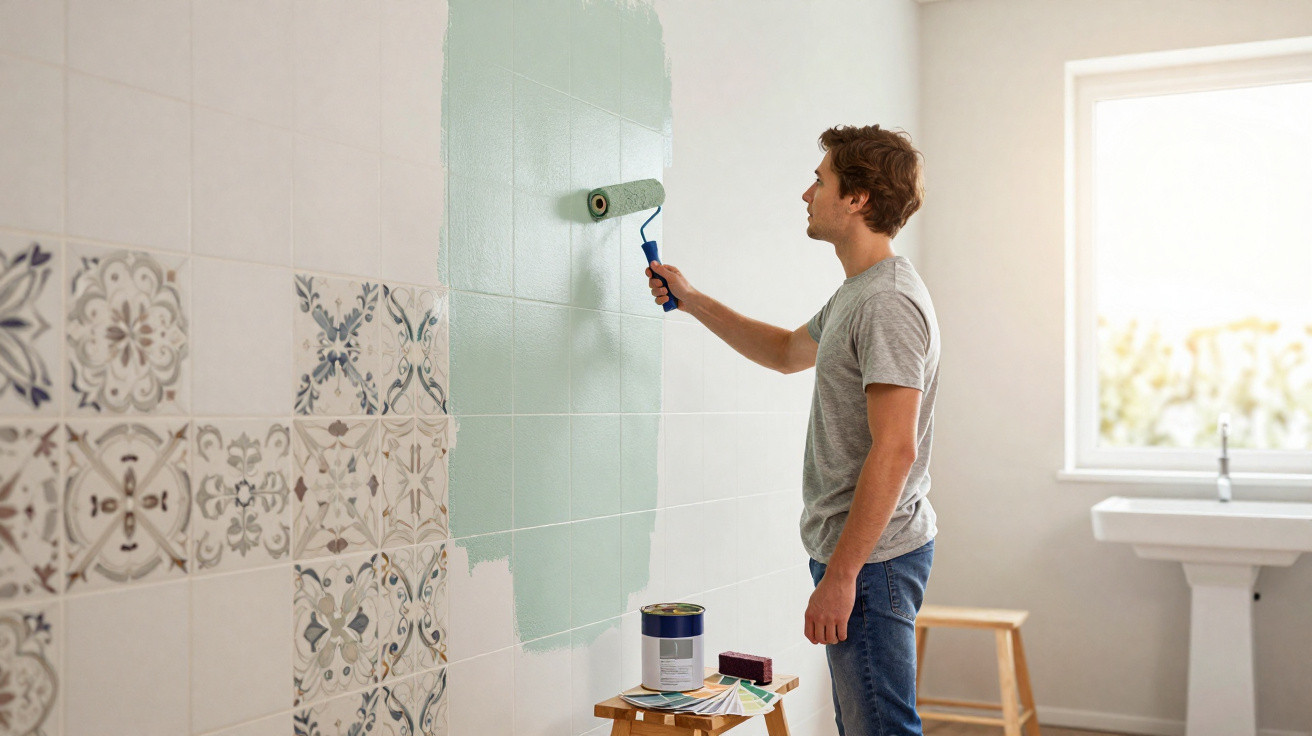
Painting old tiles has become a popular way to refresh kitchens, bathrooms and utility rooms without demolition work or lengthy renovations. It makes it possible to change the colour, conceal stains and give a space a more modern look using affordable materials, provided every stage is completed carefully and the right products are selected.
How should you assess the condition of tiles before painting?
Before applying any tile paint, inspect the overall condition of the wall covering and look for issues that could affect the finish. Loose, cracked or hollow-sounding tiles, as well as active leaks, must be repaired beforehand, including any damaged grout.
If these structural problems are left unresolved, the paint is likely to peel, blister and stain within a short time, reducing the lifespan of the visual update. In some situations, it is advisable to ask a professional to determine whether moisture is coming from pipes or from the wall behind the tiles.
Watch a video on the YouTube channel Thaís Bittencourt – Revê Interiores covering the essential stages for safely painting old ceramic wall coverings with epoxy paint:
How do you choose the right tile paint for each room?
The type of tile paint used directly affects adhesion, moisture resistance and day-to-day cleaning. In wet areas, such as shower enclosures and walls near the sink, water-based epoxy paints or synthetic enamels designed specifically for smooth surfaces are generally recommended.
On walls with less exposure to water, some high-performance acrylic paints may also be suitable, as long as the manufacturer approves this use. When comparing available products, consider these practical factors:
- Compatibility with smooth tiles, with a clear indication on the label.
- Resistance to moisture, splashes and mild cleaning products.
- Drying and curing time before direct contact with water.
- Whether a suitable primer can be used to improve adhesion.
How do you prepare tiles and apply tile paint step by step?
Proper surface preparation is vital to ensure tile paint adheres well and does not peel easily. The tiles must be clean, dry and free from grease, soap, mould and dust; in kitchens, using a degreaser and an abrasive sponge is usually essential.
Once the surface has been cleaned, lightly sand it with fine-grit sandpaper to remove the sheen of the original glaze, create better adhesion and check the joints. When everything is ready, the painting process can be carried out in straightforward stages:
- Protect the room: Cover the floor, worktops, fittings and furniture with plastic sheeting or cardboard. Apply masking tape to skirting boards, sockets and taps.
- Apply the primer: Use a foam roller or a short-pile roller in thin, even coats, allowing the drying time stated by the manufacturer.
- Apply the first coat of paint: Dilute the tile paint as directed on the label, using a roller across larger areas and a brush for corners and grout lines.
- Apply further coats: Once dry, repeat the application to correct any areas with insufficient coverage; dark tiles may require a third coat.
- Complete the finishing touches: Remove the protective tape while the paint around the edges is still slightly damp, then use a fine brush for minor touch-ups if necessary.
How can tile paint last longer in damp areas?
One of the most common concerns is preventing tile paint from peeling in humid places, especially in shower enclosures and bathing areas. How long the finish lasts depends on thorough surface preparation, choosing the correct paint and allowing the full curing period before exposing the wall to direct water.
To strengthen protection, many professionals apply a varnish or sealer that is compatible with the paint, particularly in areas subject to a constant water spray. For daily care, use neutral detergents, avoid overly abrasive sponges, keep the bathroom well ventilated and watch for signs of leaks, as moisture coming from behind the tiles can cause blistering even where the paintwork has been properly completed.

Comments
No comments yet. Be the first to comment!
Leave a Comment