
Anyone struggling with dried-out containers in spring may be overlooking a simple kitchen item that becomes a secret weapon outdoors.
Among seed packets, fresh compost and watering cans, one humble tool is easily forgotten: the old washing-up sponge. Rather than binning it, more and more amateur gardeners are using it as a water store, compost aid and protective barrier for delicate plants. It may sound unusual at first, but the idea offers tangible benefits – particularly when summer brings longer dry spells again.
Why a washing-up sponge suddenly makes sense in a flower bed
Spring can be stressful for plants. Young roots are vulnerable, the weather can change rapidly, and watering is often still irregular. This is precisely where a washing-up sponge can prove useful. Its porous texture absorbs water like a small reservoir, then releases it gradually.
“An old sponge in a pot acts as a quiet water store: it captures watering water and keeps roots moist for longer.”
Put a sponge at the base of a flowerpot – immediately above the drainage holes and beneath the compost – and the following happens:
- Surplus watering water is held in the sponge rather than sitting unused in the saucer below.
- Compost takes longer to dry out, especially in hot or windy positions.
- Plants cope better with short dry periods, such as over a weekend or during a working day.
Balcony planters and smaller containers, in particular, can dry out within a few hours in sunshine. A sponge inside the pot can extend that period considerably. It is not a miracle cure for heat, but it is a very inexpensive buffer.
The kitchen problem: why an old sponge has to go
In the sink, a sponge can be a genuine hygiene disaster. It absorbs grease, food debris and cleaning products, and it rarely dries out completely. Experts point out that a damp sponge is an ideal breeding ground for bacteria when it remains wet for many hours at a time.
If you already replace sponges regularly, you can delay their trip to the general waste bin by adding an intermediate use: the garden rather than the bin – provided the sponge is prepared and used correctly.
Natural or synthetic sponges: which ones can go into soil
Before taking a kitchen helper into a flower bed, inspect the material carefully. Not every sponge belongs in nature.
Which sponges are safe to use
- Cellulose sponges (plant fibres)
- Loofah sponges (dried gourd fibres)
Both types are made from natural raw materials. As long as they have not absorbed harsh chemicals, these sponges can rot down over time and are well suited to soil and compost.
Which sponges can cause problems
- Synthetic washing-up sponges containing plastic, with a yellow foam core
- Versions with a scouring surface that feels like coarse plastic
Such sponges may release microplastics and should not be put in compost. Although they can be used as water stores in pots, they do not belong in beds where vegetables for eating will later be grown.
“Basic rule: natural sponges can go into soil and compost; plastic sponges should only – if at all – be used as concealed water stores in ornamental plant pots.”
Preparation: making the washing-up sponge suitable for the garden
Before a sponge goes near plants, it should be as clean as possible. Food residues, washing-up liquid and bacteria are not wanted in a flower bed.
- Rinse it thoroughly under hot water until no foam remains visible.
- Heat it: either place it in boiling water for a few minutes, or soak it with hot water and briefly put it in a pan.
- Disinfect it if desired: soak it in clear household vinegar and leave it to work.
- Allow it to cool and squeeze it out well.
Afterwards, keep the sponge permanently for garden use. It should not return to dishes or the kitchen worktop.
Four clever ways to use a washing-up sponge in spring
1. A water store in pots and window boxes
This is the classic use: place sponges at the bottom of the container, above a drainage layer of expanded clay, gravel or broken terracotta. Add the compost on top.
- Ideal for window boxes exposed to plenty of sun
- Useful for balcony and patio plants when nobody can water every day
- Especially helpful for comparatively thirsty plants, such as tomatoes in containers or petunias
The sponge absorbs water that would otherwise run out of the pot, releasing it slowly afterwards. The risk of waterlogging is reduced because water initially enters the sponge structure instead of drowning the compost.
2. A moisture booster for compost
Anyone with a compost heap or compost bin will know the issue: in summer, the heap can dry out readily, while in spring the microflora gets going only slowly.
Natural sponges cut into pieces can help here. They:
- retain moisture within the compost
- create small air pockets and loosen the material
- assist bacteria and fungi with decomposition
The compost stays more consistently moist without becoming soggy. One point remains essential: use only sponges made from natural fibres, never ones saturated with harsh cleaners.
3. A mini greenhouse for seeds
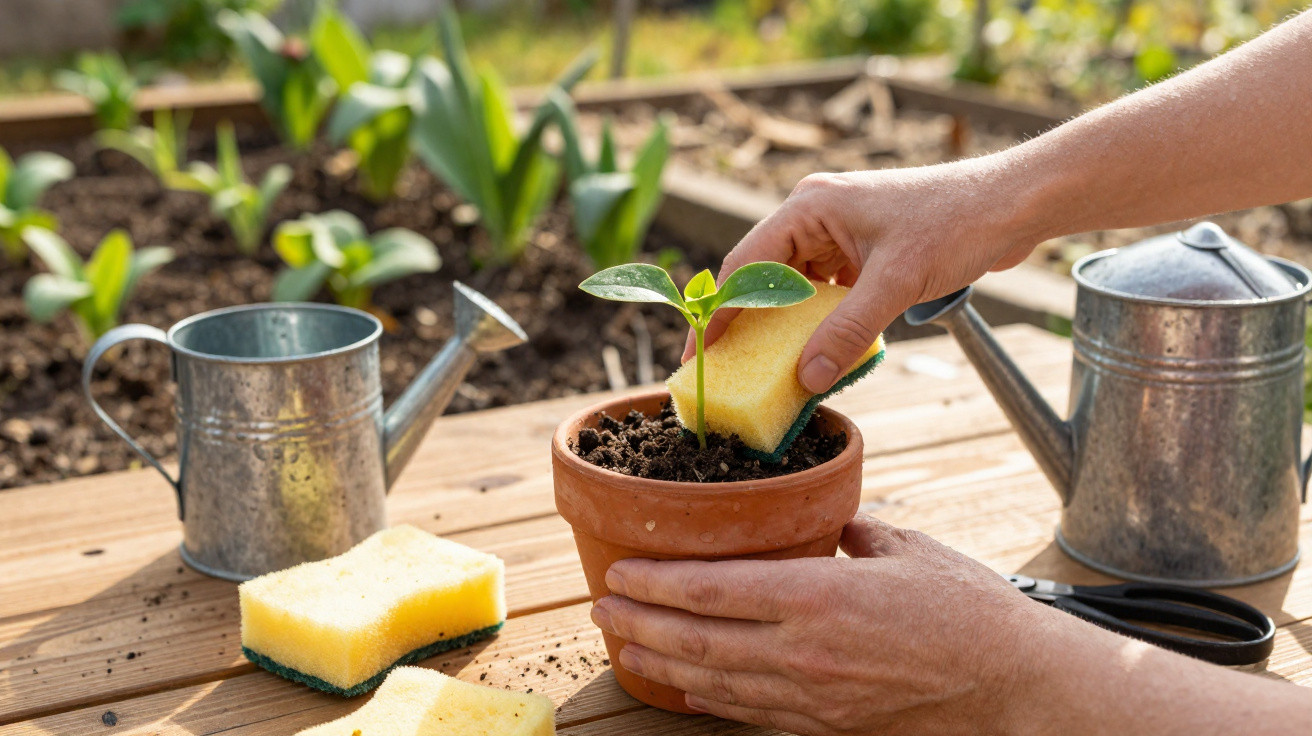
One unexpectedly practical option is to cut sponges into small cubes, each with a seed inserted into it. The damp sponge block then acts as a growing medium for germination.
The benefits include:
- Consistent moisture around the seed
- Seedlings can be transplanted intact, including their piece of sponge
- Ideal for fast-germinating crops such as lettuce, radishes or herbs
Once the young plant has grown to several centimetres, move the small block into a pot or straight into the bed. With natural sponges, the material gradually breaks down in the soil.
4. A protective layer against cold and pests
Laid flat on the soil and weighed down with a small stone, a sponge can create a surprisingly effective protective layer. The air held in the material provides slight insulation against cool nights, for example for sensitive container plants in spring.
Soaking the sponge with a few drops of essential oils that nuisance insects dislike – such as lavender, peppermint or lemongrass oil – creates a barrier directly around the plant base. It is no replacement for professional protection, but it may help make individual pots a little less troubled.
Signs that the sponge needs replacing
A sponge does not last forever in the garden either. Anyone using one should occasionally check whether it remains in good condition. Warning signs include:
- a strong, rotten smell
- visible mould growth
- material that crumbles when touched
Natural sponges can then be added to the compost, provided they have not absorbed chemicals. Plastic sponges belong in general waste.
Combining the sponge trick with other watering strategies
For those already using water-saving methods, the sponge trick is a useful addition. Combining it with mulch, large saucers or slow-release watering aids creates a more stable overall moisture level in the pot.
Typical combinations for a container garden:
| Measure | Effect |
|---|---|
| Sponge in the pot | Holds surplus watering water inside the container |
| Mulch layer of bark or straw | Reduces evaporation from the surface |
| Large saucer | Enables plants to take up water from below |
| Watering during cool morning hours | Limits water loss from sun and wind |
Especially during dry summers, this combination can determine whether plants remain healthy throughout or constantly sit on the edge of drought stress.
What amateur gardeners should consider before using one
Anyone growing vegetables or herbs for the table should take particular care over the material used. Only natural sponges are suitable for beds containing edible plants, and they must first be rinsed thoroughly and be free from harsh washing-up liquids. The rules are somewhat less strict for purely ornamental plant pots, but the principle still applies: introduce as little chemistry into the soil as possible.
Over the long term, it is worth deliberately choosing sponges made from plant fibres. They cut household plastic waste and can later be incorporated into the garden cycle far more easily. Combining this choice with clever garden use not only saves water, but also reduces the amount of general waste produced in everyday life.




Comments
No comments yet. Be the first to comment!
Leave a Comment