
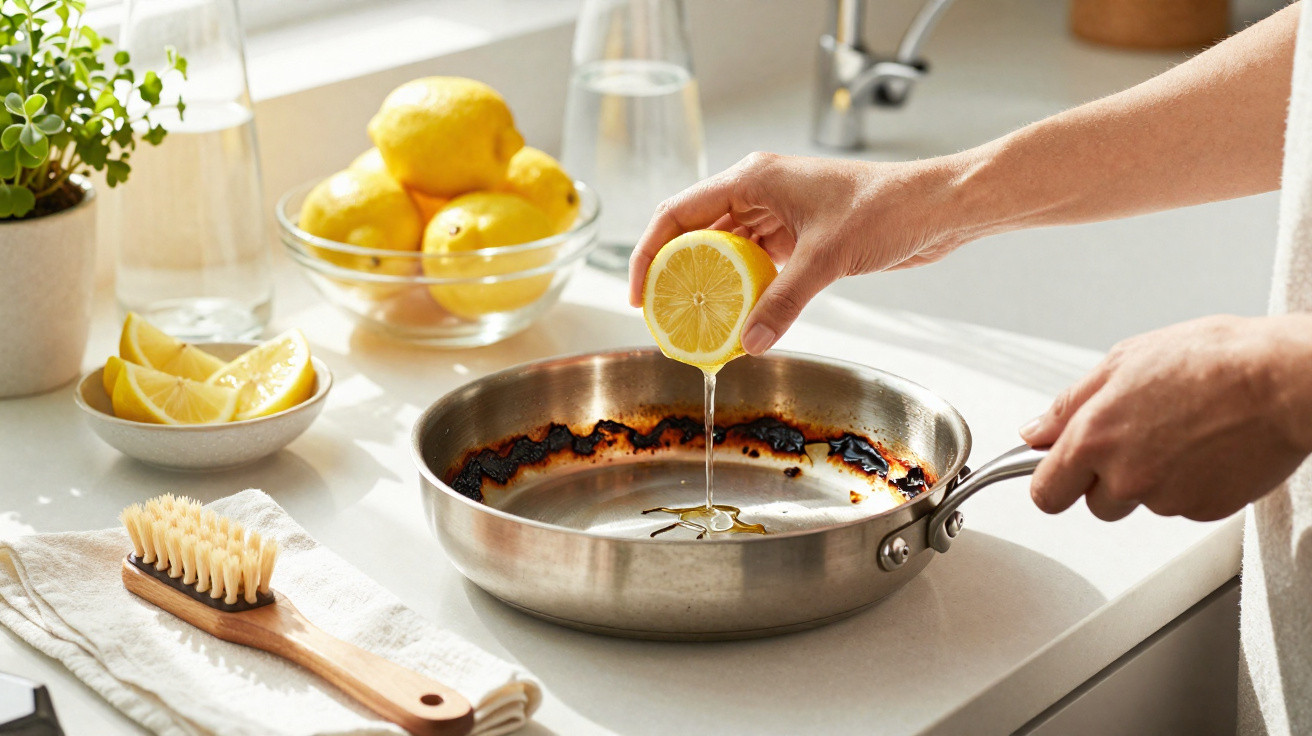
A blackened layer of fat on a favourite pan may seem impossible to shift, but an everyday kitchen essential suggests it is not.
Every home cook recognises the disheartening moment: you have made a lovely meal, only to find the pan covered in burnt-on grease that even the dishwasher cannot tackle. This frustrating grime has genuine health and environmental implications, yet there is a remarkably easy way to remove it without resorting to harsh chemicals.
The hidden risk of burnt grease on your pans
The dark, tacky coating stuck to a frying pan is not merely unattractive. It develops as oils, sauces and food debris are heated, cooled and burnt repeatedly. Every time you cook, another layer can build up.
These deposits do not simply remain inactive on the pan. When exposed to high temperatures, they degrade into other compounds. Some, including certain trans fats and reactive molecules known as alkenyl compounds, may affect the body if they are consumed frequently.
Prolonged exposure to overheated, repeatedly burnt fats may promote inflammation, a known driver of chronic conditions.
Research into cooking oils indicates that reheating alters their structure. Oxidised fats and degraded compounds may:
- Raise oxidative stress in the body
- Encourage low-grade inflammation
- Add to cardiovascular risk where exposure is frequent
- Possibly contribute, alongside other factors, to type 2 diabetes
Naturally, one overcooked steak will not change your health. The issue is repeated exposure: using the same uncleaned pan, with the same burnt area, day after day. Removing these layers is not about being overly particular; it is about reducing one small, preventable source of physical stress.
Why classic solutions fall short
When stubborn grease appears, most people turn to the familiar pairing of white vinegar and baking soda. Both are useful in plenty of situations. Vinegar breaks down mineral deposits and lighter residues, while baking soda works as a gentle abrasive and deodoriser.
Burnt fat, however, does not behave like limescale or ordinary food marks. This tar-like coating has polymerised and adheres firmly to metal. Vinegar and baking soda may loosen it slightly, but they often leave behind a greasy stain, particularly on the pan’s underside and exterior.
Shop-bought degreasers are more powerful, but that comes with drawbacks. Many use solvents, strong surfactants and synthetic fragrances. Although they remove grease quickly, they can leave chemical traces, contribute pollution to wastewater and produce fumes in kitchens with limited ventilation.
Homeowners increasingly look for cleaning methods that protect both indoor air and waterways while still doing a thorough job.
This is where a third approach stands out: a common fruit that acts as a focused, food-safe acidic cleaner for cookware.
Lemon juice: the fruit-bowl ingredient for burnt pans
The unlikely star is lemon juice. Rather than using it solely as a garnish, it can work as a cleaning product capable of dealing with baked-on grease.
Lemon juice contains citric acid, a naturally occurring organic acid that reacts effectively with many forms of residue. It helps cut through greasy films, release browned deposits and leaves a fresh scent rather than a chemical smell.
How lemon loosens burnt grease
Repeated heating causes grease molecules to bind to one another and to the pan itself. Citric acid can help disrupt these bonds. Used properly, it does not “melt” the metal or damage the coating, but it can weaken that persistent layer.
Think of lemon juice as a gentle, edible stripping agent: strong on grease, soft on your cookware and your lungs.
Citric acid is already used by manufacturers in a variety of food-safe cleaning products, including kettle descalers and dishwasher additives. Fresh lemon uses the same chemistry in the kitchen, with less packaging and fewer added ingredients.
Step-by-step: using lemon juice to clean burnt pans
This approach is straightforward and avoids long sessions of vigorous scrubbing. Follow this practical method for uncoated stainless-steel or enamel pans:
| Step | What to do | Why it works |
|---|---|---|
| 1 | Pour hot water into the pan until the greasy area is covered. | Heat softens and releases the top layer of residue. |
| 2 | Squeeze one or two lemons into the water and add the peels too. | Citric acid is concentrated in the juice, while oils from the zest provide extra degreasing action. |
| 3 | Simmer the liquid over a low heat for 10–15 minutes. | The warm acidic mixture penetrates the burnt coating and begins to break it down. |
| 4 | Switch off the heat and allow the pan to cool a little. | This lowers the risk of burns and provides additional contact time. |
| 5 | Wipe away the loosened grease with a sponge or soft brush. | The residue comes away with much less effort than it would from a dry pan. |
| 6 | Rinse using warm water and a small amount of mild washing-up liquid. | Washing-up liquid removes any remaining oily film and, if preferred, the lemon fragrance. |
To clean the outside of a pan or its handles, combine lemon juice with a little hot water in a bowl and apply it with a sponge. Leave it for several minutes, then wipe clean.
What about non-stick and cast iron?
Different pan materials need different care, so it is worth taking a few precautions:
- Non-stick pans: Dilute the lemon juice, do not simmer it for long and avoid abrasive scourers. Keep contact brief and wipe gently.
- Cast iron: Do not soak it for extended periods, as acid may remove the seasoning. Apply lemon only to small burnt areas, then rinse, dry completely and oil the surface again.
- Copper or aluminium: Try the solution on a small, inconspicuous section first. Too much exposure to acid can change the finish.
A quick spot test on the underside of the pan can prevent unpleasant surprises on more delicate finishes.
A budget-friendly, low-impact cleaning routine
Lemon juice offers a clear benefit for household budgets. One or two lemons will often cost less than a branded degreasing spray, while also being useful for cooking and drinks.
There is an environmental benefit too. Cleaning with lemon creates:
- No build-up of synthetic fragrances in the home
- Very little packaging when whole lemons are bought
- Biodegradable waste, as peel and pulp can go directly into compost
The water rinsed down the sink contains organic acids that natural processes can break down easily, rather than complex surfactants that can persist in rivers and coastal waters.
Extra uses of lemon juice around the kitchen
After restoring a pan, there is no need to put the lemon juice back in the fridge. The same bottle or used lemon halves can be used for several other jobs:
- Rubbing over chopping boards to neutralise smells and remove some surface bacteria
- Clearing limescale marks around taps and stainless-steel sinks
- Freshening a microwave: heating a bowl of lemon water for a few minutes loosens splashes
- Brightening glass containers covered in sauce or oily residue
Using one ingredient across several cleaning jobs cuts clutter under the sink and limits the number of products small children can reach.
Keeping pans cleaner for longer
Lemon juice is useful for major clean-ups, but a handful of cooking habits can prevent grease from reaching that point. Let pans cool slightly before washing them, then use warm water and mild washing-up liquid instead of scraping them dry. Try not to repeatedly heat empty pans or take oil to its smoking point, as this speeds up residue formation.
Varying cooking fats can help as well. Oils with low smoke points deteriorate more quickly. Choosing fats suited to the cooking temperature - such as refined oils for searing and more delicate oils for salads - helps limit burnt residue from forming in the first place.
When to let a pan go
In some cases, burnt grease is only the obvious issue. Deep scratches in non-stick coatings, warped bases and flaking enamel can mean that a pan has reached the end of its usable life. Lemon juice cannot safely restore damaged coatings that could transfer into food.
Before disposing of old cookware, check whether local recycling centres or scrap-metal facilities accept pans, particularly stainless-steel ones. Some manufacturers also offer take-back schemes. This helps ensure that your new lemon-cleaned pans sit in a cupboard that produces less waste and serves both your kitchen and the planet more efficiently.




Comments
No comments yet. Be the first to comment!
Leave a Comment