
Milk boiled over for two minutes, the pan was moved too late, and that ugly black ring now appears to be part of the ceramic glass hob. We all know the moment: you tilt your head beneath the kitchen light, hoping the mark will vanish with one sweep of a sponge. It does not move. Worse still, it catches on your fingernail and gives the kitchen that slightly neglected look you hate to see before guests arrive. It is tempting to scrub hard, using the wrong product or the green side of a sponge. That is often when the real problems begin. A glossy hob needs patience rather than force. A few careful steps can nevertheless restore a clean surface. The stain has not necessarily won.
Why black marks cling so firmly to a ceramic glass hob
A burnt ceramic glass hob does not always hold ordinary dirt: it often has a combination of sugar, grease and carbonised food residue stuck to it. Heat bonds this mixture to the glass in the form of a thin, almost vitrified crust. When cold, the mark can look flat, yet its raised texture becomes clear to the touch. That distinction matters, because an embedded stain cannot be dealt with like a splash of sauce. Before doing anything else, take a moment to determine whether the surface is genuinely scratched or simply covered with black residue.
Spilled milk, rice or jam is the most familiar situation. Sugar is particularly troublesome: when heated for too long, it browns, hardens and may leave a stubborn dark mark, sometimes within seconds on an area that is still hot. A study cited by appliance manufacturers suggests that sugary residues are among the most common reasons for lasting marks on smooth hobs. That is not especially reassuring when caramel has run everywhere, but it does explain why a damp sponge can seem completely ineffective.
The encouraging news is that ceramic glass is made to withstand heat and frequent cleaning. Its vulnerability lies in abrasive objects, overly harsh powders and repeated rubbing in the same spot. A black deposit can make it seem as though the hob itself has burnt, when it is actually sitting on top of the surface. Let us be honest: hardly anyone does this every day, but lightly cleaning after cooking nearly always prevents a major Sunday cleaning session. That short delay often makes the difference between a dull hob and a scratched one.
A gentle way to lift burnt residue without scratching the glass
Always begin with the hob cold and, if your installation allows, disconnected from the power supply, or at least fully switched off. Place a microfibre cloth soaked in hot water over the blackened area for five to ten minutes. The moisture softens the residue and reduces the need for rubbing. Then remove the cloth, add a few drops of ceramic glass hob cleaner or a small amount of mild washing-up liquid, and work with a non-abrasive sponge. Use small circular movements without pressing as though you were sanding furniture. Keep the motion light and even.
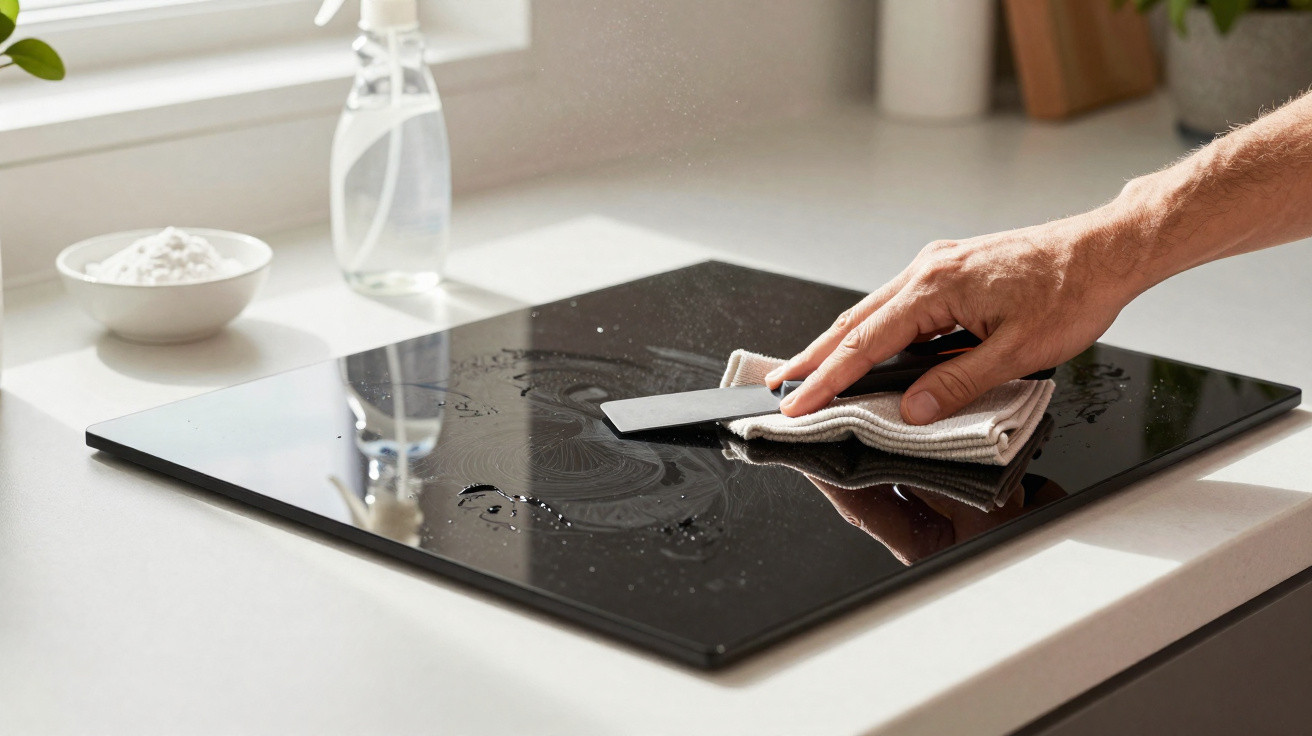
When the crust will not shift, a scraper designed for ceramic glass hobs is the most useful tool, provided it is handled properly. Hold the blade almost flat, at roughly 30 to 45 degrees, and gently push it forwards without ever digging it into the glass. Many people are reluctant to use one and instead spend twenty minutes scrubbing with an abrasive sponge: that is exactly the mistake to avoid. The scraper will not damage the hob when it is clean, suitable and held at the right angle. Replace the blade as soon as it has a nick or any sign of rust.
A few cupboard staples can be useful, although they are no substitute for a gentle touch. Diluted white vinegar restores shine after cleaning, while a very soft paste of bicarbonate of soda and water can work on a greasy mark, provided no visible grains remain.
“On a ceramic glass hob, remove the burnt material first; only then should you aim for shine.”
- Avoid metal scouring pads, steel wool and the abrasive green side of a sponge.
- Do not use a knife, a kitchen spatula or a razor blade held upright.
- Wipe with a dry microfibre cloth to check whether the mark has truly gone.
Seemingly helpful actions that turn a stain into a lasting scratch
The miracle cleaner under the sink is not always the right answer. Scouring powders, oven cleaners and some highly alkaline products can dull the surface or damage the printed markings around the cooking zones. Even bicarbonate of soda should be used sparingly: if dry grains remain beneath a sponge, they can become mildly abrasive. The safest rule is straightforward: dampen, lift, then polish. Resist the urge to pour on lots of product, as excess can leave a film more bothersome than the original stain.
Another common mistake is cleaning a hob that is still very hot after a hectic cooking session. There is one exception for sugary spills: these should be removed promptly with a suitable scraper, while taking extreme care around the heat. For everything else, waiting until the hob has cooled completely is more comfortable and much safer. A cold cloth on a hot area can also cause an unnecessary thermal shock. The kitchen will survive a ten-minute wait; your fingers will thank you.
If the black stain keeps returning in the same place, cleaning may not be the real issue. The base of a pan may be dirty, warped or coated with baked-on grease, transferring residue each time it is used. Get into the habit of wiping the underside of pots and pans before placing them on the hob. It may seem trivial, particularly on a tiring evening, but it protects the surface and also improves heat distribution. A well-maintained ceramic glass hob does not need to be perfect: it should remain pleasant to use, without marks that tell the story of every dinner-time mishap.
Restoring a clean ceramic glass hob without chasing exhausting perfection
An embedded black mark is not inevitable, nor does it automatically mean the hob is ruined. With hot water, a microfibre cloth, a suitable cleaner and a scraper used without force, most residues will eventually lift away. If a line remains visible but is entirely smooth, it may be an old alteration rather than dirt, so there is no need to persist until you create a scratch. Keeping a hob clean also means accepting that a kitchen is lived in. Rushed meals, splashing sauce and overflowing coffee are all part of the scene. Sharing a favourite cleaning tip could even stop someone else from reaching for the sponge that will cause one scrape too many in a moment of frustration.
| Key point | Detail | Benefit for the reader |
|---|---|---|
| Soften before rubbing | Place a warm, damp cloth over the mark for several minutes | Less effort and a lower risk of scratching |
| Use a suitable scraper | Use a clean blade, held at an angle and pushed gently | Removes carbonised residue precisely |
| Prevent new marks | Wipe pan bases and clean up spills | Preserves the hob’s shine day to day |




Comments
No comments yet. Be the first to comment!
Leave a Comment