
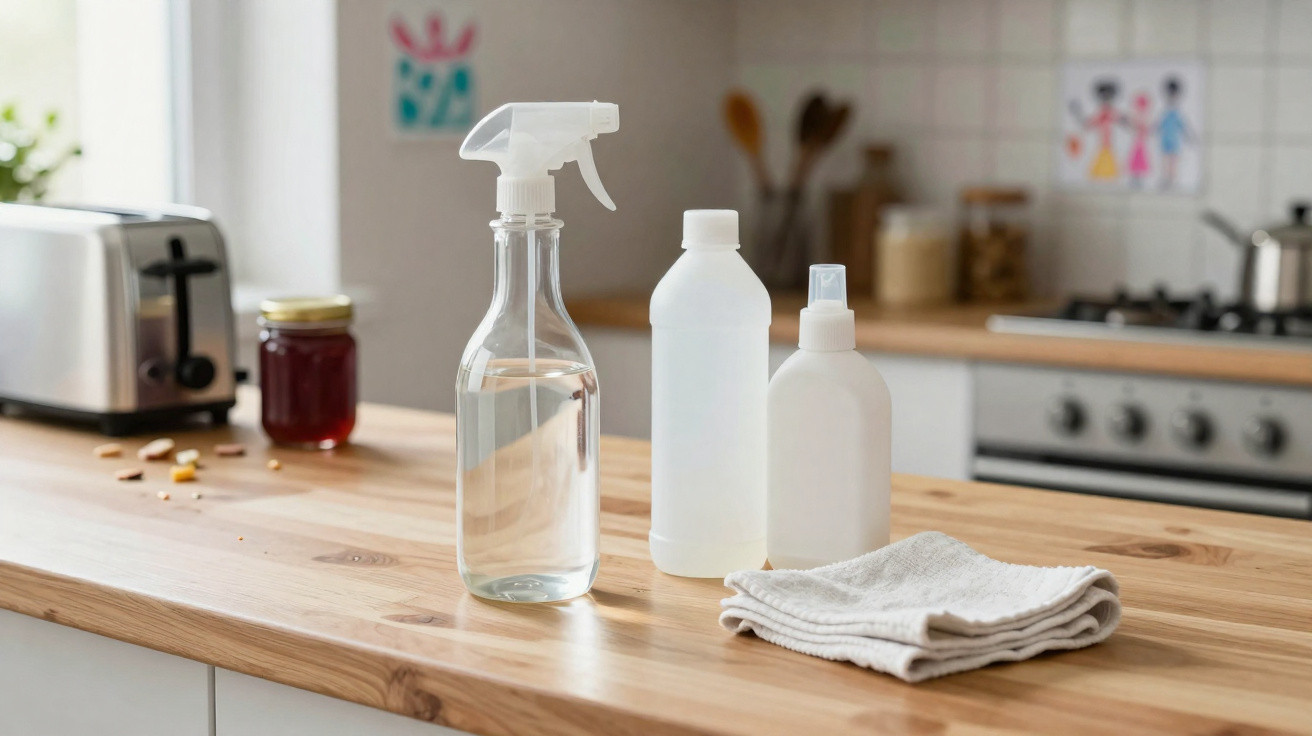
There is a tacky circle where the jam jar stood, a trail of fingerprints across the fridge door, and crumbs quietly staging a takeover beneath the toaster. Then I open the cupboard below the sink and face a lurid lineup of bottles, every one claiming to transform one particular surface. We have all reached the point where the clutter seems more overwhelming than the dirt. I pause, choose three unremarkable items instead, and the atmosphere changes: white vinegar, water and a squirt of washing-up liquid. There are no labels or grand claims, only a modest domestic revolt that smells a little like chips for roughly five minutes. There must be a simpler way. It has been sitting in front of us all along.
Why a three-ingredient cleaner works so well
Returning to basics brings a particular kind of relief: it clears your mind almost as effectively as it clears the worktops. I made my first bottle in an old spray container and, oddly, started cleaning more often rather than less, simply because the hassle had disappeared. You do not need a cupboard packed with chemical cocktails. What you need is something you will genuinely pick up when pasta sauce splashes, the dog shakes itself dry or the post leaves a grey mark on the hall table.
A friend sent me a picture of her kitchen: one hand resting on a highchair tray, the other indicating splatters on the hob. The same spray featured in both places, along with the same untroubled expression. She said it had cost her pennies and that she kept it beside the kettle, because that is where everyday mess actually occurs. Her last shop-bought multi-surface cleaner had been nearly £3; this bottle cost loose change, the sort you would retrieve from a car cup holder without a second thought. Those small savings build up without much fuss.
The gentle acidity in vinegar works through mineral residue and greasy films. Washing-up liquid tackles oils because it is a surfactant, reducing surface tension so grime can be lifted away. Water carries and softens the blend, diluting it sufficiently for regular use while helping it spread across a surface and wipe away cleanly. This is not complicated science; it is kitchen-table chemistry that performs predictably every time. That consistency matters when you are dealing with ordinary life rather than attempting a TikTok stunt.
The three-ingredient cleaner recipe and method
Take a clean 500 ml spray bottle made from HDPE or glass. Pour in 330 ml of cool distilled water or water that has been boiled and allowed to cool, followed by 160 ml white vinegar and ½ to 1 teaspoon of washing-up liquid. Gently tilt and swirl the bottle rather than shaking it, so you do not create a foam-filled bubble bath. Mark the bottle with its contents and the date, keep it where you are likely to notice it, and roll it briefly before every use to restore an even, freshly mixed solution.
Apply it with a microfibre cloth and use the trigger sparingly; two sprays will achieve more than you might expect and will help prevent streaks. Avoid using it on marble, granite, limestone and all other natural stone. Keep it off screens, unsealed wood and waxed finishes too, as soap and acidity may dull these surfaces or lift their finish. Never mix vinegar with bleach, full stop. First test the mixture in a concealed area, clean one small section at a time, and dry glossy surfaces afterwards. After all, nobody buffs their toaster every day.
To keep the smell manageable, maintain a 2:1 water-to-vinegar balance. Give food-contact surfaces a final wipe with plain water, and prepare a new batch every couple of weeks when using tap water.
“Simple wins because simple gets used,” says Jess, a professional housekeeper who switched to a three-ingredient routine after years of lugging a caddy. “If a product makes you hesitate, mess will win.”
- For mirrors and glass, reduce the washing-up liquid by half to limit streaking.
- For stainless steel, spray the cloth instead of the surface.
- For stone, use a stone-safe combination of water, isopropyl alcohol and a drop of washing-up liquid.
- For sticky handles, leave the spray in place for 30 seconds before wiping it away.
Create small routines: spritz once the kettle has been used, and wipe a surface before sitting down.
A small bottle with a big impact
I did not expect a homemade cleaner to alter how the kitchen felt, but it did. Having the bottle close by makes the action instinctive, and the result is the quiet sense of ease that comes when the final crumb has left the counter. The best cleaner is the one you actually use. This is neither about perfection nor moral purity. It is about reducing the noise and choosing something effective on a hungry, exhausting Tuesday afternoon, when you only want your home to feel like yours again. Pass the idea to a neighbour, keep an extra label in the drawer, and see what changes when normal household mess encounters a kinder approach. Your future self will nod, spray and get on with the day.
| Key point | Detail | Benefit for the reader |
|---|---|---|
| Three-ingredient formula | Water + white vinegar + washing-up liquid in a 2:1:tiny-squeeze ratio | Easy to remember, fast to prepare and requires no specialist shopping |
| Smart use | Microfibre cloth, light sprays, patch test, avoid stone and screens | Improved results with fewer streaks and fewer errors |
| Safety and savings | Never mix with bleach; make for pennies and refresh fortnightly | Protects health while reducing the cleaning bill |
FAQ
- Can I use this on granite or marble? Do not use vinegar on natural stone. Use a stone-safe trio instead: 1 cup water, 1 cup isopropyl alcohol (70%), and ½ teaspoon washing-up liquid. Spray it onto a cloth, wipe the surface, then buff it dry.
- Does this disinfect? Vinegar is not a registered disinfectant. For proper disinfection, apply 70% alcohol to pre-cleaned surfaces for the appropriate contact time, or choose a product that makes germ-related claims. Never mix vinegar with bleach.
- How long does a batch last? It will last around 2–3 weeks when made with distilled or boiled-and-cooled water and kept at room temperature away from sunlight. If the mixture smells unusual or separates strangely, discard it and make a fresh batch.
- Can I add essential oils for scent? Yes, although this creates a fourth ingredient and does not improve cleaning performance. If you want a light fragrance, add 5–10 drops of lemon or lavender; shake before use and avoid applying it to plastics that could soften.
- Will it streak on glass and stainless steel? For glass, cut the washing-up liquid down to a tiny drop and polish with dry microfibre. For stainless steel, spray the cloth rather than the surface and finish with a dry wipe to restore its sheen.

Comments
No comments yet. Be the first to comment!
Leave a Comment