
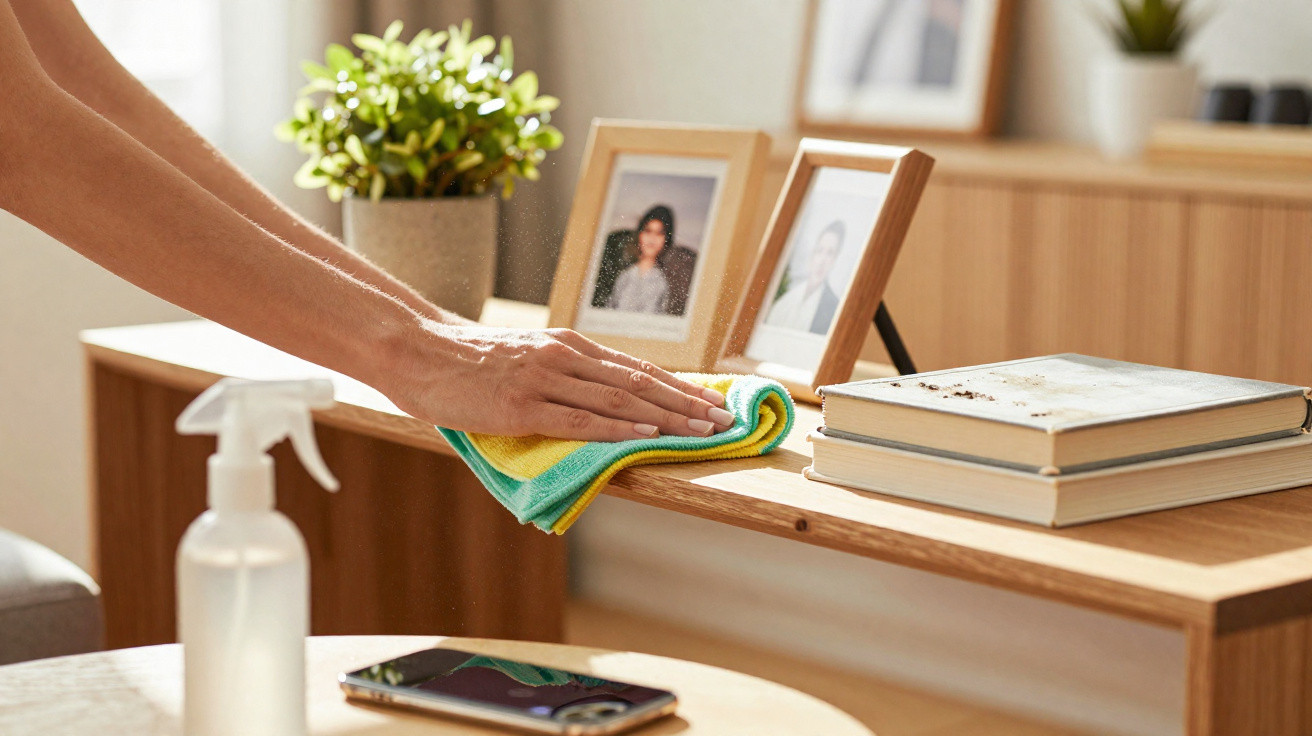
On Saturday morning, sunlight streams into the living room and abruptly exposes what you would rather overlook: a thin grey film on the TV unit, shelves, plant leaves and even the window ledge. Yet you cleaned only two days ago. That feeling of having to start all over again is familiar and, frankly, irritating. Dust never truly vanishes; it shifts around, clings to surfaces and reappears with the first shaft of sunlight. Cleaning professionals, however, rely on a very simple habit that is often missing from our cupboards: rather than chasing dust, they trap it. Their tool is far from dramatic, but the way it is used changes how clean a home feels. Once you have adopted it, it is hard to go back.
The professionals’ quiet habit: lightly dampen the microfibre cloth
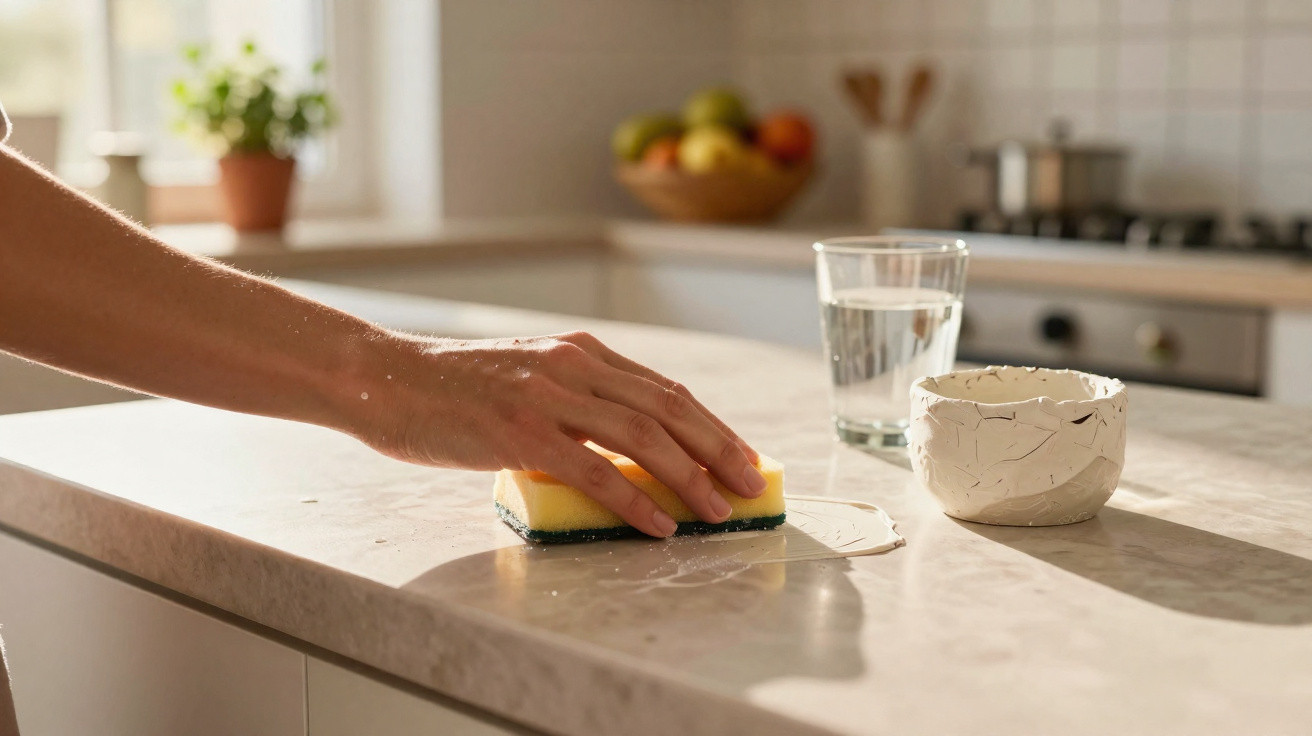
In hotels, offices and holiday lets, cleaning teams do not use a dry duster to send dust from one piece of furniture to another. Instead, they use a barely damp microfibre cloth, sometimes known as a pre-impregnated cloth. It should still feel soft to the touch and must not leave water marks in its wake. That tiny amount of moisture is what makes the difference: it holds particles rather than throwing them into the air. The action may seem ordinary, but it creates the rare feeling of a tidy interior that stays tidy for a little longer.
For Claire, a domestic cleaner with twelve years’ experience in the Lyon area, this approach solved a recurring issue for a client with allergies. Previously, surfaces were wiped using a dry cloth and the floor was vacuumed immediately afterwards; an hour later, the black hallway console already appeared dusty again. By using a lightly moistened microfibre cloth folded into several sections, she found that the furniture looked clean for an extra two to three days. There is no magic involved. It is simply dust that is no longer sent wandering around.
The explanation is quite straightforward: the exceptionally fine fibres in a good microfibre cloth form a surface that can hold grime, hair and light particles. A cotton cloth or an old T-shirt will often just push them ahead of it. Too much water spreads a grey sludge and leaves rings behind; no water at all can allow static electricity to draw fresh dust onto certain surfaces. The right feel is like a cool hand after it has been quickly dried. This balance is what professionals aim for before they even begin.
A three-minute method that stops you dusting twice
The process is easy: dampen a clean microfibre cloth with warm water, wring it out extremely thoroughly, then fold it into four or eight sections. Each fold gives you a fresh side. Move it slowly over the furniture, working from top to bottom and without rubbing as though you were polishing car bodywork. Once one side turns grey, turn the cloth over. This prevents dust you have already collected from being transferred onto a clean area. One calm, steady pass is more effective than ten frantic movements.
The most common mistake is spraying product straight onto the furniture. We all do it, particularly when we are in a hurry. However, spray can leave a sticky layer on varnished wood, plastic or screens, and that coating becomes a dust magnet. Let us be honest: nobody really does this every day. Save specialist products for stains, fingerprints or surfaces that genuinely require them. For routine dusting, water and a good-quality microfibre cloth are enough in most rooms.
Extra care matters on delicate areas such as a screen, speaker or games console: never spray liquid directly onto the device. The microfibre cloth should be almost dry, and grilles, ports and openings should be avoided. Professionals also keep one cloth specifically for sensitive surfaces, so that no grease or cleaning-product residue is left behind.
“Dust that has been trapped does not settle back down five minutes later: that is the difference between cleaning and merely moving it.”
- Use a clean microfibre cloth, with no fabric softener trapped in its fibres.
- Dampen it lightly, then wring it out as much as possible.
- Fold it to make use of several sides before rinsing it.
- Always start with higher items: shelves, frames and light fittings.
- Finish with the vacuum cleaner or the floor, where particles naturally end up.
This small habit also changes how clean your home feels
The most surprising thing is not only that furniture stays clean for longer. It is the overall atmosphere. A table cleared of its grey film instantly looks brighter, a mark-free screen seems larger, and a bookcase regains its colours. Dust makes a room feel visually tiring before we even notice it. Trapping it properly also reduces that sense of endless housework which makes you want to put everything off until later.
A few related habits remain useful alongside this tip. Airing rooms for ten minutes, rather than leaving a window open all day on a busy street, washing throws and covers regularly, and vacuuming rugs with a well-maintained appliance all reduce the stores of dust. Clogged vacuum filters, meanwhile, can release some of what they have just sucked up back into the air. It is not a glamorous detail, but it is a very practical one. A home will never be sterile, nor should that be the aim.
The real success lies in finding a realistic rhythm. Running a damp microfibre cloth over the most visible surfaces for two minutes once or twice a week is often more effective than an exhausting deep clean every fortnight. Everyone can adjust the routine to suit their home, pets, windows or allergies. Some will first notice the change on the black unit in the living room; others in the bedroom, where morning light reveals everything without mercy. This tiny tip is a reminder that a pleasant home does not always depend on expensive products, but on a better-considered action.
| Key point | Detail | Benefit for the reader |
|---|---|---|
| Lightly damp microfibre cloth | It traps particles instead of moving them through the air. | Furniture stays clean for longer. |
| Cloth folded into several sides | Each clean side prevents dust from being redeposited. | Faster, cleaner results. |
| Cleaning from top to bottom | Dust ends up on the floor, which is vacuumed last. | Fewer unnecessary passes and less effort. |
Comments
No comments yet. Be the first to comment!
Leave a Comment