

One morning, while reaching for the milk, you spot a thin black line tucked into the fold of the fridge seal. At first, it seems insignificant: perhaps a splash of sauce or an old mark that simply went unnoticed the day before. Then you run a finger over it and feel the surface catch slightly. The smell is a clearer warning. In this flexible recess where the door closes, moisture settles unnoticed and mould finds an almost ideal hiding place. We have all had that mildly frustrating moment when an otherwise clean appliance suddenly looks neglected. The reassuring part is that it is far easier to deal with than you might think, often with just a few straightforward steps.
Why fridge seals grow mould so quickly
A fridge seal is unobtrusive, yet it is constantly at work. It keeps cold air inside, endures repeated door openings, collects condensation droplets and may receive a small splash of soup or fruit juice without anyone noticing. Grime quickly works its way into its grooves, particularly in a warm kitchen or when the fridge is packed full. Mould thrives on this combination: moisture, organic residues and limited airflow. This does not necessarily mean that a home is poorly maintained. More often, everyday life has simply left its mark in an awkward spot.
For Claire, a mother of two, the marks appeared after a weekend away. The fridge had been almost emptied, but a poorly sealed bottle had leaked against the door. When she returned, several dark grey spots had formed on the seal, mostly in the lower corners. She assumed the entire seal would need replacing, but careful cleaning was enough. Depending on the conditions in the room, mould can develop within a few days on a damp area that has not been wiped. The issue is not always what you can see: it is what remains trapped in the fold.
A door that does not close properly can make the problem worse too. If the seal is greasy, misshapen or dusty, it grips the fridge frame less effectively; warmer air then gradually gets in, producing more condensation. It is an ordinary but persistent cycle. Let us be honest: hardly anyone cleans this area every day. We clean the shelves, the vegetable drawers and sometimes even behind the fridge, then forget this strip of rubber until marks become visible. A clean seal also helps keep food fresh and reduces lingering odours.
A gentle method for removing marks without damaging the rubber
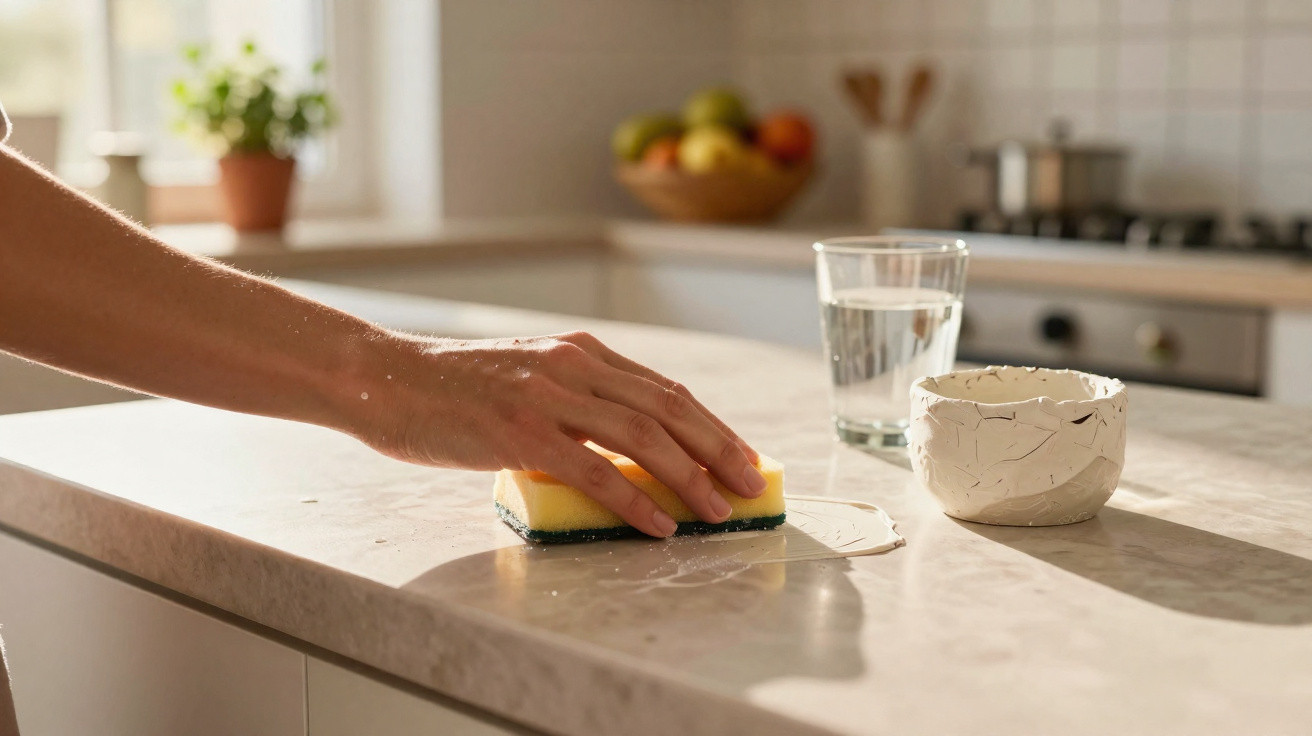
Before you begin, remove the items stored in the door and switch off the power if you are planning a longer clean. Mix warm water with a few drops of washing-up liquid in a bowl, then take a clean microfibre cloth or an old soft toothbrush. Carefully separate the lips of the seal with your fingers to reach inside the folds, without tugging sharply. Work on small sections, wiping each one dry straight away. For any marks that remain, a mild paste made from bicarbonate of soda and water can help. Leave it for a few minutes, rub gently, then remove all residue with a damp cloth.
White vinegar is often presented as a miracle solution, and diluted in water it can be useful for light marks. However, it is best not to leave it on ageing or delicate seals for too long, as repeated acidity may eventually dull them. Bleach can seem reassuring when faced with black mould, but it is rarely the best option: it may damage the rubber, leave a strong smell and does not resolve the moisture problem. Gentle cleaning often works better than harsh scrubbing. If a mark persists, repeat the process the next day rather than rubbing as though you were scouring a saucepan.
Once cleaning is complete, drying matters just as much as the product you used. Run a dry microfibre cloth through every fold, leave the door slightly open for a few minutes if possible, then make sure no moisture remains in the grooves. A cotton bud can help with the tightest corners, the areas we rarely inspect but which are often the first to turn black.
“A fridge seal does not need aggressive products: above all, it needs moisture and the small deposits that feed mould to be removed.”
- Use warm water and a soft brush for routine cleaning.
- Always dry the folds of the seal after every clean.
- Avoid abrasive sponges, neat bleach and heavily fragranced products.
- Check the lower corners of the door, which are often damper.
Preventing mould from returning without turning it into a chore
The most effective habit is also the least dramatic: quickly wipe up anything that spills. A milk bottle, a sauce jar or a bag of defrosting vegetables can leave a few drops along the door edge. Wiping them away before they dry stops the seal from becoming a small food store for microscopic fungi. Keeping the fridge at an appropriate temperature, around 4 °C, also helps limit excessive moisture and preserves food more effectively. A fridge that is too warm produces more condensation, while one that is too cold can create frost and make matters more difficult.
Checking every two or three weeks is usually enough. Open the door, run your hand over the seal and inspect the folds in daylight. If it feels sticky, dusty or damp, two minutes with a soapy cloth will prevent a more demanding clean later. It is also worth confirming that the fridge is stable: on many models, a slight backward tilt helps the door close correctly. A seal that grips properly is a seal that stays drier. It may seem like a tiny detail, but it affects both electricity use and the appearance of marks.
Sometimes a seal has become too porous, cracked or detached in places. In that case, cleaning is no longer a complete solution, even if it improves its appearance for a few weeks. Test how well it works by trapping a sheet of paper in the door: if it slips out without resistance in several places, the seal should be checked. Many seals can be replaced without changing the whole fridge, provided you order the correct part number. It is not a glamorous purchase, but it can give the appliance a new lease of life, cut energy waste and get rid of that stale smell that returns far too quickly.
This small maintenance task says something about our kitchens, too: they are never static. They are lived in, become cluttered and accommodate hurried Monday evening meals alongside leftovers we promise to finish tomorrow. Mould on a fridge seal is not a failing or a domestic defeat. It simply indicates that a damp space has been overlooked for a while. By getting into the habit of noticing these details, you can stop the issue taking hold and regain that pleasant feeling of opening a fridge that is clean, hygienic and free from unpleasant surprises.
The easiest approach is to include the seal in the same routine as the shelves: a cloth, a little soapy water, then careful drying. There is no need for a major spring clean or a collection of specialist products. This light regular routine is more realistic, especially during busy weeks. It also helps you spot a door that is closing less securely, a leaking bottle or a temperature that seems unusual at an early stage. Taken separately, these small signs may appear harmless. Together, they make all the difference.
There is also a reassuring idea behind this cleaning: you can act before black marks become a source of disgust or concern. In most cases, a few minutes, a soft brush and attention to moisture are all that is needed. If you have already found a trick that works in your kitchen - leaving a microfibre cloth near the fridge, checking weekly or using bicarbonate of soda occasionally - it is worth sharing. The best household habits are often the ones you can genuinely maintain over time.
| Key point | Detail | Benefit for the reader |
|---|---|---|
| Gentle cleaning | Warm water, washing-up liquid, a soft brush and bicarbonate of soda if needed | Removes marks without weakening the seal |
| Thorough drying | Focus on folds and corners after cleaning | Denies mould the moisture it needs |
| Regular checks | Visual inspection every two or three weeks | Prevents established marks and identifies a poor seal |




Comments
No comments yet. Be the first to comment!
Leave a Comment