
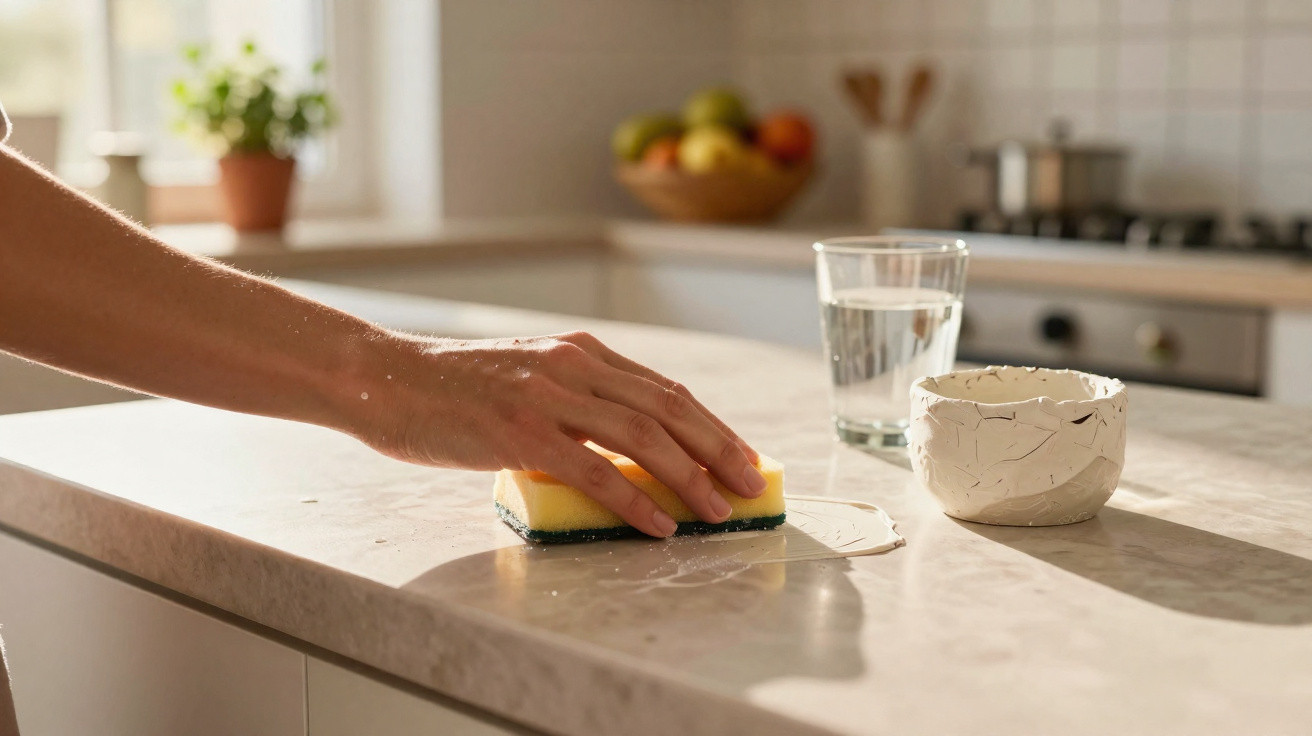
The coffee has barely finished brewing, the kitchen is still quiet, yet that long pale line across the worktop is already catching the light. Sometimes all it takes is a ceramic dish moved too quickly, a tin placed down without a mat, or a knife slipping from your hand for the surface to look suddenly worn. We all know that moment when we assume the only proper answer will be expensive, messy and inevitably postponed. Yet a small tub costing under €10 can often lessen these unsightly marks: white clay stone. The result is particularly surprising when the scratch is not as deep as it first appears. You simply need to know how to use it properly.
The scratches that make a worktop seem beyond saving
A scratched worktop rarely tells the story of a disaster; it shows that a kitchen is being used. Marks crop up beside the sink, around the hob, or in the exact spot where keys, shopping bags and breakfast bowls are set down. On dark laminate, they stand out as white streaks; on a pale surface, they look grey and create the impression of stubborn dirt. The instinct makes sense: scrub hard, try more and more products, then start considering a replacement. In many cases, however, the mark is only superficial. It has not gouged into the material, but has dulled the top finish or trapped residue in a tiny scratch.
Clay stone, also called white stone or cleaning stone, generally costs between €4 and €9, depending on the brand and tub size. This solid product, often sold in a small round container with a sponge, usually contains clay, soap and very fine polishing agents. For Claire, who has rented her home for six years, a scratch beside the sink on her wood-effect worktop seemed impossible to remove. After a few gentle passes with lightly dampened white stone, the line had faded enough that it no longer caught the eye. There was no television-style miracle, just a surface that looked more even again.
The key is a distinction that is easy to overlook. A deep scratch removes material, and no cleaner can refill it permanently. A light scratch, on the other hand, can be made less noticeable because the product lifts metal marks, embedded grime and the dull film that makes its texture stand out. Light does the rest, more or less. On laminate, resin, stainless steel or certain melamine surfaces, the improvement can be striking. Greater caution is needed with natural stone, delicate quartz or oiled wood: not all worktops react in the same way.
A gentle white clay stone method that will not worsen the mark
The right approach starts with an ordinary but important step: wash the area with warm water and a drop of washing-up liquid, then dry it. Next, dampen the sponge supplied with the clay stone, wring it out thoroughly and pick up only a very small amount of product. Rub the mark without pressure, using small circular motions or following the direction of the worktop pattern. There is no need to continue for ten minutes: thirty seconds is enough to see an initial change. Rinse with a damp microfibre cloth, dry the area, then inspect the surface from several angles before repeating the process.
The most common mistake is assuming that harder scrubbing will automatically produce a better result. It is understandable: when a mark is visible, we want it gone immediately. But clay stone remains mildly abrasive, even if it feels gentle to the touch. On a glossy finish, pressing too firmly can leave a dull patch that is more noticeable than the original scratch. Let us be honest: hardly anyone carries out a test patch before every cleaning job. Even so, trying the product behind an appliance, in an inconspicuous corner or beneath a basket can prevent an unpleasant surprise and some entirely avoidable regret.
Before reaching for the sponge, it is best to check exactly what the surface is made from, particularly in newer kitchens where imitations can be remarkably convincing. One simple rule can stop a cleaning job from becoming an expensive repair.
“The aim is to soften a mark, not strip the worktop: a gentle approach often produces a cleaner result than persistence.”
- Suitable with care: laminate, melamine, satin-finish stainless steel and certain resin surfaces.
- Test first on: glossy finishes, matt black patterns, sealed polished concrete or lacquered surfaces.
- Avoid without the manufacturer’s advice: marble, limestone, untreated or oiled wood, sensitive quartz and glass.
A small tub under €10, but not a universal solution
What makes clay stone appealing is its reassuringly practical nature: the same tub can also be used on the sink, ceramic hobs, cupboard handles and black marks left by certain utensils. In a kitchen, it soon becomes one of those products kept at the back of the cupboard because it genuinely comes in handy. Its price also changes how the issue is viewed. Before calling a fitter or searching for a new worktop, you can try a straightforward, reversible and affordable option. Sometimes, that step alone gives several more years of peace of mind to a surface you thought was beyond rescue.
Expectations must remain realistic. If your fingernail catches clearly in the scratch, if the printed laminate pattern has been removed, or if the substrate is swelling near a joint, white stone will not make the damage disappear. It may improve the appearance, clean the edges of the mark and make the whole area less obvious, but it cannot recreate a protective layer. In that situation, a colour-matched repair kit, a specialist wax or help from a professional may be more sensible. The right product is not the one that claims to solve everything; it is the one that prevents matters from getting worse.
This small tub is also a reminder that a worktop does not have to be flawless to remain pleasant. The most welcoming kitchens often have a few marks, a more weathered corner or a trace that recalls hurried meals and busy Sundays. Clay stone provides a modest, practical and almost satisfying response: it restores a little lustre without creating a renovation project. Even if the scratch remains faintly visible, it at least stops dominating your attention. Between costly replacement and doing nothing, there is often this simple sponge-sized solution.
| Key point | Detail | Benefit for the reader |
|---|---|---|
| Affordable product | White clay stone is often available for between €4 and €9 in supermarkets, DIY shops or hardware stores. | A low-cost first attempt before considering complete worktop replacement. |
| Expected result | It mainly reduces light scratches, metal marks and dullness, without repairing material that has been deeply gouged. | More realistic expectations and less disappointment with an old or deep scratch. |
| Technique to remember | Use a barely damp sponge, a small amount of product and light pressure, and test it first in a hidden area. | A simple method that reduces the risk of creating a dull halo or a fresh scratch. |
Comments
No comments yet. Be the first to comment!
Leave a Comment