
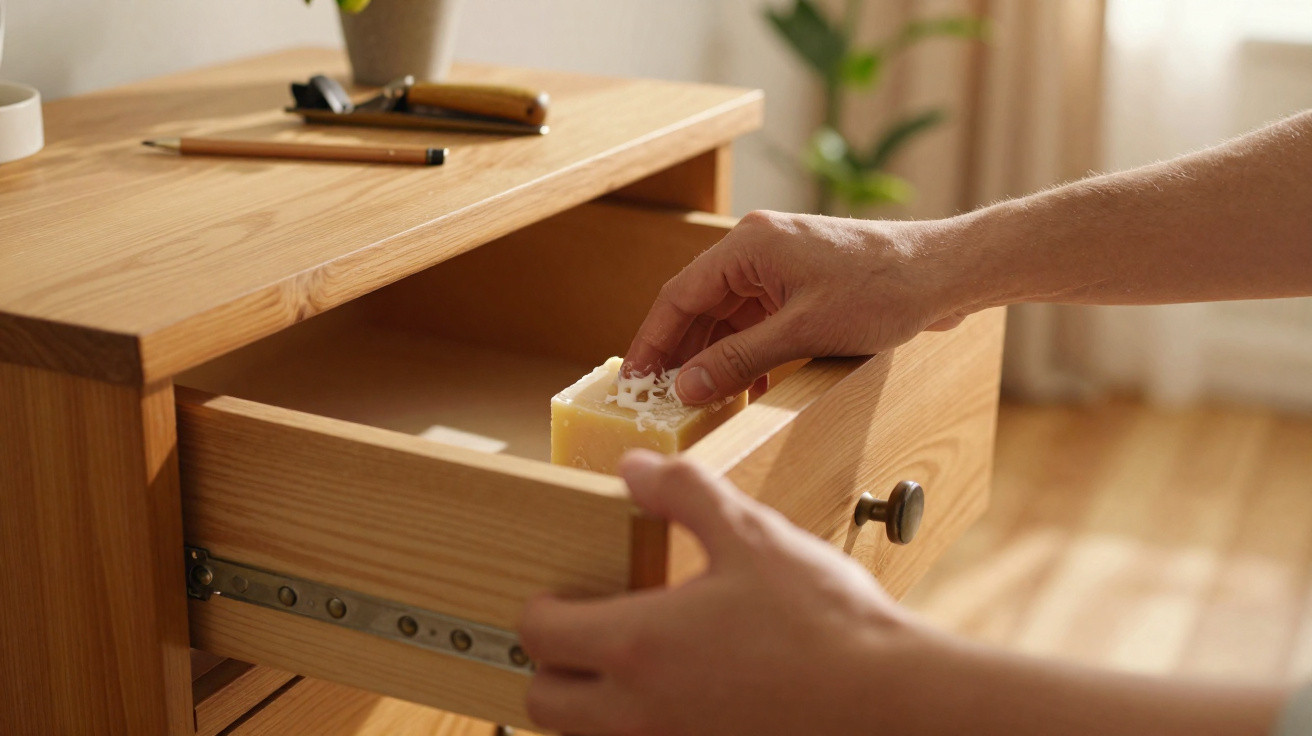
A stuck drawer can be enough to spoil a rushed morning. You pull it, try harder, lean down to see what is wrong, and the furniture creaks as though it has chosen to keep its secret. Whether it is in an old kitchen, an inherited chest of drawers or a vintage sideboard, this minor fault soon becomes a major irritation. Yet the answer is often sitting in a cupboard beside the sponge: an ordinary dry bar of soap.
We all know the moment when a drawer will not open just when you need batteries, cutlery or that bill you should have filed ages ago. You apply a little more force, the wood objects, and you start wondering whether the furniture will give way before the drawer does. This everyday frustration is often caused by living wood, which responds to moisture, warmth and the passing years. Earlier generations did not always have specialist sprays to hand, but they did rely on a highly effective habit: rubbing a bar of soap over the contact areas. It seems almost too simple. Even so, the drawer will often run again as though it has just left the workshop.
Why a wooden drawer can suddenly start sticking
Wood is never completely static, even when it looks dry and perfectly settled within a piece of furniture. When the air is damp, its fibres take in a small amount of water and swell; in exceptionally dry spells, they contract. In a drawer fitted to the nearest millimetre, even a few tenths of a millimetre can create troublesome friction. This is often noticeable in autumn after several rainy days, or during winter in a home with little heating. A drawer that slid silently in July can then feel heavy, catch as it moves, or become completely jammed. That does not necessarily mean the furniture is damaged. More often, it is simply wood reacting to its surroundings.
Cabinetmakers have always known about this behaviour. An antique item made with traditional joints can perform differently from one season to the next without there being any structural issue. A drawer 40 centimetres wide can expand enough in humid conditions to rub against its side runners. Dust, crumbs in a dresser, or an old wax coating that has become sticky can make matters worse. One reader said she had considered dismantling her grandmother’s chest of drawers before realising that the drawer only stuck on rainy days. After applying soap, it was sliding again in under a minute.
Friction mainly occurs where two wooden components meet: along the sides of the drawer, its lower battens and the runners fixed inside the furniture. Repeated opening and closing can leave these surfaces rough, or marked with fine black lines. Soap works as a gentle dry lubricant, forming a film that improves movement without soaking the wood. It is a modest repair, but there is something reassuring about it: rather than throwing something away, you make a small adjustment. To be honest, nobody really does this every day. But once the drawer slides again, you may wonder why you left it so long.
The soap trick: the simple method woodworkers keep close by
First, empty the drawer and remove it carefully, without pulling it out at an angle. Next, wipe the sides, the underside and the furniture’s runners with a dry cloth to remove dust, grit and small residues that may act like sandpaper. Choose a thoroughly dry solid soap, preferably Marseille soap or a plain white neutral bar, without heavily oily ingredients or added cream. Rub it directly over the areas where wood slides against wood, applying slightly more to the edges. There is no need to use a large amount: a thin layer is enough. Put the drawer back in place, then open and close it around ten times to distribute the soap.
The most frequent mistake is using liquid soap, shower gel or a damp sponge in the hope of doing the job more quickly. Such products introduce water and sometimes greasy or fragranced agents, a combination wood does not always tolerate well. Another temptation is to spray all-purpose penetrating oil onto the runners. That can make sense on a metal mechanism; on wooden furniture, however, it may stain the surface, attract dust or leave a persistent smell in stored linen. Dry soap remains the cleanest solution for a traditional drawer. If it still sticks after two applications, there is no point forcing the issue: the furniture may need more precise adjustment.
Some craftspeople even keep a piece of soap in their toolbox, alongside a pencil and sandpaper.
“On a sound wooden runner, soap does not repair a defect: it simply restores the drawer’s freedom of movement,” explains a joiner who regularly restores family furniture.
Before rubbing on the soap, take a minute to check these easily overlooked details:
- a nail or screw protruding beneath the drawer;
- a drawer base that has sagged under an overly heavy object;
- a runner that is split, warped or coming loose;
- a thick layer of wax that has turned tacky;
- furniture standing on an uneven floor, causing it to shift slightly.
When soap is no longer enough: listen to what the furniture is telling you
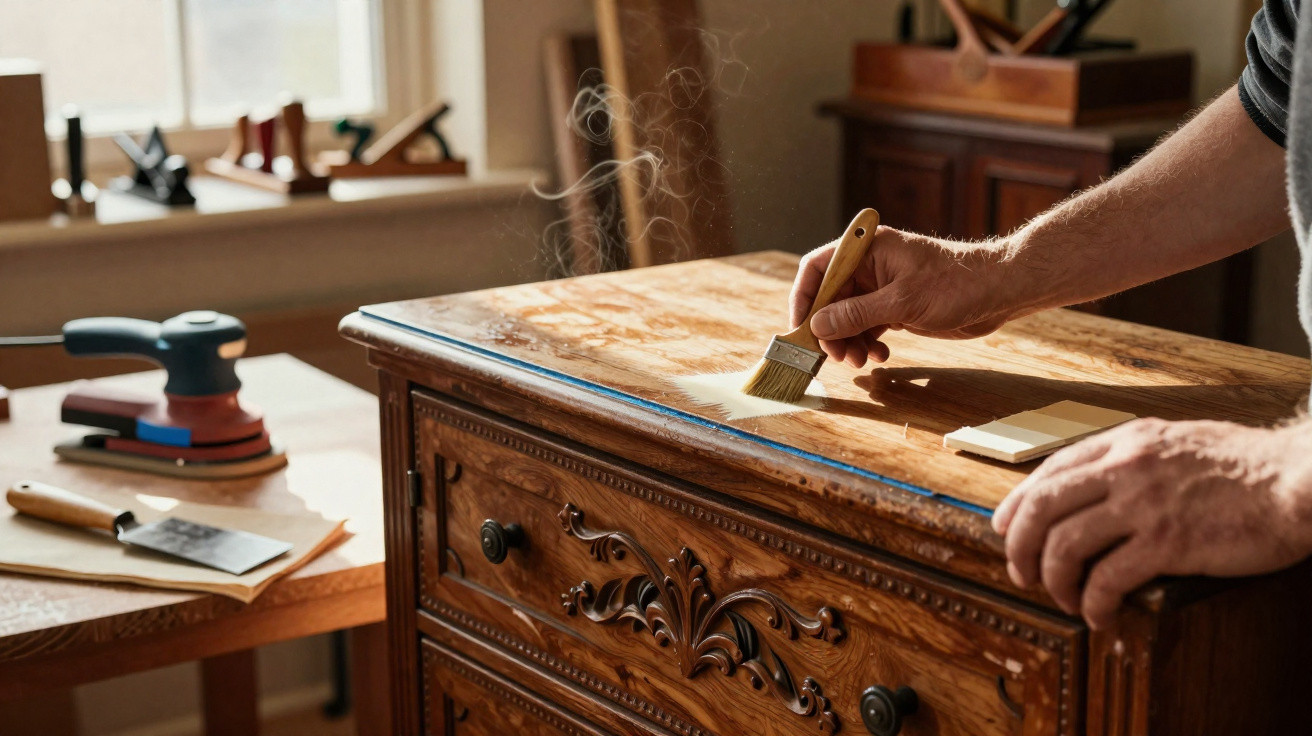
If the drawer always catches at the same point, watch how it moves instead of applying force. Localised rubbing may indicate a swollen runner, a chipped section of wood or a base that has warped slightly under the weight of years. You can then sand the affected area very lightly with fine abrasive, following the grain, before applying a little more soap. The key word is lightly: removing too much material creates looseness, and a drawer that rattles around in its housing is rarely more pleasant than one that resists. For valuable, antique or veneered furniture, professional advice can prevent regrets.
A jammed drawer may also be a sign that the room is too damp. In a bathroom, utility room or poorly ventilated home, furniture absorbs that atmosphere day after day. Regular airing, moving a chest of drawers away from a cold wall and avoiding placing it directly against a radiator can already help stabilise the wood. Moisture-absorbing sachets can be useful in an enclosed cupboard, but they are no substitute for healthy ventilation. The best maintenance is often the least noticeable: a dry cloth, a little soap when needed, and less rough handling in everyday use. Wood retains the memory of poor treatment for a long time.
This grandmother’s tip appeals because it does not claim to be a spectacular miracle cure. Instead, it is a reminder that an ordinary object sometimes deserves a tiny amount of attention before it is replaced. A bar of soap forgotten at the back of a cupboard can make a desk, bedside table or old wardrobe full of memories comfortable to use again. Many people rediscover the simple pleasure of furniture that works properly, without a sharp scraping noise or resistance beneath the palm. What if that stubborn drawer became an opportunity to look differently at the furniture around us-the pieces we use without noticing until the day they, too, ask for a little care?
| Essential point | Detail | Added value for the reader |
|---|---|---|
| The soap must be dry | Rub a solid bar of soap over the sliding areas | Lubricates without wetting or staining the wood |
| Clean before taking action | Remove dust, crumbs and residue from the runners | Prevents dirt from being mistaken for a mechanical problem |
| Do not force it | Identify the exact point at which the drawer catches | Protects the runners and reveals a possible fault |


Comments
No comments yet. Be the first to comment!
Leave a Comment