
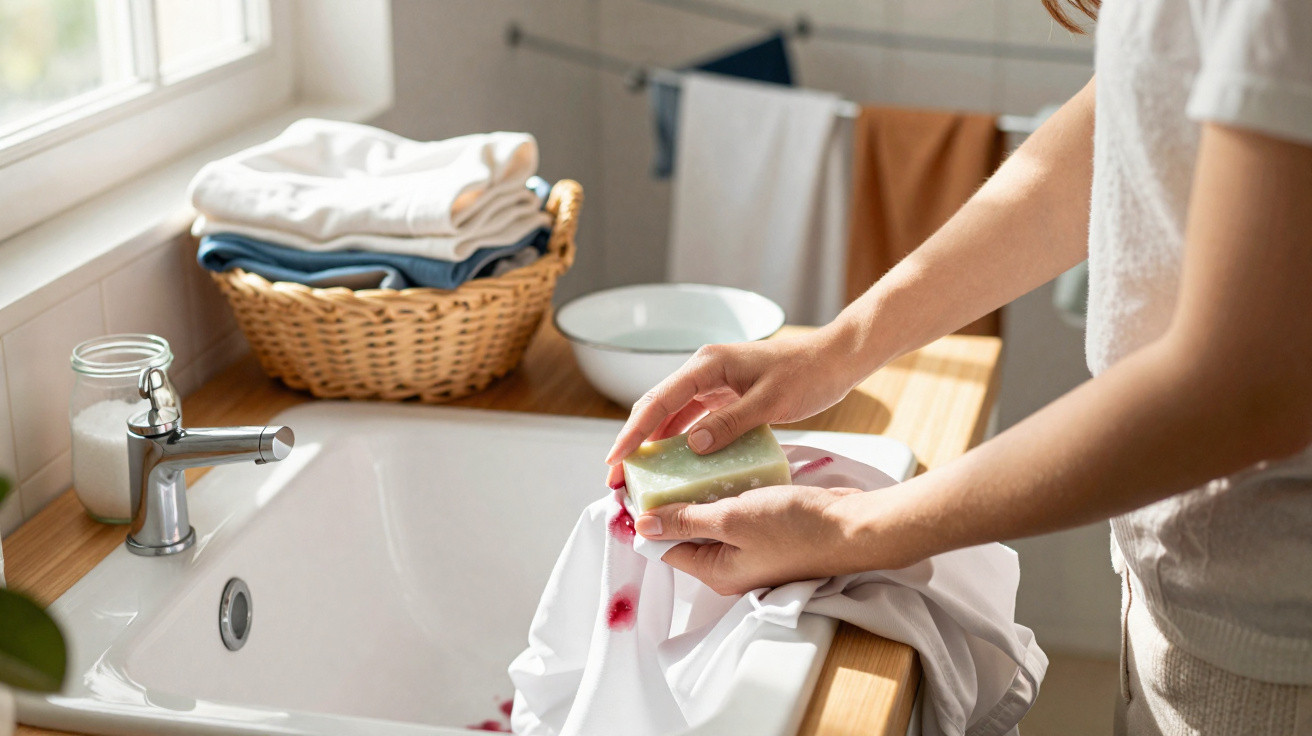
One Sunday evening, just before putting on a wash, a mother spots a sauce stain on her son’s pale T-shirt and feels that familiar flicker of dismay. The stain remover has run out, the supermarket is shut, and the laundry basket has already been waiting for two days. Yet an old, slightly dried-out bar of Marseille soap sits almost forgotten on the bathroom shelf. She rubs it over the damp fabric, leaves it for a few minutes, then puts the garment in the washing machine. By the next day, the mark has vanished, or nearly so. There is no miracle involved: simply an everyday habit our grandmothers used without a second thought. Sometimes the best routines are the ones we have abandoned. This one clearly deserves another chance.
Marseille soap, the little bar that once did everything at home
In many kitchens and bathrooms, Marseille soap is still tucked away at the back of a cupboard, wedged between an opened box of bicarbonate of soda and new sponges. It has been overtaken by sprays that promise instant cleanliness, scented capsules and brightly labelled liquids. Yet this plain bar remains remarkably effective on everyday marks: grease, grass, chocolate, make-up, sweat stains and fresh tomato sauce. Its strength lies in its simplicity. It works directly on the affected spot, without requiring the whole garment to be treated with a harsh or heavily perfumed formula.
My aunt always kept a piece of soap beside the sink, resting in a slightly chipped saucer. If a child spilled cherry juice on a shirt or a tea towel still bore an oil mark, she did not overcomplicate matters: she dampened the fabric, rubbed it gently, then left the item to sit in a corner. According to a 2023 Ifop survey into consumer habits, nearly one French person in two says they are trying to cut down on chemical household products. The old bar of soap is gradually returning to homes, even if it has not yet taken centre stage on shop shelves.
There is nothing mysterious about how it works. Soap made from saponified vegetable oils helps lift greasy substances from fibres, particularly while the stain is still fresh. Rubbing matters too, allowing the soap to reach the places where the dirt has settled. Naturally, an old red-wine mark or baked-on grease will not necessarily come out on the first attempt. But for ordinary mishaps, those that happen between meals, journeys or washes, this approach can often prevent a perfectly wearable item from being thrown away. The right reflex matters more than the amount of product.
How to use Marseille soap without damaging your laundry
The process requires very little, which may be exactly why it is so easy to overlook. First, lightly dampen the stained area with cold or lukewarm water. Never use hot water if the mark contains blood, milk or egg. Next, rub Marseille soap directly onto the fabric until a thin white layer forms. Work it in with your fingers without pulling at the fibres, then leave it to act for between fifteen minutes and an hour. The garment can then go into the washing machine with your usual detergent. On a shirt collar or tea towel, this small step often makes all the difference.
The most common mistake is simply leaving it too long. You come home tired, put the stained trousers on a chair and tell yourself you will deal with them tomorrow. Three days later, the mark has dried, set into the fabric, and the soap has much more work to do. Let us be honest: nobody manages this every day. Still, keeping a bar near the laundry basket makes it easier to build the habit. Sometimes thirty seconds, just before washing your hands, is enough to save an item you thought was destined for the back of the wardrobe.
Before trying it on a delicate textile, always test it on an inconspicuous area, such as an inside seam. Silk, very fine wool, some hand-dyed fabrics and garments labelled “dry clean only” require greater care.
“My grandmother always said that a fresh stain is a stain that has not won yet,” says Claire, 42, who returned to using solid soap after her children were born.
A few straightforward steps can help avoid disappointment:
- treat the stain before washing, rather than afterwards;
- avoid very hot water on protein-based stains;
- do not scrub delicate fibres too vigorously;
- allow the item to air-dry before checking the final result.
Why this old-fashioned habit is returning at the right time
There is something reassuring about a soap with no showy packaging, no scent that fills the room and no promises that sound too good to be true. It does not claim to clean the entire house in ten seconds. It has one particular job, and it does it well. At a time when we buy a different product for every corner of daily life, returning to a versatile item can feel almost like breathing more easily. Marseille soap can also be used to hand-wash a few items of underwear, clean a sponge or freshen a yellowed collar.
This tip is about saving money too, without any grand claims. A bar of soap generally costs a few pounds and lasts a long time, especially when kept dry in a soap dish that lets water drain away. Compared with stain-remover sprays, disposable wipes and specialised pods, the savings can quickly add up for a family. This is not about banishing everything else or making people feel guilty for using modern products. A felt-tip stain on a sofa or a jacket marked with engine grease may require something different. But returning to a simple habit already means fewer bottles cluttering the cupboard.
What resonates in this story is not just the effectiveness of an old product. It is also the hazy memory of homes where things were repaired, where cleaning did not automatically mean replacing, and where a stained shirt was not seen as beyond saving. We have all had that moment when a favourite garment seems ruined by a tiny mark: almost silly, yet impossible to ignore. Reaching for Marseille soap means slowing down for a few minutes instead of giving in to irritation. It is not revolutionary. It is, in fact, very ordinary. That modesty is probably where its strength lies.
| Key point | Detail | Benefit for the reader |
|---|---|---|
| Act quickly | Dampen and soap the stain as soon as possible | Improves the likelihood of removing the mark |
| Protect the fabric | Test on an inconspicuous area and avoid excessively hot water | Reduces the risk of fading or distortion |
| Keep the soap close at hand | Place it near the laundry basket or sink | Turns a good intention into an everyday reflex |


Comments
No comments yet. Be the first to comment!
Leave a Comment