
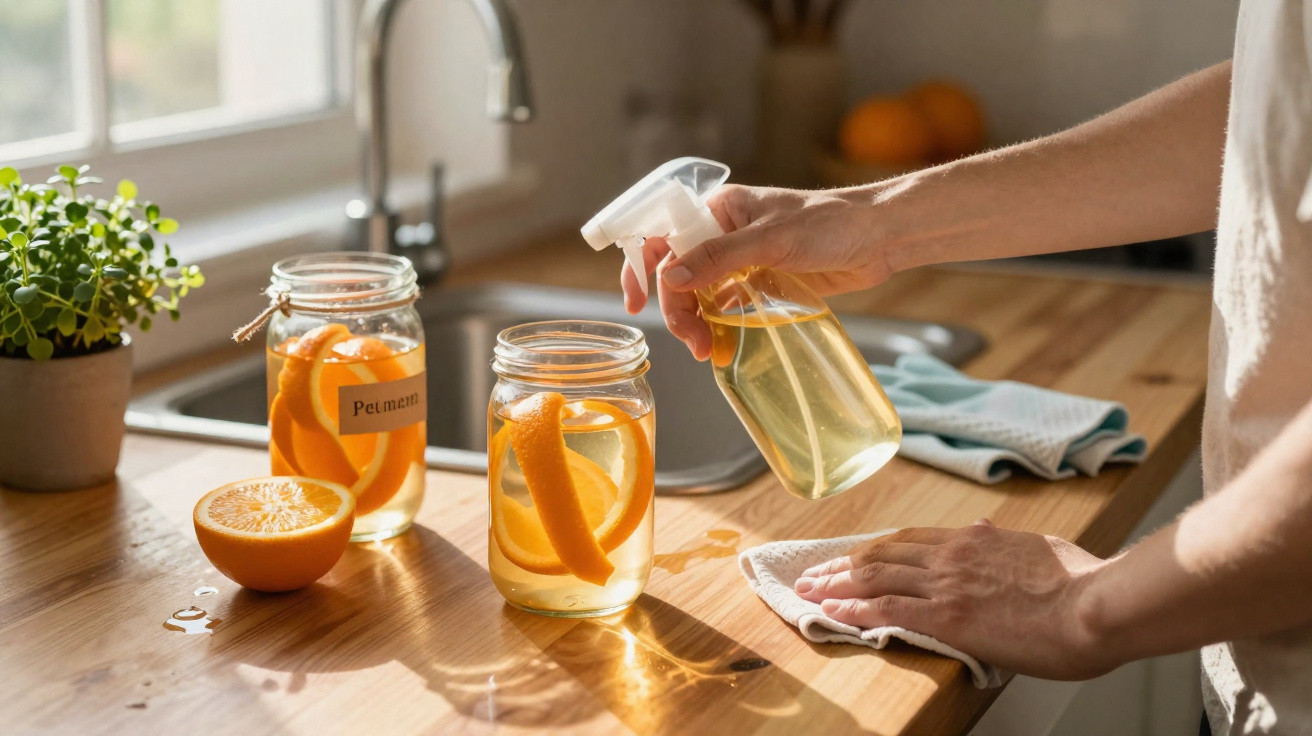
An orange peel that would usually be thrown away can serve a new purpose at home, particularly for fragrance-related uses. The fruit’s outer layer contains aromatic compounds that account for its distinctive scent, although this does not mean that every homemade peel-based recipe is effective or safe.
Why can orange peel be reused around the home?
Orange peel contains essential oils and other compounds that produce its citrus fragrance. Whether fresh or dried, it can be used as a simple way to scent rooms, provided it is kept in conditions that do not encourage mould growth.
The peel may also be included in certain cleaning preparations, especially when its aromatic compounds are combined with other suitable ingredients. However, these household uses should not be regarded as universal replacements for products specifically formulated for cleaning.
What should be considered before using orange peel for cleaning?
The type of surface is one of the key considerations. Delicate materials, natural stone, unprotected wood and some metals may react differently to substances found in citrus solutions. For this reason, a homemade mixture should not be used indiscriminately throughout the home.
It is also essential to distinguish a pleasant fragrance from disinfectant action. A citrus smell may create an impression of cleanliness, but it does not prove that the peel has removed microorganisms or replaced a sanitising product. Recipes making overly broad claims should be approached with caution.
How can orange peel be reused more safely?
For fragrance purposes, the peel can be placed in a clean, open container in a dry, well-ventilated area, or used in suitable culinary and aromatic preparations. If it is dehydrated, it must be fully dry before storage to prevent moisture and spoilage.
When used for cleaning, the most important step is to choose methods compatible with the surface and test them first on a small, inconspicuous area. After use, the area should be cleaned in line with the material manufacturer’s guidance, particularly if it comes into contact with worktops, utensils or surfaces used to prepare food.
Who should adapt this reuse method, and when?
Homes with young children, pets or people sensitive to fragrances require extra care when using concentrated fruit preparations and essential oils. An ingredient being natural does not automatically make it suitable for every person or setting.
It is also best not to keep fresh peels for long periods in sealed containers. Moisture promotes deterioration and mould growth. Where there is no specific purpose for the material, composting or proper disposal remains a safer option than attempting to use the peel in unproven recipes.





Comments
No comments yet. Be the first to comment!
Leave a Comment