
On Sunday mornings, light often falls at an angle across the shower seals, exposing what we would rather ignore: tiny black specks that begin discreetly before becoming firmly established. We scrub them with an old toothbrush, open the window for ten minutes and promise ourselves we will deal with them “soon”. Two weeks later, the marks are back, almost defiantly. We all know the moment when an otherwise clean bathroom suddenly looks uncared for. The issue is not always a lack of cleaning. More often, it is moisture left trapped in the corners once the steam has cleared. This is exactly where professional habits make a difference.
The real culprit is not dirt but water left behind
In a bathroom, seals rarely turn black simply because they are not cleaned often enough. They darken because they remain damp for too long, sometimes for several hours after a shower. Silicone, particularly around the shower tray and screens, then becomes an ideal breeding ground for mould: warmth, steam, soap residue and insufficient fresh air are all present.
A plumber often explains it with a straightforward comparison: a wet seal is like a towel left scrunched up in a sports bag. Even if it starts out clean, it will eventually smell unpleasant. In a poorly ventilated bathroom, moisture can remain on walls and seals for more than two hours after a hot shower.
The key detail is therefore less dramatic than using a miracle product: remove visible water before it is left to dry slowly. Mould does not take hold overnight; it benefits from repetition. One shower a day, a few standing droplets and a closed door are often enough for black spots to appear after several weeks.
The professional tip: squeegee, dry, then let the bathroom breathe
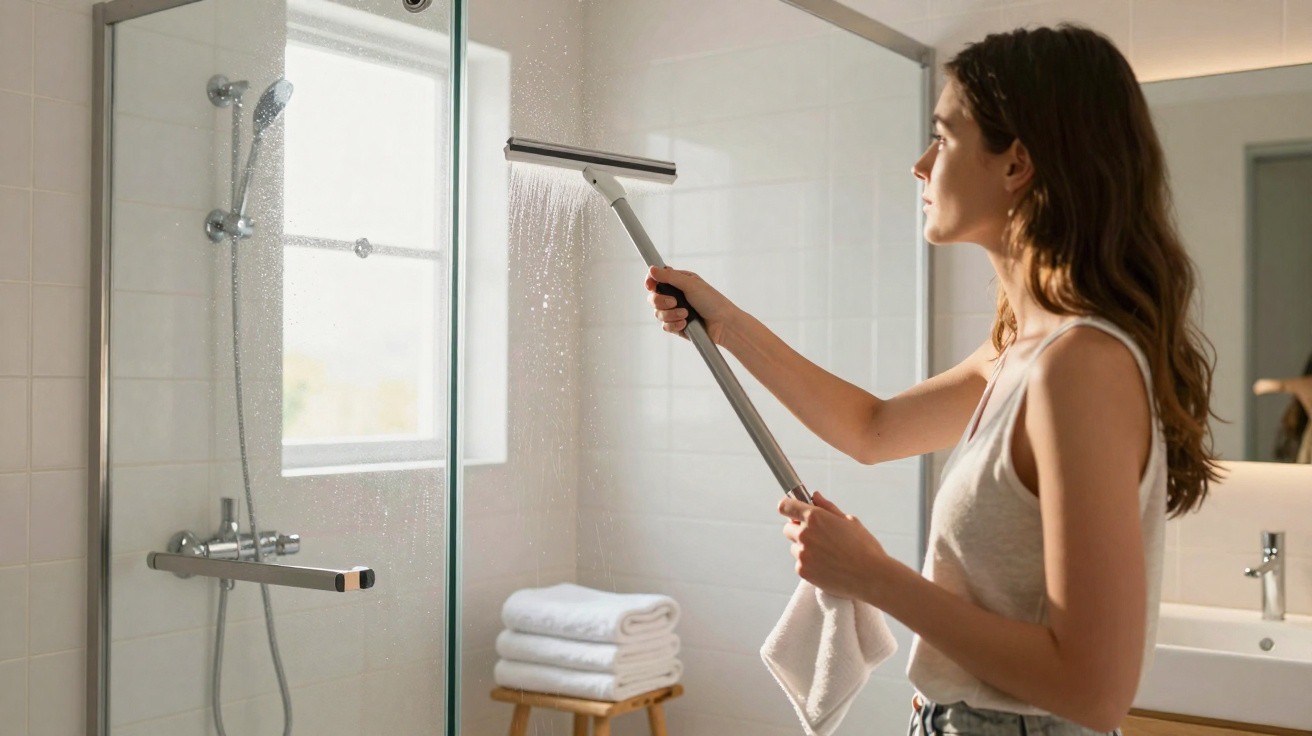
The method used in hotels, well-maintained rental properties and by many tradespeople takes less than a minute. Once you have showered, run a soft squeegee over the walls, nearby tiles and the bottom of the glass door. Finish by using a dry microfibre cloth on the horizontal seals around the shower tray or bath.
At first, this final step can seem excessive, but it soon becomes automatic. Let us be honest: nobody does it every day with military discipline. The aim is not to turn the bathroom into a laboratory, but to stop water collecting in the tiny, unseen dips in the silicone, where stains begin their quiet work.
Ventilation does the rest, provided it is not forgotten too soon. If you have mechanical ventilation, leave it running after showering; if not, open the window slightly or leave the door open towards a better-ventilated room, rather than trapping all the steam in the bathroom.
“A seal stays white when it can dry fully between uses. Cleaning comes afterwards, never before this rule.”
- Squeegee the surfaces immediately after every shower.
- Dry flat seals with a clean microfibre cloth.
- Allow air to circulate for at least twenty minutes.
- Avoid hanging a wet towel in front of the shower.
Small bathroom maintenance prevents major scrubbing
If the first black marks have already appeared, there is no need to panic or empty an entire bottle of bleach. Targeted cleaning with an antifungal product suitable for bathroom seals may be enough, as long as you rinse thoroughly and dry the area afterwards. The trap is to clean aggressively, then allow moisture to return exactly as it did before.
White vinegar is often recommended, but it is not a universal solution. It may help with limescale, but it is less effective against deeply embedded mould, and repeated acidity is not suitable for every material. Never mix vinegar with bleach, as the fumes released can be dangerous. It is better to choose one product and follow its instructions for use.
When silicone is blackened throughout, cracked or coming away, it may be necessary to replace it. This is a small job, but the surface must be completely clean and dry before the new seal is applied. Anti-mould sanitary silicone gives a better starting point, without replacing the essentials: dry, ventilate and repeat.
A bathroom stays attractive when the routine is easy
The right habit should not feel like a burden. A squeegee hung within easy reach, a microfibre cloth folded in a small basket and a window left ajar for a few minutes: organisation matters more than motivation. When these accessories are hidden at the back of a cupboard, even the best intentions tend to stay there too.
There is something reassuring about this routine. It prevents the discouraging major clean on a Saturday, harsh products that sting the eyes and the feeling of having to catch up with a problem that is already established. A few seconds after showering also protect glass panels from limescale, taps from white marks and the damp smells that can sometimes appear without warning.
One simple reality remains: some bathrooms are poorly ventilated, have no window or suffer from persistent condensation. In this situation, a timed extractor fan, a compact dehumidifier or a check of the mechanical ventilation system can radically change the atmosphere. Seals are a discreet, almost domestic indicator of the air quality we breathe every morning.
| Key point | Detail | Added value for the reader |
|---|---|---|
| Remove water after showering | Use a squeegee on the surfaces, then a microfibre cloth on horizontal seals. | Reduces standing moisture, the primary cause of black mould. |
| Ventilate for longer | Keep mechanical ventilation running or refresh the air for around twenty minutes after showering. | Encourages complete drying, including in less visible corners. |
| Renovate at the right time | Replace silicone that is cracked, loose or deeply blackened. | Avoids repeated use of products and restores a clean seal for the long term. |



Comments
No comments yet. Be the first to comment!
Leave a Comment