
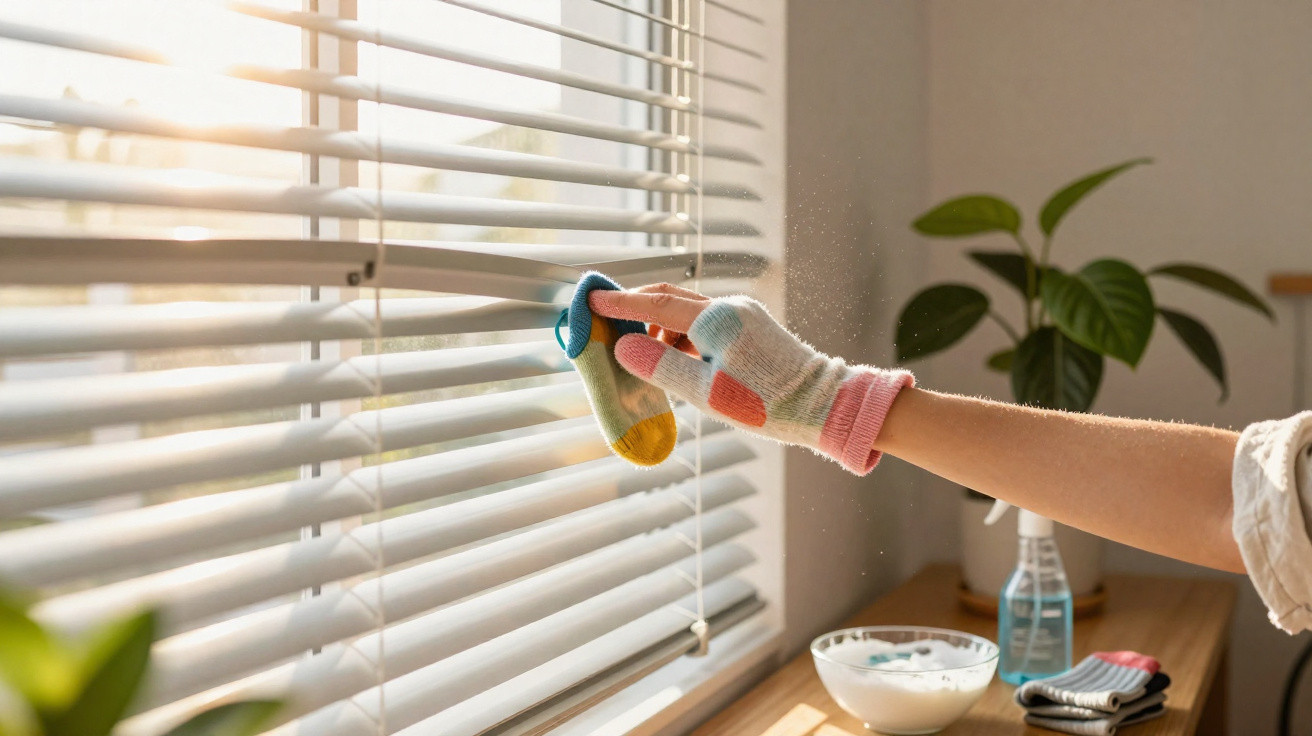
Dust quickly clings to blind slats, and cleaning them can often seem never-ending. Yet an everyday accessory can make all the difference.
In the kitchen, living room or bedroom, blinds collect fine dust, fingerprints and sometimes greasy splashes. Many people put off cleaning them because they lack time or worry about damaging the slats. An old clean sock, used properly, makes it possible to clean every section without taking the blind down or using several household products.
A sock turns your hand into a precision tool
The idea is extremely straightforward: pull a sock over your hand as though it were a glove, then run your fingers along the slats. Your hand naturally follows their shape and reaches the edges, which are often missed by a feather duster or flat cloth.
This approach gives you genuine control over each movement. You can grip a slat between your thumb and fingers, move steadily from one end to the other, then turn it over to clean the reverse side. Unlike overly vigorous dusting, it stops dirt from being scattered around the room.
“A slightly damp sock is enough to remove settled dust, provided the slats are never soaked.”
A cotton sock is suitable for routine care. Microfibre gives a cleaner result on dry dust. Its fibres hold particles through an electrostatic effect, trapping them instead of pushing them further along the blind or into the air.
A step-by-step method for clean blind slats
Before you begin, open the blinds so that you can reach the entire surface of the slats. Close the window to prevent a draught from immediately depositing fresh dust on areas you have already cleaned.
- Select a clean, hole-free sock that does not shed lint.
- Put it on your dominant hand.
- If the slats are heavily coated, dust them dry first.
- Lightly dampen the fabric with the appropriate cleaning solution.
- Wring it out carefully: no drops should run from it.
- Grip each slat and slowly slide your hand along its full length.
- If the material is sensitive to moisture, dry it with a second clean sock or soft cloth.
It is best to work from top to bottom, as dust naturally falls onto the lower slats. Working the other way round can mean dirtying sections that have already been cleaned.
For particularly grimy blinds, use the other side of the sock once the fabric becomes grey or greasy. A dirty sock spreads residue rather than removing it. Keeping two or three mismatched socks to hand avoids repeated trips to the washing machine.
A simple solution for each level of dirt
Expensive products are not necessary for everyday maintenance. Lukewarm water with a few drops of mild washing-up liquid or soft soap is enough to remove ordinary marks. This mixture is suited to blinds exposed to daily dust, particularly in living areas.
In a kitchen, deposits are often stickier. Cooking steam combines with dust to create a greasy film on the slats. A mixture of one part water and one part white vinegar can help cut through grease, especially on hard-wearing surfaces.
- Light dust: use a dry microfibre sock.
- Everyday marks: use lukewarm water and mild soap.
- Greasy deposits: use water and white vinegar, after testing it on an inconspicuous area.
- Stubborn marks: treat the area with a damp cloth, without scrubbing harshly.
White vinegar has an acidic action that is useful against limescale and certain greasy marks. It is not a replacement for an approved disinfectant where a surface requires specific disinfection. For household blinds, its main benefits are its cleaning power and low cost.
Adjust the method to the blind material
Not all blinds can withstand the same amount of moisture. Before dampening the sock, check what the slats are made from. The wrong product or too much water can cause water marks, dull a finish or warp wood.
Plastic blinds
Plastic slats generally cope well with soapy water. They are easy to clean using a damp, well-wrung sock. A final wipe with a dry cloth reduces marks caused by hard water.
For old stains, hold the damp fabric against the affected area for a few seconds, without using an abrasive object. Rough sponges can scratch the surface and create areas where dust clings more readily.
Aluminium blinds
Aluminium tolerates moisture, although water marks remain noticeable on glossy finishes. A lightly vinegared solution can restore a more even appearance to the slats, as long as they are dried immediately after cleaning.
Avoid scouring powders, stiff brushes and excessive pressure. Thin slats can bend. If one becomes misshapen, gently straighten it between your fingers rather than trying to force it back in one movement.
Wooden blinds
Wood requires extra care. Water can make it swell, lift its finish or leave a lasting stain. A dry sock is therefore the preferred option for regular maintenance.
“For wooden slats, the rule is simple: use very little moisture, dry immediately and avoid all harsh products.”
If a mark remains, use a barely damp sock, then wipe every slat straight away with a dry cloth. If the blind is varnished or oiled, check the manufacturer's guidance before applying vinegar, even when diluted.
The right cleaning schedule to prevent build-up
A quick dusting every fortnight is often enough in a home with limited exposure to dirt. In a kitchen, near a busy road or in a household with pets, cleaning once a week can be helpful. This regular routine reduces the need for a longer wash.
The sock can also be used on cords, handles and the top rail, where grime builds up unnoticed. Use a clean section of fabric for these parts, as the mechanisms may hold darker grease than the slats themselves.
One final detail makes a difference: wash the socks used for cleaning afterwards, separately if they are very dirty. They will remain effective for the next clean and will not leave residue on the blinds. This small habit also helps windows retain their clean appearance, often enhanced by clearer light in the room.




Comments
No comments yet. Be the first to comment!
Leave a Comment