
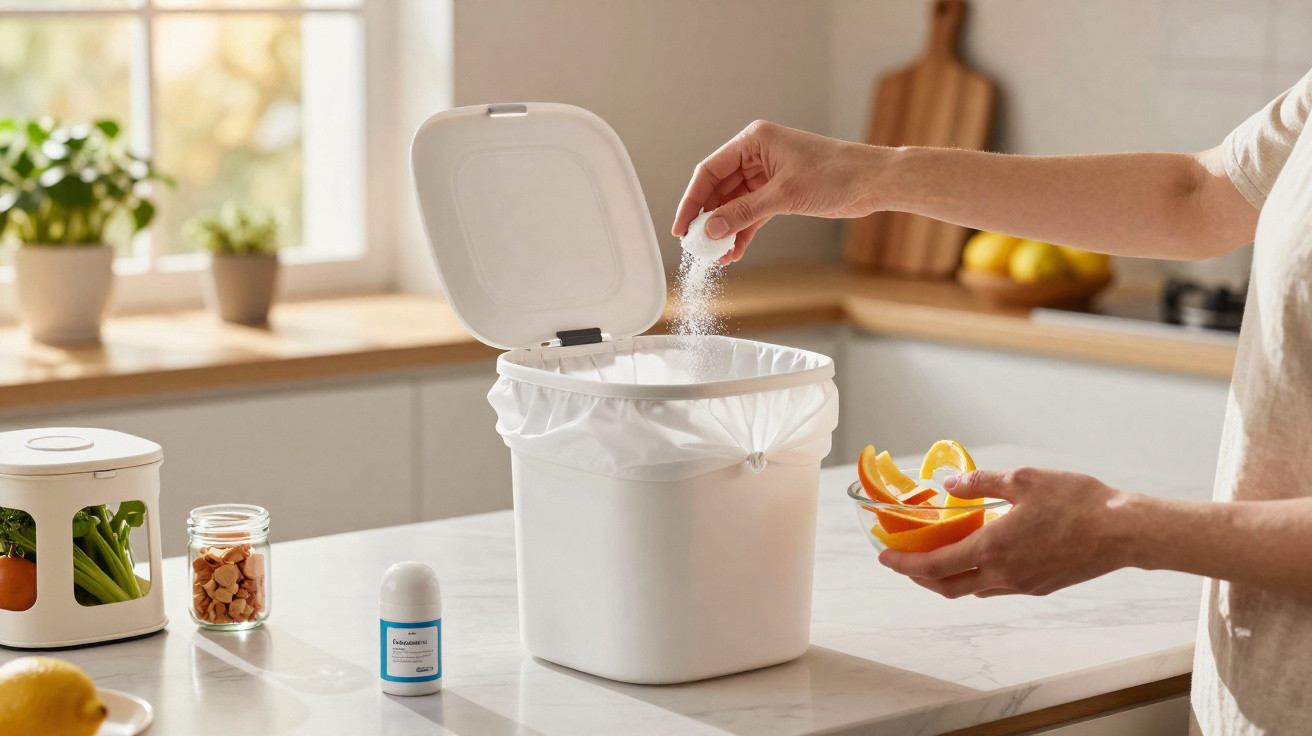
One evening, after preparing fish and clearing away a few peelings, you close the kitchen bin with that automatic little gesture. The following morning, as you walk past the sink, a stubborn smell seems to have taken over the room, even with the window open. We all know that slightly embarrassing moment when we wonder whether guests will notice it before we do. The good news is that a smelly bin is not an unavoidable part of domestic life. A few straightforward habits are often enough to stop unpleasant odours settling into the lid, liner or hidden corners of the bin. It can genuinely transform the feel of a kitchen.
Why bin odours can develop faster than expected
A bin does not smell simply because it is full: it smells because damp waste starts to break down, sometimes within just a few hours. Meat leftovers, eggshells, wet coffee grounds and peelings stuck at the bottom provide ideal conditions for bacteria. In a warm kitchen, this process speeds up and the smell can become noticeable almost straight away.
The most familiar example follows a seafood meal or cooking fish. Even when they are wrapped in a bag, fish bones and soiled packaging release a strong smell that soon passes through plastic, particularly if the refuse collection is not for another two or three days. A family of four can produce more than 500 kilograms of household waste a year: only a small amount is needed to scent the entire kitchen.
The real issue is often concealed beneath the liner, in the place nobody inspects until the problem becomes unpleasant. Liquid may have leaked out, dried, then mixed with a fresh spill the next day. The bin does not always look dirty, but it retains the memory of what has been poured into it. A lingering smell rarely appears for no reason.
Simple habits that stop a kitchen bin becoming a nightmare
The most effective habit is to separate the strongest-smelling waste before putting it in the bin. Wrapping meat, fish, very mature cheese or nappies in newspaper, a sealed bag or their original packaging significantly reduces odours. In summer, some people even keep this waste in a small container in the freezer until collection day: it may seem excessive, but it is remarkably effective.
At the bottom of the bin, a handful of bicarbonate of soda absorbs some moisture and neutralises smells rather than merely covering them up. You can also place a sheet of kitchen roll there with a few drops of white vinegar, provided it is replaced regularly. Let us be honest: hardly anyone really does this every day. The right routine is one that remains manageable during a busy week.
The lid deserves as much care as the bin itself, as invisible splashes collect around the handle and hinges. Hot soapy water, followed by diluted white vinegar, will generally restore things to normal.
“A clean bin does not need to smell of perfume: it simply needs to forget what it has held.”
- Empty the liner as soon as it contains damp waste or animal products;
- Quickly rinse heavily soiled packaging before binning it;
- Allow the bin to dry completely after every wash;
- Put a little bicarbonate of soda beneath the fresh liner.
When fragrance conceals the bin problem instead of solving it
Deodorisers hung inside the lid often create an impression of freshness for a few days, but then the artificial floral scent combines with the smell of rubbish. The outcome is seldom convincing. It is better to tackle the source, clean stained areas and replace the liner before it tears. Fragrance is no substitute for a clean bin.
Another common mistake is to tightly seal a bag containing lots of hot, damp waste. Steam remains trapped, condensation develops and the base of the bag soon becomes slippery. Letting cooked leftovers cool before throwing them away avoids this very ordinary trap. It also reduces the chance of the bag splitting at the worst possible moment.
If the smell returns immediately after cleaning, inspect the pedal mechanism, the wheels or the area behind the bin. A trace of food juice may have been lodged there for some time. A thorough monthly clean often takes only ten minutes, using hot water, washing-up liquid and an old brush kept for the job. The kitchen immediately feels fresher.
A more pleasant kitchen often starts with this unseen detail
Looking after your bin is not glamorous, which is probably why it is so easy to put off. Yet this small task affects the overall impression of a kitchen: you feel more inclined to cook, leave less packaging lying around and open the cupboard door without hesitation. Domestic comfort often comes down to the details nobody notices when everything is working well.
Every household eventually finds its own method: bicarbonate of soda at the base, a Sunday wash, a quick wipe with vinegar after fish meals, or changing the liner before it is even full. The key is to act before the smell clings to the plastic. If a tip works in your home, it is worth keeping: the best habits are often the ones you can repeat without thinking about them.
| Key point | Detail | Benefit for the reader |
|---|---|---|
| Separate sensitive waste | Fish, meat and cheese leftovers, as well as heavily soiled packaging, can be wrapped before being put into the liner. | Reduces odours at the source, even when refuse collections are spaced apart. |
| Clean overlooked areas | The underside of the lid, hinges, bottom of the bin and the area behind it often retain invisible residue. | Prevents unpleasant odours returning a few hours after an apparently recent clean. |
| Absorb moisture | Bicarbonate of soda placed beneath a clean liner helps reduce dampness and odours that settle into the plastic. | An accessible, inexpensive solution that is easy to include in an everyday routine. |






Comments
No comments yet. Be the first to comment!
Leave a Comment