
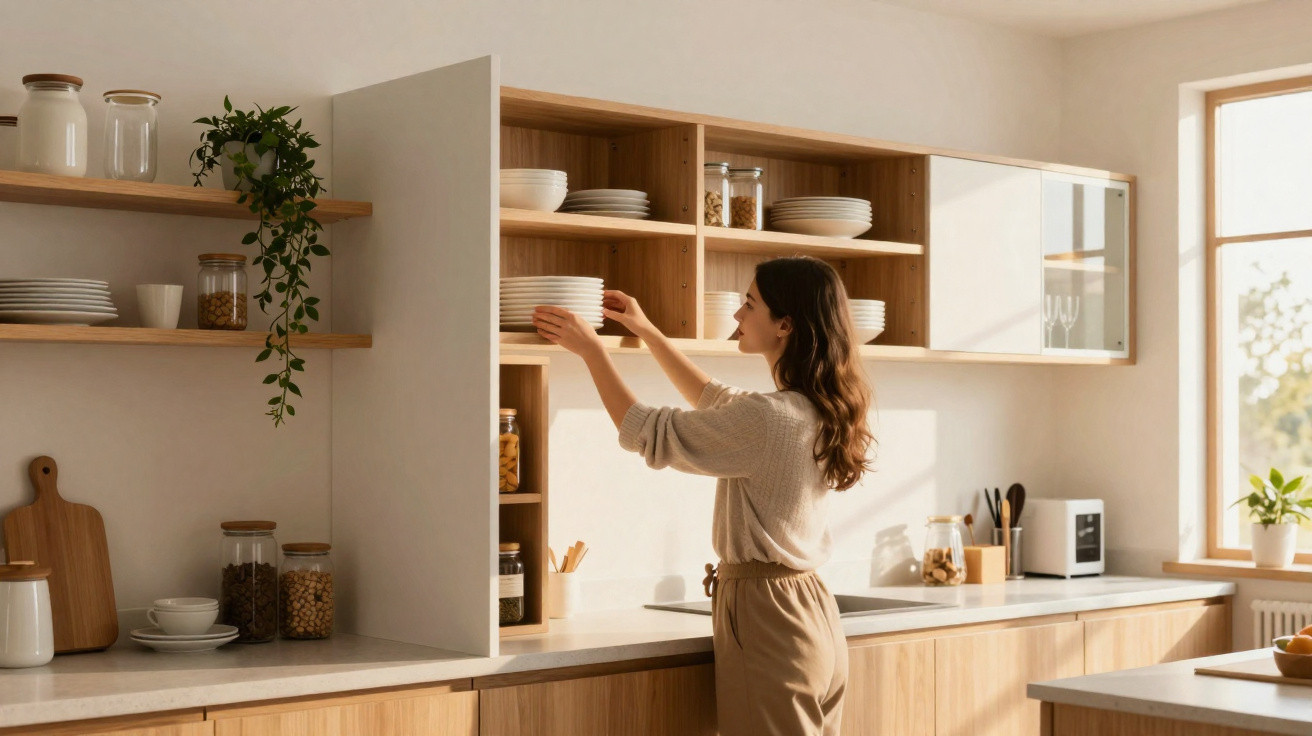
The traditional wall cabinet is becoming less common in refurbished kitchens, as many homeowners want spaces that feel lighter, more open and easier to use. Rather than covering an entire wall with closed doors, 2026 trends favour options that give kitchens more character, improve visual flow and provide smarter storage.
Why is the wall cabinet falling out of favour?
For many years, the wall cabinet was seen as almost essential in a kitchen. It addressed storage needs, but could also make the room feel heavier, especially in compact spaces. When it fills a whole wall, it can reduce the sense of spaciousness and make the kitchen appear visually cramped.
The preference now is for kitchens that feel less cluttered and more connected to the rest of the home. Designers are choosing solutions that balance practicality with a lighter look, rather than turning every wall into a row of closed doors.
Open shelves make the kitchen feel lighter
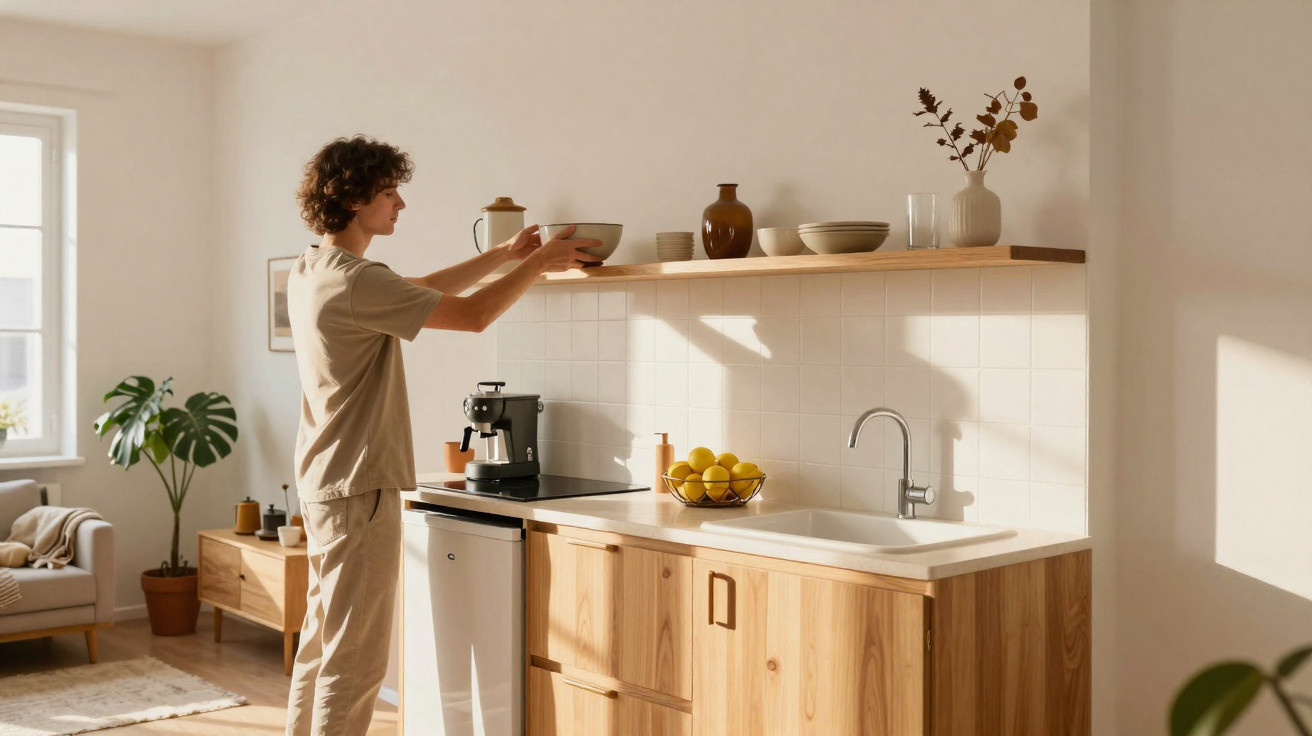
The first trend involves replacing some wall cabinets with open shelving. This works particularly well for attractive, frequently used items, including everyday plates, glasses, bowls, glass jars, recipe books and small plants.
The key is not to overdo it. Open shelving looks best when it is neatly arranged rather than used to store everything. In a small kitchen, just one or two shelves above the worktop can transform the appearance without requiring major renovation work.
Glass cabinets offer lightness while retaining protection
The second alternative is to choose cabinets with glass doors, particularly reeded, frosted or subtly textured glass. They retain the feel of enclosed storage, shielding crockery and utensils from dust, while making the overall scheme look less heavy than fully opaque doors.
This option suits anyone who likes a lighter appearance but does not want every item on display. It also works in medium-sized and small kitchens, as it adds depth and prevents the wall from becoming a solid expanse of timber or MDF cabinets reaching the ceiling.
Vertical larders replace several tall wall cabinets
The third trend is to centralise storage in a vertical larder, side tower or full-height floor-to-ceiling cabinet. Instead of distributing small wall cabinets across the entire wall, the kitchen gains a single place for food, small appliances and less frequently used utensils.
This approach frees up visual space above the worktop and keeps the food-preparation area clearer. In a small flat, a narrow tower beside the fridge can already replace several wall-cabinet units. In larger homes, the larder can become an elegant and highly practical feature.
How can you adopt these trends without renovating everything?
There is no need to remove every cabinet to refresh the kitchen. One straightforward adjustment is to take down just one wall-cabinet unit and install shelves in its place. Another possibility is to replace some standard doors with glass versions or reorganise the existing cabinets to clear one wall.
The key to a more contemporary kitchen in 2026 is achieving balance. Open shelves create a lighter feel, glass cabinets preserve protection, and vertical larders keep clutter concentrated in one place. With small changes, the kitchen can become more attractive, practical and less visually heavy, without the need for a complete renovation.

Comments
No comments yet. Be the first to comment!
Leave a Comment