
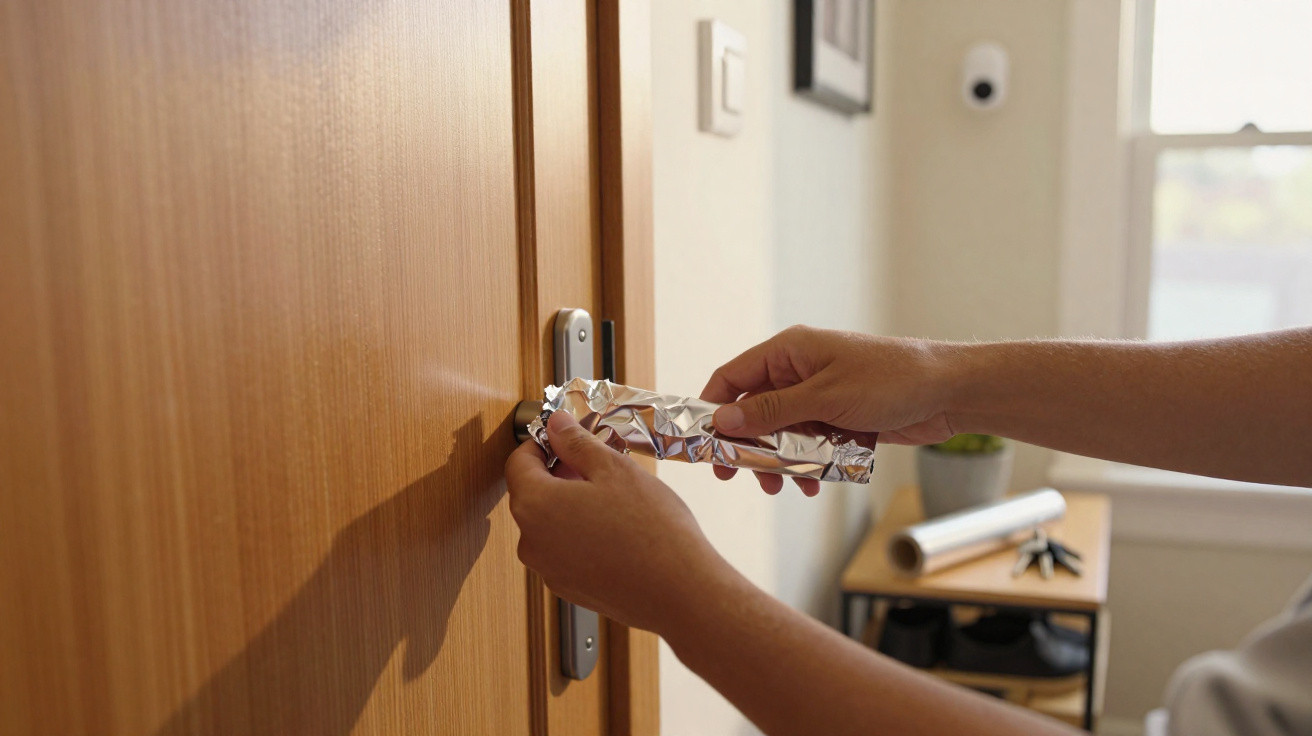
Wrapping a door handle in aluminium foil has attracted attention in a range of settings, particularly on social media. Although it may initially look like a simple household improvisation, the practice can serve different purposes connected with protection, everyday convenience and, in certain cases, home security. Its meaning depends greatly on each household’s habits.
What does putting aluminium foil on a door handle mean?
In general, covering a door handle with aluminium foil has three main purposes: protecting it from dirt, providing a visual signal and creating a slight physical barrier. In places with heavy footfall, the foil acts as an intermediate layer, preventing direct contact with the metal and making cleaning easier.
In some homes, foil on a handle signals that a room is being cleaned, painted, treated for pests or undergoing another type of work. The covered handle then acts as a visual reminder not to enter the area, helping to organise the household routine without the need for written notices.
How can aluminium foil on a door handle support security?
When used for security-related reasons, aluminium foil is more of an improvised warning device than genuine protection. If someone tries to turn the handle, the foil may become crumpled, tear or come loose, suggesting that it may have been handled. This can be useful for people who spend time away from home or who want to monitor a door discreetly at night.
Some people also place foil on doors with gaps or loose fittings in an attempt to make it harder to use tools to force the mechanism. Although it is no substitute for reinforced locks, cameras or alarms, it can form part of a wider set of precautions, including effective outdoor lighting and keeping the door and lock well maintained.
What are the most common and practical household uses?
In everyday situations, aluminium foil is most often used on door handles for convenience while decorating or cleaning. Covering the metal helps prevent paint splashes, dust build-up and grease marks on doors near the kitchen, making subsequent cleaning quicker.
In these circumstances, the foil provides temporary, disposable protection that can be replaced whenever it becomes too dirty or damaged. Its most frequent uses include:
- Protection from paint and dust during renovation work and minor repairs.
- Reducing grease marks on kitchen and utility-room doors.
- A disposable layer in areas with high footfall.
- Temporary signalling that a room is occupied or under maintenance.
How should aluminium foil be used on a door handle effectively and safely?
For aluminium foil to be genuinely useful in daily life, it should be fitted securely, shaped closely around the handle and applied without too many layers. This reduces the chance of it coming loose or interfering with the lock, allowing the door to open and close as normal.
A straightforward process is usually enough: cut a piece large enough to cover the entire handle, wrap it around and press it gently into place, check that the door moves properly, and replace the foil once it is torn, crumpled or very dirty. When used alongside other household and security measures, this approach shows how an ordinary kitchen item can take on curious and useful roles in different rooms of the home.



Comments
No comments yet. Be the first to comment!
Leave a Comment