
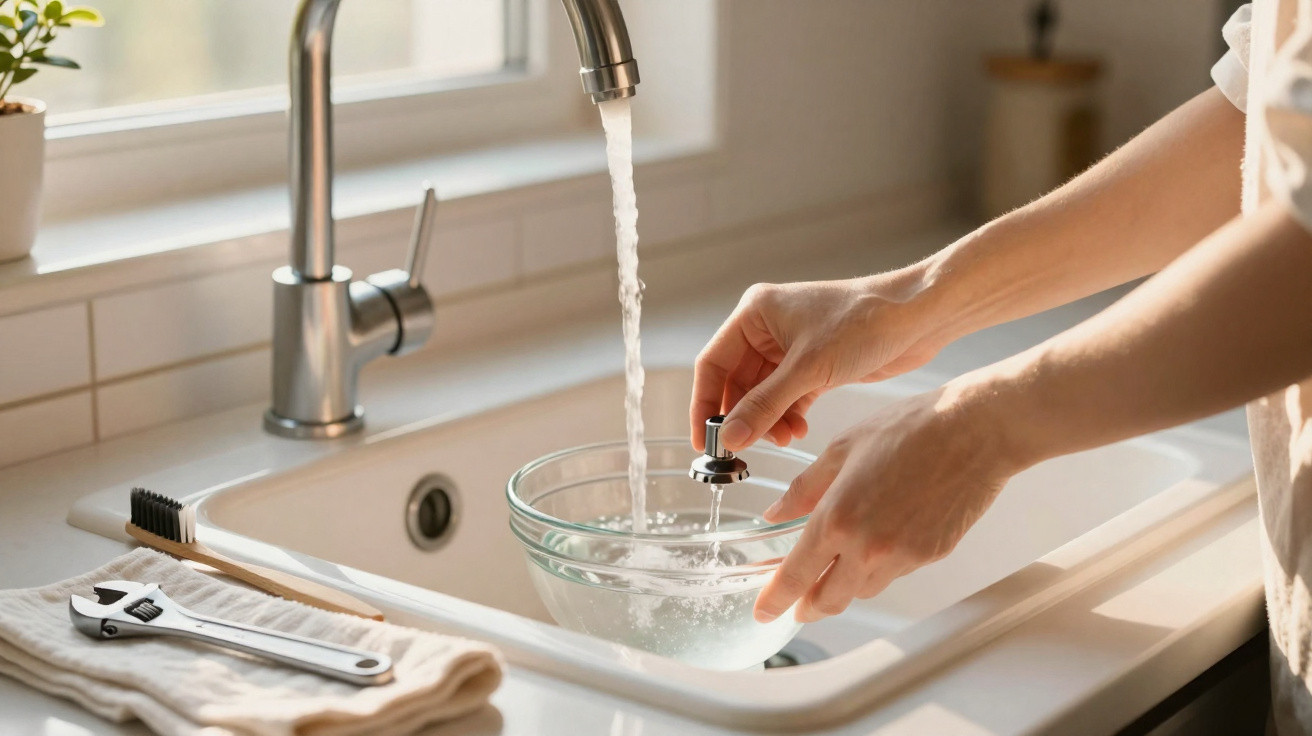
When a kitchen tap starts running weakly or spraying in every direction, the fault may be at the spout rather than in the pipework. The aerator can collect limescale, rust and debris, restricting the flow.
Why does kitchen tap pressure become weak?
The end of a tap usually contains a small filter called an aerator, which shapes the stream and catches particles. Over time, this component gathers sediment from the water, becomes blocked and makes the tap run unevenly.
If the aerator is dirty, water may flow at an angle, weakly or spray in several directions, even with the valve fully open. Before replacing any parts, it is worth cleaning this filter, as the fix may be quick.
The most common signs are:
- Stream: weak, angled or split in several directions.
- Limescale: pale crusts may build up around the water outlet.
- Aerator: located at the end of the tap and can be unscrewed.
- Cleaning: vinegar helps loosen dirt without excessive force.
- Warning: low pressure at several taps points to a larger issue.
How does a tap control water flow?
The part that regulates fluid flow through pipework works by opening and closing an internal passage. In homes, it makes it possible to control the water outlet in different rooms, including the kitchen.
At the spout, the aerator supports this process by mixing air into the water, softening the stream and trapping small particles. When its internal screens become clogged, the passage narrows and the perceived pressure drops during use.
How to clean a kitchen tap aerator in minutes
Start by trying to unscrew the aerator by hand, turning it carefully to avoid scratching the finish. If it is stuck, use an adjustable spanner protected with a cloth, applying firmness without crushing the part.
The aerator needs soaking.
White vinegar helps release mineral deposits. Once the part has been removed, soak the components to soften crusts and light rust.
A soft brush cleans the internal screens without misshaping the fitting or widening the holes.
After removing the component, soak the parts in white vinegar for a few minutes or for several hours, depending on the level of dirt. Brush the internal screens with soft bristles, rinse thoroughly, then refit the aerator squarely onto the thread.
Clean it in this order:
- turn off the tap and dry the area around the sink;
- unscrew the aerator by hand or with a cloth-protected spanner;
- carefully take apart the small screens so you remember their order;
- soak the components in white vinegar;
- brush, rinse, reassemble and test the stream.
How often should a tap filter be cleaned?
In areas with harder water, recent building work or old pipework, cleaning may be needed more often. A monthly or every-two-months check helps prevent build-up, especially when the stream changes direction or loses strength.
It is also worth checking for rust particles, fine sand and white crusts on the aerator, as these show that the component is trapping dirt. Preventive maintenance protects the finish, improves flow and avoids unnecessary replacements.
To keep the tap working properly:
- clean the aerator whenever the stream becomes uneven;
- avoid overtightening the component when refitting it;
- do not use needles to pierce the internal screens;
- replace the aerator if the thread is broken or distorted.
When does low pressure indicate a whole-house problem?
Anyone who has learned how to unblock a tap filter and improve water pressure should compare the result with other outlets in the home. If several taps are weak, the issue may involve the shut-off valve, water tank or pipework.
In this situation, cleaning only the aerator will not solve the underlying cause, although it may improve one specific outlet. When the drop affects the whole property, it is best to call a professional to assess the pressure, water supply and plumbing.




Comments
No comments yet. Be the first to comment!
Leave a Comment