
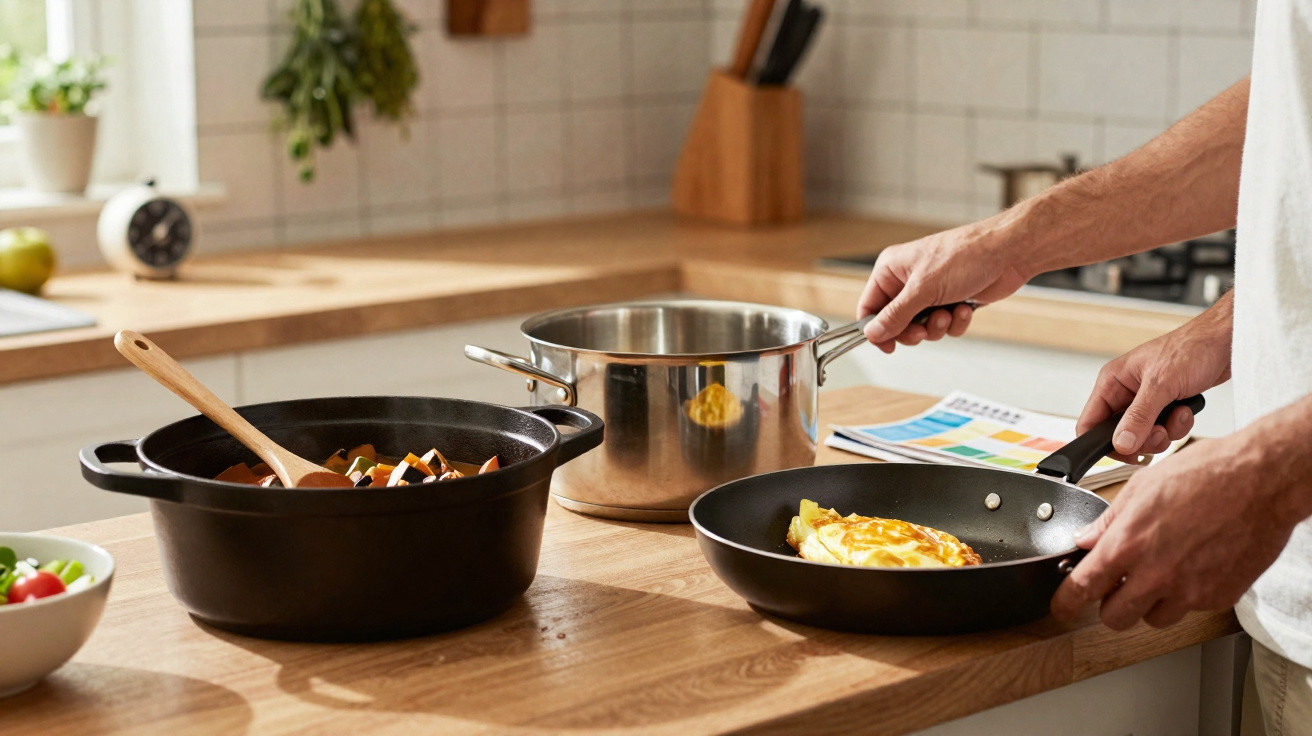
Choosing between a cast-iron pan, stainless-steel pan or non-stick pan is now a frequent question in Brazilian kitchens. Each material affects food preparation differently, from oil use and cleaning to lifespan and even health. It is therefore worth knowing how each performs on the hob and which recipes it suits best.
Is a cast-iron pan worthwhile for slow cooking?
A cast-iron pan is valued for retaining heat exceptionally well and cooking food evenly. Once hot, it holds a consistent temperature for a long period, making it particularly suitable for beans, stews, braised meats and other low-heat dishes.
It may transfer small amounts of iron into food, which can appeal to people looking to increase their intake of the mineral. However, it is heavy, must be dried thoroughly to prevent rust, and can darken highly acidic dishes, such as sauces containing plenty of tomato or vinegar.
Watch this video on the Panela Terapia YouTube channel, which gives a complete overview of each type of pan, health safety and the most suitable cooking method for every material:
https://www.youtube.com/watch?v=U3d4z2aL6Q8
Is a stainless-steel pan suitable for everyday and versatile use?
A stainless-steel pan stands out for its durability and contemporary appearance: it does not peel or shed a coating. Versions with a triple-layer base spread heat more evenly, reducing hot spots and providing steadier results on gas, electric and induction hobs.
It works particularly well for rice, pasta, stock, soups and water-based cooking. However, foods such as meat and eggs may stick if the heat is too high or the pan has not been properly preheated. Used correctly and cleaned with a soft sponge, it will generally last for many years without warping.
Is a non-stick pan practical when speed is the priority?
A non-stick pan makes everyday cooking simpler, as it requires less oil and can be cleaned quickly. It is widely used for eggs, pancakes, thin fillets and sautéed vegetables because food releases easily from its coated surface.
It performs safely under current standards, provided it is not overheated while empty and metal utensils are not used. To get the best from this type of pan and avoid replacing it too soon, follow a few straightforward precautions:
- Avoid thermal shock, such as pouring cold water into a pan that is still very hot.
- Use silicone, nylon or wooden spatulas to avoid scratching the coating.
- Dispose of the pan if its non-stick coating is peeling or heavily scratched.
- Choose low to medium heat to protect the material and prevent smoke.
How should you choose and care for pans to extend their lifespan?
Many cooks advise using a combination of materials: cast iron for lengthy cooking, stainless steel for water-based preparations, and non-stick for quick recipes requiring little oil. This covers the needs of a Brazilian kitchen well, where grilled foods, stews and brief frying are all common.
Your decision should also take account of budget, hob type, storage space and how often the pans will be used. Whatever the material, keeping the heat low or medium, preventing thermal shock, and replacing warped or cracked pans will help preserve safety, flavour and convenience for much longer.
Comments
No comments yet. Be the first to comment!
Leave a Comment