
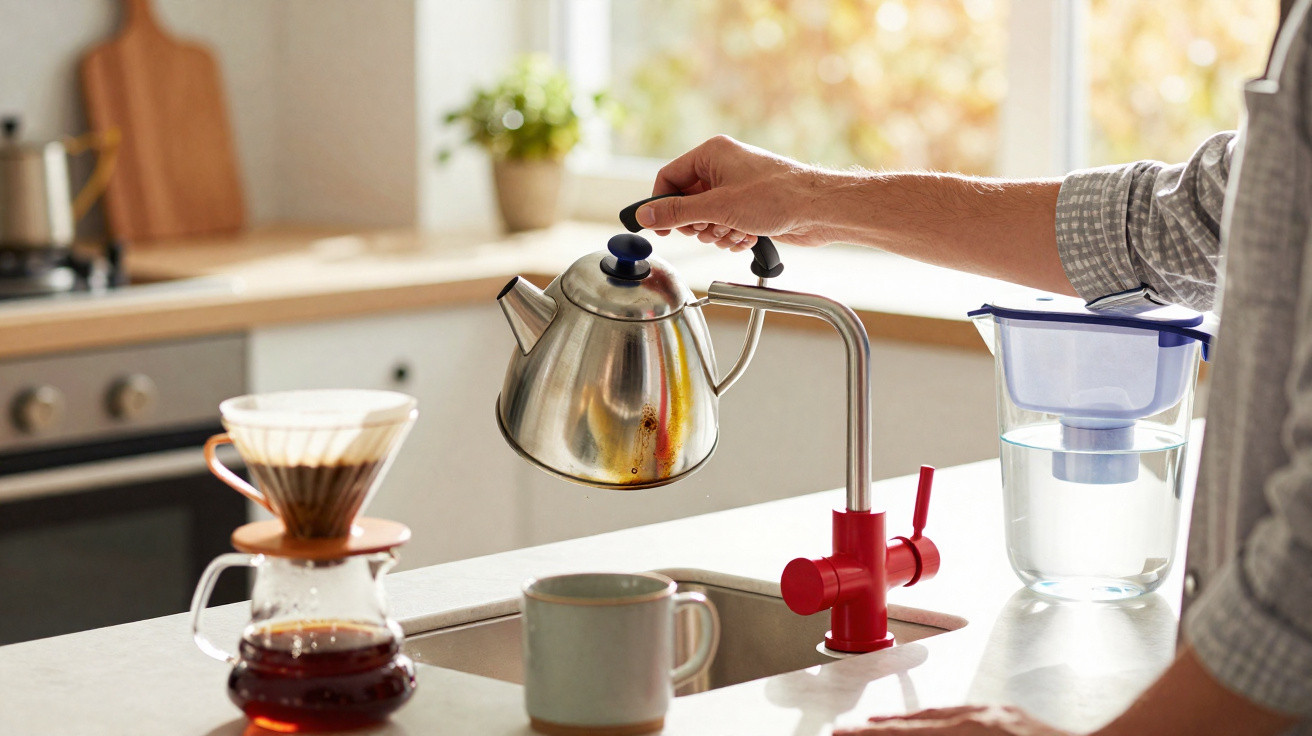
Turning the tap seems harmless: select “hot”, fill the kettle quickly, brew the coffee – done. What many people do not realise is that hot water drawn straight from the tap is not officially classed as drinking water. Health authorities strongly advise against using it for coffee, tea or baby bottles.
What authorities say about hot tap water
In France, the Ministry of Health, the national health authority and regional bodies all make the same point: only cold tap water should be used for drinks and cooking. Hot water from the tap passes through domestic pipes and storage systems that are not monitored in the same way as the official drinking-water network.
“Only cold tap water is subject to strict drinking-water controls – hot water at the tap is considered utility water.”
The same principle applies in the UK and elsewhere: hot water will usually come from a separate circuit within the building. Hot-water cylinders, instantaneous water heaters and ageing pipes may all fall partly outside drinking-water monitoring. That can be an issue for a morning cup of coffee.
Why hot water releases more metals from pipes
The key issue is that heat speeds up chemical reactions inside pipework. Many older properties still contain old pipe sections or fittings, some of which may include lead. More modern installations are more likely to contain metals such as copper and nickel.
When water remains in these pipes, it can dissolve tiny quantities of these substances. The warmer the water becomes, the faster this happens. Measurements show that, at around 25 degrees, the lead concentration in the same pipe can be roughly twice as high as at 15 degrees.
- older buildings: increased risk of lead in pipes
- newer systems: mainly contact with copper and nickel
- water left standing in pipes: more dissolved metal ions
- higher temperatures: substantially faster release
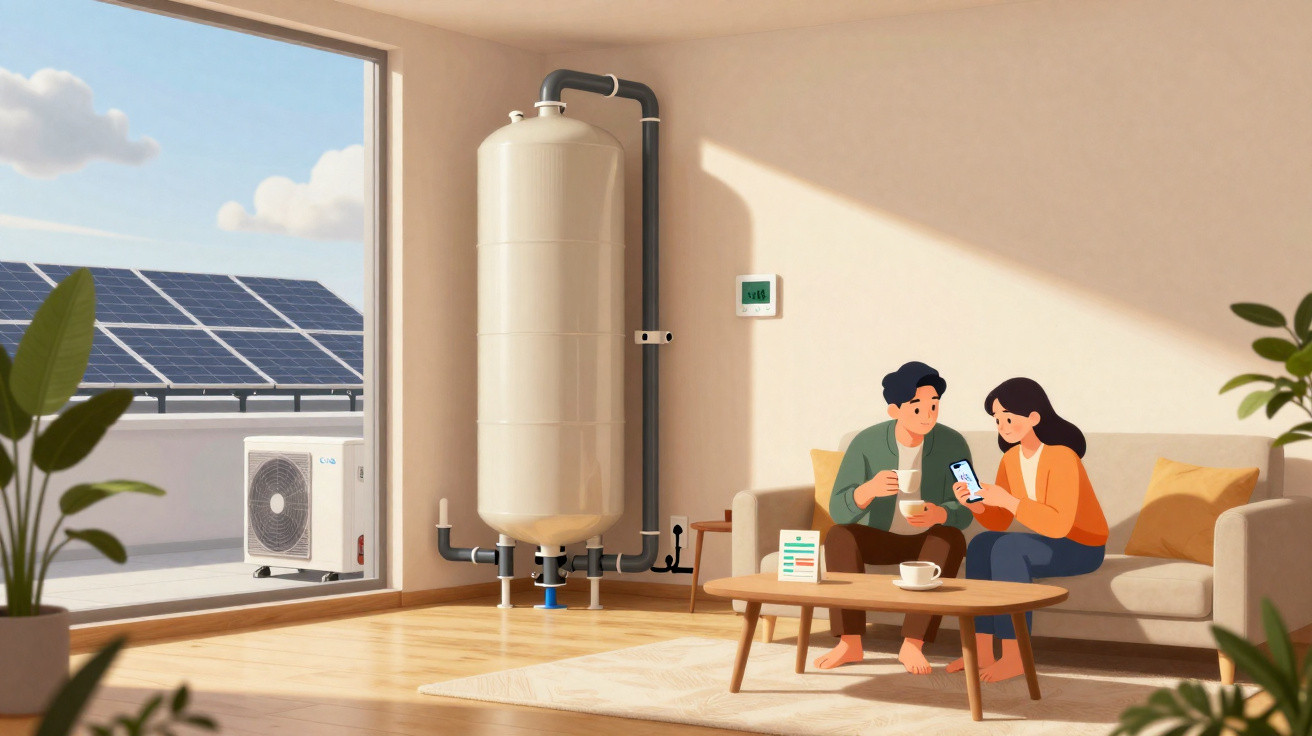
The hot-water cylinder is another factor. In many homes, water is stored there at 50 to 60 degrees. That temperature is suitable for showering, but less suitable if the water is intended for drinking. It remains in contact with metal surfaces and deposits for a long time, and may also accumulate bacteria.
Why boiling does not solve the problem
Many people think: “I’m boiling the water anyway – so it must be clean.” That is true only for germs, not for metals. Heating water on the hob or in a kettle kills bacteria and other pathogens, but dissolved metals such as lead and copper remain in the water.
What is more, if water boils vigorously and some of it evaporates, the concentration of dissolved substances can even rise slightly. This also applies to other residues, including limescale and certain organic compounds.
“Boiling kills germs but does not remove metals – on the contrary, their relative proportion can increase.”
For coffee, tea or instant soups, therefore, use only water that originally came cold from the tap as drinking water and was heated afterwards.
Official recommendations for drinking water from the tap
Health authorities provide clear guidance that is easy to follow in daily life. They recommend:
- Always use cold tap water for drinking and cooking.
- After water has been left standing for a long period, run the cold tap for 1–2 minutes.
- Never use hot water directly for coffee, tea or baby food.
The reason is that, in many countries, the limit for lead in drinking water is 10 micrograms per litre. Cold tap water is tested for this; hot water within the home is not. In particular, in older properties, the so-called “first draw” after the night can contain considerably higher levels if water has been standing in the pipes for a long time.
There is no need to waste the flushed water. It can be used for washing up, cleaning or watering plants.
How to make coffee at home more safely
The good news is that a few straightforward habits can make home-brewed coffee noticeably safer – and may even improve its taste.
The right morning routine for coffee
If you get up in the morning and switch on the coffee machine, first run the cold tap briefly. This is particularly worthwhile after the night or after a weekend without using any water. Then follow these steps:
- Always fill a kettle, filter coffee machine or espresso machine with fresh, cold water.
- Heat the water in the appliance or on the hob, rather than drawing it hot from the tap.
- If the pipework is very old, consider having it professionally checked.
Pregnant women, babies and young children are especially sensitive to lead. For them, the extra effort is even more worthwhile. Adults can benefit too: many coffee enthusiasts report that coffee tastes smoother and less “metallic” when the water comes freshly drawn from the cold supply.
When a water filter may be worthwhile
Anyone who suspects that their property has old pipes, or lives in a house with an unclear history, may wish to consider a filter. Several factors matter:
- Jug filters with cartridges usually improve taste and reduce limescale, but remove metals only to a limited extent.
- Permanently fitted filters on the cold-water supply can specifically reduce lead and other metals, but must be maintained professionally.
- A laboratory water test can establish whether a filter is needed at all.
If you already use a water softener or filter, take maintenance intervals seriously. Neglected systems can themselves become a source of germs and therefore increase health risks.
How hot-water cylinders affect water quality
Hot-water cylinders add another concern to this coffee-water habit. Water can remain in tanks for hours or days. During that time, deposits known as scale and other residues can form. Bacteria readily settle in these areas.
Many systems operate at temperatures that limit Legionella growth but do not rule it out completely. This may be acceptable for showering, but it is an unnecessary risk when preparing hot drinks – particularly as freshly heated cold water offers no disadvantage.
What metal exposure can do to the body
Lead accumulates mainly in bone tissue. Taken in over a long period, it can damage nerves, affect children’s development and place strain on blood formation and the cardiovascular system in adults. Pregnant women can partly pass stored lead on to their unborn child.
Copper and nickel do have roles in metabolism in trace amounts, but at elevated doses they can irritate the digestive system and aggravate allergies. Anyone who regularly makes coffee, tea or instant meals using hot water straight from the tap is exposing themselves unnecessarily to additional amounts of these substances.
Practical advice for home, work and travel
These precautions do not apply only at home. At work, many people automatically use the hot tap to fill the coffee pot more quickly. A better approach is to:
- always use the cold tap, even when in a hurry
- flush the pipes briefly after the weekend
- inform colleagues and building managers if old pipes are known to be present
In a hotel room or holiday apartment, it is worth checking briefly: if there is a kettle, fill it only with cold tap water. In very old accommodation or in countries where water quality is doubtful, bottled water is often the safer option – especially when babies or pregnant women are travelling.
Making these simple habits routine can noticeably reduce the intake of potentially harmful substances – and means you can enjoy a coffee each morning that not only smells good, but also comes with greater peace of mind.
Comments
No comments yet. Be the first to comment!
Leave a Comment